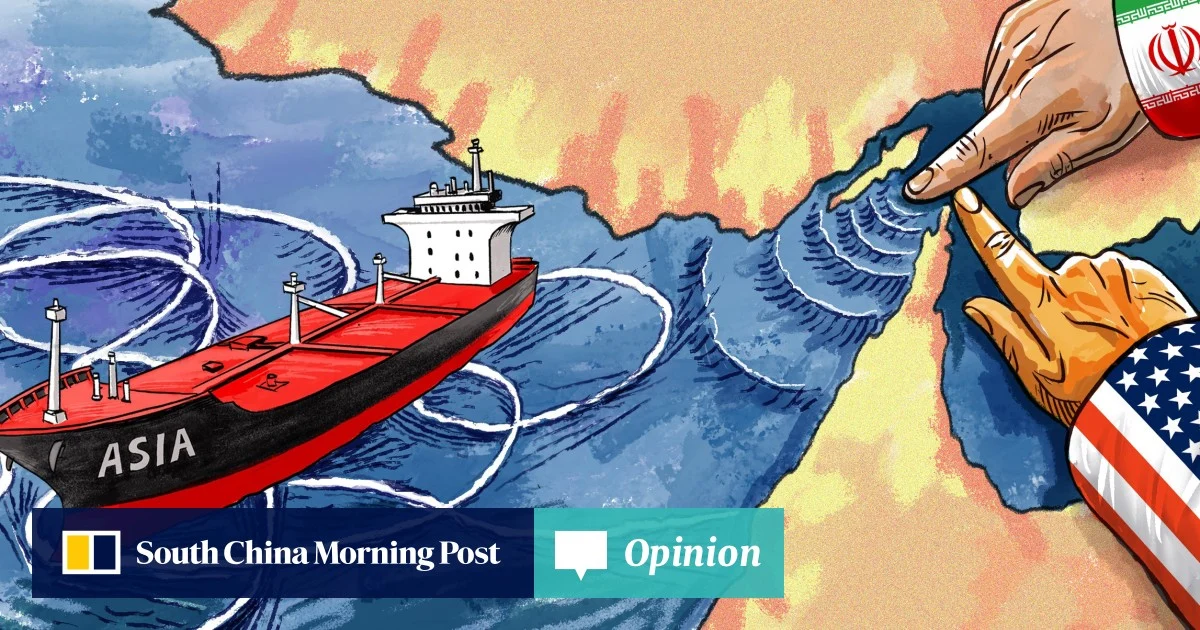
Even if the immediate phase of conflict subsides, the Gulf is unlikely to return to the status quo. For Asia, the central question is no longer simply whether the Strait of Hormuz is open. It is whether the waterway remains reliable, predictable and politically insulated from coercion.
That distinction now matters more than ever. For China and other major Asian importers, it is a question of whether energy flows, shipping routes and sanctions exposure are increasingly being shaped by a crisis they do not control.
The current status of the Strait of Hormuz is best understood as an open-ended holding arrangement: contested in substance and vulnerable to change. The interruption of another planned round of US-Iran diplomacy only reinforces the point. Negotiations have not stopped, but they are moving in fits and starts, shaped by pressure, distrust and shifting calculations rather than by a clear route towards a settlement.
For Asia, this phase may prove more important than the fighting itself. The clearest sign is not diplomatic language but maritime traffic. The strait is open to some, yet traffic has remained well below normal levels. The issue is no longer legal access alone, but commercial confidence. A waterway can be open on paper while still failing to function as a stable artery of the global economy.
The danger is not necessarily another dramatic rupture of maritime transit. It could lie in a more durable situation where the strait remains formally open but strategically uncertain. Commercial movement may continue, but with thinner confidence, higher premiums and more political risk, meaning that every government must plan for renewed disruption.
This is the new Hormuz disorder. It is a condition short of full-scale war but still far from normal commerce. It is a coercive middle ground where access remains possible, but confidence is weakened. That is precisely why it matters so much for the Indo-Pacific. For Asian economies, prolonged uncertainty can be damaging even without a spectacular closure of the strait.