World
White House talking points claim victories in Iran deal, but often don’t meet reality

WASHINGTON — The White House has told supporters that US President Donald Trump has accomplished his goals in the war with Iran, despite the details of an initial agreement remaining unclear and with negotiations on Tehran’s nuclear program still to be held.
In a series of talking points sent to Trump supporters and Republican members of Congress this week, the White House proclaimed major victories, such as Iran agreeing to never have a nuclear weapon (which it had always proclaimed it does not seek), reopening the crucial Strait of Hormuz (which Iran only closed as a result of the conflict), and fighting in Lebanon ending (which is far from guaranteed).
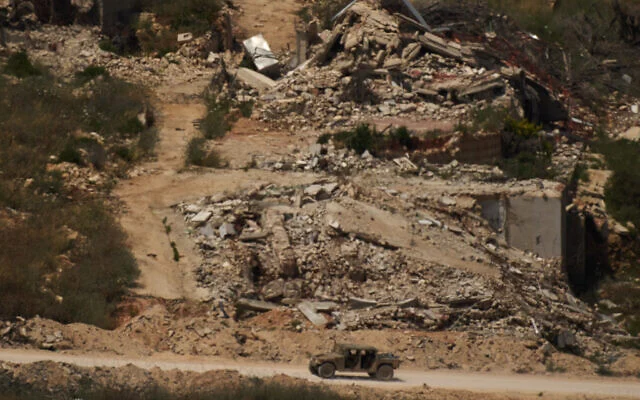
The talking points, on White House letterhead, were obtained by The Associated Press from two recipients of the document and go against some of the realities on the ground, especially regarding what Israel has agreed to in its conflict with Hezbollah in Lebanon. That began when the terror group attacked northern Israel with rockets and drones in support of Iran. Israel has bombed Hezbollah sites and also invaded southern Lebanon, where it is now holding what it calls a security zone.
But the memorandum of understanding between the US and Iran, expected to be signed Friday in Switzerland, is still a closely guarded secret, even from Republican allies in Congress and the Israelis. That has led to confusion, concern, and skepticism among all but the most hardcore Trump supporters about what has been agreed to.
Republicans acknowledged that the initial deal, by remaining under wraps, has created a vacuum that is being filled by potential misinformation.
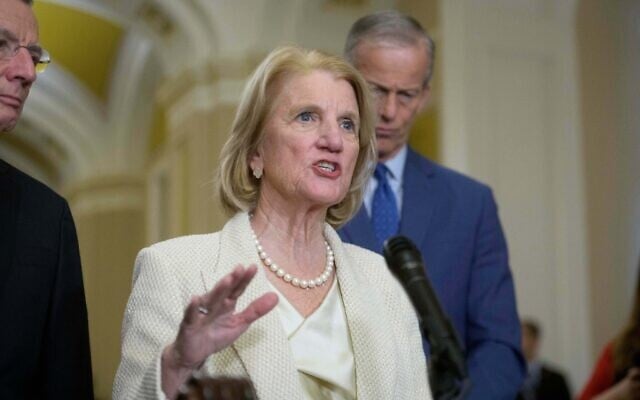
“You don’t know what’s true and what’s not true — is it in there?” said Sen. Shelley Moore Capito, a Republican of West Virginia. “My speculation is that it’s probably still being written and fine-tuned, and the administration is not ready to release it until it’s all done.”
Asked why he was not releasing the terms of the initial agreement, Trump told reporters Tuesday at the Group of Seven summit in France that he would “like to get a formal setting first before we do that.”
“I’ll not only release it,” he went on to say, “I’ll probably have a press conference and read it to you word by word, so that the press covers it accurately.”
Comparison with Obama accord
Trump said he was open to submitting an eventual agreement to Congress for review and approval.
“I like the idea, send it to Congress please,” Trump said. “I mean who wouldn’t approve it?”
Submitting a nuclear agreement with Iran to Congress is mandatory under a law that was passed following the 2015 Iran nuclear agreement reached by then-president Barack Obama, which Trump pulled out of during his first administration. Some congressional aides argue that even the presumed memorandum of understanding to be signed Friday would also be subject to lawmakers’ review.
The talking points claim that the Obama-era Joint Comprehensive Plan of Action, or JCPOA, was never signed, which is partly true but misleading. The foreign ministers who negotiated the agreement did sign a copy of the deal, although it was viewed as an informal document meant to memorialize the occasion.
More importantly, the JCPOA was endorsed and approved by the UN Security Council, which enshrined its provisions into international law.
“President Trump solved a threat Washington spent 40 years managing,” according to the talking points. “Iran will never have a nuclear weapon.”
Copies of the talking points were provided to the AP by a congressional aide and an outside government adviser.
Iran’s stated position dating back decades is that it has no desire to develop a nuclear weapon. Many Iran critics doubt that pledge because the country has 440.9 kilograms (972 pounds) of uranium that is enriched up to 60 percent purity, a short technical step from weapons-grade levels of 90%, according to the International Atomic Energy Agency.
Uranium enriched to 60% has no peaceful civilian use, and Iran has vowed to wipe out Israel.
Reopening the Strait of Hormuz
Meanwhile, the talking points say that “the Strait of Hormuz is open again, and energy prices American families pay every day are coming down.”
“American Families Are the Big Winners,” the document says. “Start with what this means at home. American families no longer have to fear a nuclear-armed Iran. They are going to feel relief at the pump and at the grocery store.”
The Strait of Hormuz, through which a fifth of the world’s oil passed before the war began, had been open to all maritime traffic until February 28, when Trump and Israel began attacking Iran in a bid to destabilize the regime and destroy its nuclear and ballistic missile capacities. That means that an agreement to reopen the strait would start to return the situation to where it was on February 27 before the US and Israel spent billions of dollars to go to war. It could take weeks or even months for some normalcy to return.
Consumer prices in the United States and elsewhere spiked only after the war began and shipments of oil and other commodities through the strait were interrupted by Iran, which insists it will retain control of access to the crucial waterway no matter what.
Sanctions relief for Iran
The talking points say Iran will not receive any American taxpayer money for its eventual agreement with and adherence to an as-yet unnegotiated nuclear agreement, and will only get financial incentives if it meets certain benchmarks.
They suggest that Obama’s 2015 nuclear accord cost US taxpayers billions of dollars, when the monetary sanctions relief provided to Iran then actually came from frozen Iranian assets and not the US treasury.

The talking points mention “the pallets of cash” the US sent to Iran after the JCPOA was signed. In fact, the shipment of cash, which came from an Iranian payment for a canceled arms sale to the late shah of Iran’s government, were unrelated to the nuclear deal.
That money was part of a swap that saw the release of several American citizens detained in Iran and of several Iranians imprisoned in the US.
Israel-Hezbollah fighting in Lebanon
The talking points trumpet Trump’s claim that the agreement will end the Israel-Hezbollah conflict in Lebanon.
“This signed agreement ends military operations on every front,” they say. “For the first time, that explicitly includes Lebanon, with a commitment to both Israel and Lebanon’s sovereignty and territorial integrity.”
However, Hezbollah is not party to talks that have been taking place in the US between Israel and Lebanon, and the Iranian-backed terror group has rejected any agreements reached during them. Israeli officials also have said they will not be bound by the terms of the tentative Iran-US agreement and do not know the details of it.
At a press conference Monday, Prime Minister Benjamin Netanyahu avoided criticizing the deal, but also stressed that Israeli troops will stay in southern Lebanon.
“We’re less encouraged about the fact that it seems that Lebanon has been included in the agreement with Iran,” Israeli Ambassador to the US Yechiel Leiter told NPR. “And we think that that’s unnecessary and unhelpful.”
A senior US official told reporters that Israel’s withdrawal from Lebanon was not a condition of the memorandum of understanding. The official spoke to reporters on condition of anonymity Monday to discuss outlines of the unreleased agreement.
Saudi Arabia’s Al Arabiya published what it said was a copy of the 14-point agreement’s full text, which mentions “an immediate and permanent end to the war on all fronts, including Lebanon,” but does not specify an Israeli withdrawal.