World
What signals lie behind Khamenei’s funeral?

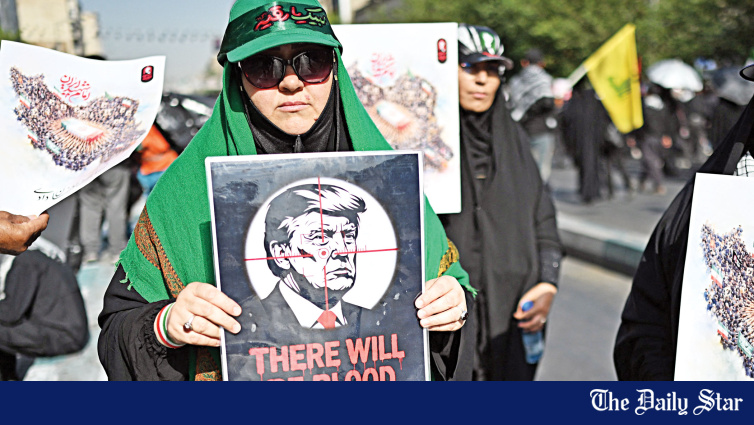
A week of ceremonies for the funeral of Iran’s supreme leader Ayatollah Ali Khamenei has adopted heavy symbolism to promote pro‑government religious and political messages.
From state rhetoric to organised demonstrations, authorities are pushing a narrative of unity among supporters of the Islamic Republic, in power since the 1979 revolution. Khamenei’s funeral began with three days of mourning in Tehran before a procession through Iranian and Iraqi cities, laden with symbolism about his life and Shia Islam.
Officials emphasised his “martyrdom” and framed grief as a national duty. The slogan “We must rise” appeared on banners, while Arabic audiences saw “Rise for Allah,” both drawn from Quranic verses urging Muslims to stand for a divine cause, reports Al Jazeera online.
KHAMENEI’S CLENCHED FIST
An illustration of Khamenei’s clenched fist on a red‑black background has become the defining image of the ceremonies. Rooted in a message attributed to Mojtaba Khamenei, it symbolises defiance and martyrdom. Mojtaba, absent from events due to security risks, is expected to remain unseen. Black and red colours combine grief, martyrdom and revenge.
The Supreme National Security Council said mourners were crying out slogans of “resistance” and “revenge.” A giant red flag reading “O avengers of Hussein” was unfurled at Tehran’s Grand Mosalla, linking Khamenei’s death to the 7th‑century martyrdom at Karbala.
A SHIA ISLAM POLITICAL MAP
The funeral route carries symbolic weight, moving from Qom to Najaf and Karbala before burial in Mashhad. Each site reinforces clerical legitimacy and Shia authority.
Foreign delegations from Hezbollah, Hamas, Islamic Jihad and Houthis attended, greeted with Quranic verses highlighting loyalty and steadfastness. A verse read to Riyadh’s delegation referenced the Battle of Badr, interpreted as a message of confrontation between believers and non‑believers. Together, the ceremonies frame retaliation against the US and Israel as both political and religious obligation, while signalling Iran’s transnational Shia leadership.