Trends
What She Said: At 20 I Turned My Passion for Heart Health Into a 40,000-Person Movement

Every week, ThePress spotlights the unfiltered stories of women navigating life, love, identity and everything in between.
What She Said will give women the mic to speak freely, honestly and openly, without shame, about sex, politics, family, survival, and everything else life throws our way.
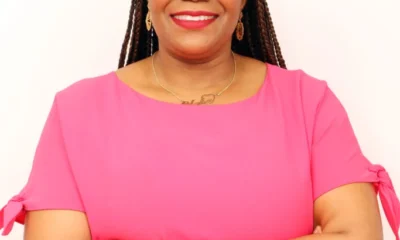
The subject of today’s #WhatSheSaid is Ifeoluwa Oyewole, a 23-year-old medical student at the University of Lagos and the founder of The Cardio Health, an organisation that has reached over 40,000 people with cardiovascular health education and screening. She talks about the childhood that shaped her, the conversation that changed how she saw high blood pressure, and the dream that gave her organisation its name.
My name is Ifeoluwa Oyewole. I am a medical doctor-in-training, global health advocate, youth development advocate and award-winning social entrepreneur. I am also a project manager and event curator, with a passion for building initiatives that create meaningful social impact, particularly in healthcare and community development.
I spent most of my childhood in Ibadan, where I had my primary and secondary education, before moving to Lagos for university at the University of Lagos.
I had a beautiful childhood. My father was a lecturer, so education and reading were significant parts of our home life. We were encouraged to read, learn and stay intellectually curious. We also had Sunday family gatherings where we spent time together, shared stories and listened to moonlight tales. Those moments gave me a strong sense of family and shaped some of my earliest memories.
Looking back, I grew up in an environment that encouraged learning, curiosity and ambition. A lot of who I am today can be traced to those early experiences.
A very ambitious one. Being the firstborn, I think I naturally developed a strong sense of responsibility and independence. My family and friends would probably describe me as a go-getter, audacious, outspoken, someone who isn’t afraid to say exactly what she thinks.
I was always interested in doing something. I loved writing, volunteering, advocacy and organising things. I enjoyed managing people’s projects, events and outings, even when there was no formal title attached to what I was doing. I simply enjoyed bringing ideas together and making things happen.
I was also academically competitive. I was consistently among the top students in my class throughout much of secondary school. I remember being particularly disappointed when my Further Mathematics grades affected my overall position in SS2. I went from first to third, and my mum was not particularly pleased. That pushed me to work harder, and I eventually regained my position.
Even as a child, I knew I wanted a life that involved doing meaningful things. I didn’t have all the details figured out, but I knew I wanted to be in spaces where I could contribute, organise, create and make a difference.
Integrity, hard work, ambition and the importance of pursuing whatever we set our minds to.
One thing my father did that I particularly appreciate was recognising my early interest in healthcare. When I got to junior secondary school, he noticed I was becoming interested in the health sector and connected me with medical professionals in our church.
That exposed me to an entirely different world at a very young age. I became particularly close to one of them, the late Dr Sotumbi, a consultant anaesthesiologist at the University College Hospital, Ibadan. She was one of my earliest role models, and I admired her tremendously.
She would invite me to her medical outreach programs, and I got to observe how healthcare professionals engaged with communities and addressed people’s health needs. I think that exposure was one of the most important gifts my parents gave me. They allowed me to explore an interest that would eventually become a significant part of my life’s work.
I started volunteering when I was 13, and I think that fundamentally shaped how I relate to people and the world around me.
I was drawn to opportunities where I could make someone’s situation a little better. Whenever I visited hospitals and saw patients get better, I felt a genuine sense of fulfilment. It made me want to be part of creating those outcomes for other people. I was also very passionate about young people and their potential. I have always believed that young people have enormous capacity to influence their communities.
It taught me something early on: you don’t have to wait until you are older, more established, or have a particular title before you can contribute to society. You can start with what you have and where you are.
Yes. I remember hearing about a 37-year-old man who had suddenly collapsed and died. I was curious about what had happened, so I asked Dr Sotumbi. She explained that he had high blood pressure.
At 13, I didn’t really understand what that meant. I knew about common illnesses like malaria, but hypertension was not something I knew much about. I simply accepted the explanation without appreciating its implications.
A few years later, when I was about 15 and in SS3, I went back to ask her what high blood pressure actually meant. This time she explained it in more detail, including how it could lead to serious complications and even sudden death.
What stayed with me was that a 37-year-old man could die from a condition he might not even have known he had. I began to realise there was a significant gap in awareness, early detection and preventive healthcare.
After secondary school, I started visiting different communities to educate people about their health, particularly the importance of checking their blood pressure. When I moved to Lagos for university, I continued. I went with a few friends to different streets and communities around Akoka, Yaba, Sabo and Bariga, speaking to residents about their health and encouraging them to take prevention seriously.
At the time, I didn’t have a formal organisation or a large team. I simply had a conviction that people deserved to know more about their health before it became a crisis. Looking back, I can trace the beginning of my work in cardiovascular health to that encounter when I was 13.
It has largely been driven by one ambition: studying Medicine and Surgery.
I have wanted it for as long as I can remember. After secondary school, I received admission offers to study Medicine at institutions including Ekiti State University and Babcock University, but I remained determined to attend the University of Lagos. Even when I eventually had an opportunity at LAUTECH, I still had my sights set on UNILAG. It was a university I had always wanted to attend.
Today I am at the University of Lagos, approaching the completion of my medical training. It has been a journey of persistence, and I am grateful to be close to achieving something I have long wanted.
My interests have always extended beyond clinical medicine, though. I have always been interested in healthcare policy, preventive healthcare and finding ways to improve how people access health information and services. I want to contribute not only through individual patient care but by influencing the systems and interventions that determine people’s health outcomes.
Yes. I organised an outreach in the Iwaya community around 2020. We were speaking to residents about their general health, and I encouraged them to check their blood pressure regularly. One person stopped me and asked, “What is blood pressure?”
I took time to explain it, but I decided to ask other residents if they knew what blood pressure meant. To my surprise, several people didn’t. What made it even more concerning was that some of the people we screened had elevated blood pressure without knowing it.
I realised the problem was much bigger than I had imagined. We were talking about a condition that contributes significantly to deaths globally, yet people in some communities didn’t even know what it meant, let alone the importance of screening for it. If people didn’t know what hypertension was, how could we expect them to prevent or manage it?
That strengthened my commitment to cardiovascular health. Healthcare must involve more than treating people when they become ill. We also have to make health information accessible enough for people to protect themselves before complications develop.
Next Read: Why Are Young Girls Learning to Defend Patriarchy?
In 2021, I visited Magboro community for a church-organised medical outreach. I had been invited to speak to residents and conduct a health outreach, and we attended to approximately 200 people that day.
In 2021, I visited Magboro community for a church-organised medical outreach. I had been invited to speak to residents and conduct a health outreach, and we attended to approximately 200 people that day.
While we were there, I became concerned about the healthcare infrastructure available to the residents. I looked around and couldn’t identify a functional primary healthcare centre that people could readily access. I wondered what happened to residents who needed medical attention outside the occasional outreach.
During the screening, we again met people with elevated blood pressure who were unaware of their condition. It reinforced something I had been observing for years: hypertension can exist without obvious symptoms, and many people carry on with their daily lives without knowing their blood pressure is elevated.
That experience showed me that taking healthcare to underserved communities was not simply about conducting a one-day medical exercise. It was about creating sustained awareness, encouraging early detection and connecting people to healthcare services they could access when they needed them.
Before all of this became an organisation, I had spent several years volunteering with different organisations and hospitals. I also worked with the Oyo State Ministry of Health around 2018.
Those experiences showed me some of the difficulties people face when trying to access healthcare. For some, the problem was financial. They couldn’t afford medical care. Others struggled with the distance to healthcare facilities, limited access to functional health centres or long waiting times.
These challenges were interconnected. Having a hospital in a community didn’t necessarily mean everyone could access it, and having access to a doctor didn’t automatically mean people had the information they needed to make informed decisions about their health. I began to understand that improving outcomes required addressing both access to services and access to health information.