World
Visiting south Lebanon, PM says IDF won’t withdraw ‘as long as Hezbollah remains here’

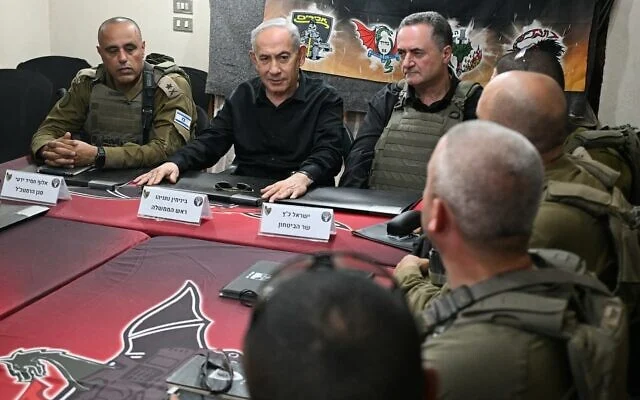
Prime Minister Benjamin Netanyahu told troops in the southern Lebanon security zone on Tuesday that the military would remain in the area for the foreseeable future, crediting the soldiers’ work for the recent agreement between Israel, Lebanon, and the US that demands Hezbollah’s disarmament to enable an Israeli withdrawal.
“If you identify a threat to your security, to your lives, or to the lives of your soldiers — act. Do not wait. Act. That is an ironclad directive,” Netanyahu told troops during the visit, according to a statement from his office. The visit also included Defense Minister Israel Katz and Deputy IDF Chief of Staff Tamir Yadai.
Netanyahu said Israel’s recent military operations against Iran-backed Hezbollah led to the agreement, telling soldiers that, “as a result of your actions here, Lebanon recognizes Israel, Israel recognizes Lebanon,” describing them as “two sovereign states that want peace.”
“We are telling both Iran and Hezbollah: leave this place. You have no business being here… This is a slap in the face, a punch in the face of the Iranian axis,” he said.
The premier reiterated that “we will not leave southern Lebanon until the threat has been eliminated. And as long as Hezbollah remains here, armed and threatening us, we will remain here as well.”
Netanyahu hailed military achievements against Hezbollah, calling the terror group “the most important link in the Iranian axis,” and saying that after recent rounds of fighting, only 8% of its previous stock of 150,000 missiles and rockets remains, while 9,000 Hezbollah terrorists have been killed.
A framework agreement signed last week committed Lebanon to restoring sovereignty over its territory through the “verified disarmament of non-state armed groups,” which would in turn enable a progressive Israeli withdrawal. The state of Lebanon, along with Israel and the US, signed the agreement, but Hezbollah and its allies are opposed to it.
On Monday, Defense Minister Katz said Israel has “no territorial ambitions in Lebanon,” but that the IDF will not withdraw “a millimeter” until the terror group is disarmed. He also voiced skepticism that the Lebanese army would “suddenly become lions charging at Hezbollah,” concluding that the IDF’s presence in Lebanon would be “long-term.”
That night, Lebanese state media said an Israeli strike had hit the country’s south, between the towns of Qantara and Deir Seryan. There was no comment from the IDF. The reported incident was inside the security zone and may have been demolition work.
On Tuesday, a Hezbollah operative who was identified near Israeli forces was killed in a strike, the IDF said, reporting that he was spotted near the village of Manzleh, close to the security zone.
“The terrorist’s activities posed a threat to the forces,” it continued, adding that he was targeted and killed in a strike to “remove the threat.”
UN said pushing to maintain presence in Lebanon
The United Nations is pushing to maintain a military presence in southern Lebanon after the mandate of the United Nations Interim Force in Lebanon (UNIFIL) expires at the end of the year, Channel 12 reported.
According to the TV network, UN Secretary-General António Guterres, with backing from France, is pressing the United States and the UN Security Council to approve a successor force comprising some 5,000 troops and 500 observers to monitor southern Lebanon.
The proposal came amid French concerns over the dominant US role in overseeing the Israel-Lebanon ceasefire, with Paris sidelined in the negotiations.
Israel opposes any continued UN military presence, arguing that UNIFIL failed to prevent Hezbollah’s military buildup and did not fulfill its mandate, with an official telling the network that the peacekeeping force is “incapable of creating deterrence or reducing escalation during the war.”
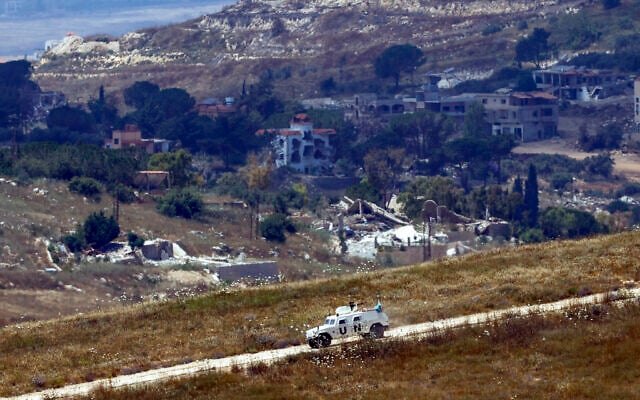
Some 400,000 Lebanese have returned to parts of southern Lebanon that are outside the security zone after fleeing earlier in the conflict, the country’s social affairs minister said on Tuesday, encouraged by the relative lull.
Since this round of fighting began on March 2, when Hezbollah attacked Israel in support of Iran, around a million people have been forced to flee their homes, and large numbers are still in shelters or temporary housing because their homes are destroyed or uninhabitable, said the minister, Hanine El Sayed.
Roughly 40% of those displaced have now returned to their towns and villages. The number of people staying in collective shelters has fallen sharply, to about 13,000 from 37,000, she said.
Authorities expect further returns in the coming days and hope within about a week to better gauge how many families cannot go back at all.
“In about a week’s time … we would really know the size of the problem — how many absolutely cannot return because their homes have been totally damaged,” she said.