World
Vance ‘confident’ Israel will join deal, as US and Iran prepare for talks on Friday

US Vice President JD Vance said Monday that he believes Israel will become a party to the emerging US-Iran deal at some point in the future, ahead of a new round of nuclear talks slated to begin on Friday after a memorandum of understanding between Washington and Tehran is formally signed.
Amid a blitz of TV interviews, Vance told NBC: “What we know is this agreement is going to make Israel safer; it’s going to make the entire region safer.”
“What I’ve seen is a lot of misinformation about this agreement — sometimes in the Iranian media, sometimes in the Israeli media,” he continued.
“We believe quite firmly that when the Israeli people understand what’s in this agreement, they’re going to see this as a pathway to a new Middle East, to peace and prosperity in that region,” he asserted.
“That’s all we can really ask for. We feel quite confident the Israelis are going to be bought in on this when we get a little further down the road.”
On Sunday, US President Donald Trump announced that Washington and Tehran had signed a memorandum of understanding to extend their ongoing ceasefire by 60 days and open the Strait of Hormuz, while holding negotiations on a long-term resolution to the conflict over Iran’s nuclear program.
The MOU, already signed digitally, is set to be formally signed in Switzerland on Friday.
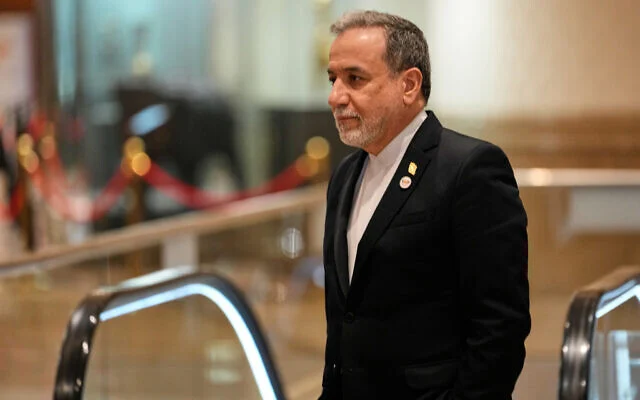
That same day, Iran and the US will start a new round of negotiations to reach a final agreement, Iran’s Foreign Minister Abbas Araghchi said.
According to Axios, Trump aides Steve Witkoff and Jared Kushner will attend the meetings alongside Vance, as will Araghchi and Iranian Parliament Speaker Mohammed Ghaber Ghalibaf.
Announcing the talks, Araghchi warned that any Israeli attack on Lebanon or continued presence in Lebanese territory would constitute a violation of the interim agreement with the United States.
Israeli troops are currently stationed deep within southern Lebanon, and the Israeli military has struck targets throughout the country, ever since the Iran-backed Hezbollah terror group attacked Israel on March 2 in support of Tehran.
Araghchi said Tuesday: “In our view, the two parties to this memorandum are the US and Israel on one side, and Iran and Hezbollah on the other.”
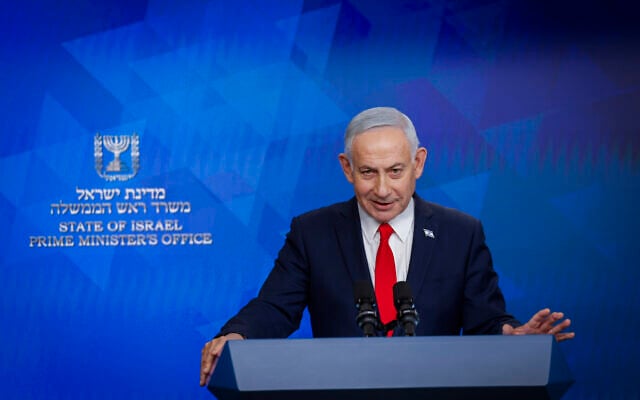
During a press conference on Monday, Prime Minister Benjamin Netanyahu stressed that Israel is not a party to the memorandum of understanding and does not yet know the full details of the agreement.
Opposition figures in Israel — as well as some ministers in Netanyahu’s own government — have lambasted the premier over the US deal, calling it a diplomatic failure and a danger to Israel’s security, in part because of concerns it will hamper Israel’s efforts in Lebanon.
In his press conference, Netanyahu declined to say whether Trump would seek to prevent Israel from striking Iran alone or acting independently against Hezbollah, but said Israeli troops would remain in the buffer zone in southern Lebanon “for as long as necessary.”
“Iran wanted us to withdraw from there. That did not happen. Do you know why it did not happen? Among other reasons, because I stood very, very firm. I was very, very resolute on this matter. And I think our American friends respect that resoluteness and that firm stance,” he said.
Asked about Trump’s harsh public criticism of Netanyahu in recent days, Vance said Monday that “Israel is often a good partner, we also have aligned interests, but also sometimes we’re going to disagree on issues.”
He added that “that’s totally reasonable, even our closest allies, from the United Kingdom to Israel, we sometimes have disagreements.”
Vance said Monday that Trump may choose to release the agreement before Friday, but said holding off for now was a matter of “respecting the diplomatic sensibilities.”
An administration official, briefing reporters on Monday, had said the text would likely be released in the next 24 to 48 hours.
Amid confusion over what is actually in the MOU, The Wall Street Journal reported on Monday that some of Trump’s own senior aides were surprised by his announcement it had been signed.
Trump inked the deal Sunday while speaking to journalists, allies and Russian President Vladimir Putin on the phone, and as he prepared to attend the cage fights being held on the White House lawn in honor of his 80th birthday that day, according to the report.
Trump: Iran agreed never to have a nuclear weapon
In a social media post overnight Monday-Tuesday, Trump declared that “Iran has agreed to never have a Nuclear Weapon!” in an apparent reference to the MOU.
Iran has long insisted it does not seek a nuclear weapon, and made such a commitment in the 2015 deal that Trump vilified and withdrew from in 2018.
Both of Trump’s administrations, along with Israel, have refused thus far to take Tehran at its word, something the US president seemed to indicate he was now prepared to do.
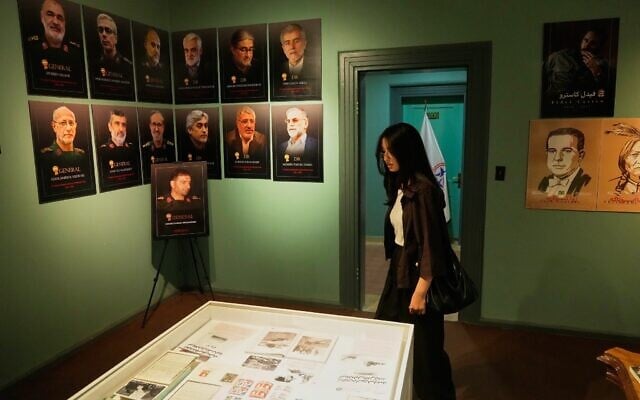
Trump also wrote in his Truth Social post that “the story that the US is paying Iran 300 million Dollars is Fake News, put out” by Democratic operatives — an apparent reference to several reports discussing a $300 billion fund for Iran’s reconstruction.
Hours earlier, one of his top aides said the US had discussed with Iran “the possibility of releasing frozen funds, sanctions relief and a big $300 billion fund to rebuild their country,” which would be tied to concessions in subsequent nuclear talks.
A Financial Times report, citing a source briefed on the talks, said the Trump administration is indeed considering a $300 billion fund, which would be created for companies keen to invest in the country, and would not come from governments.
Separately, Iran’s Islamic Revolutionary Guard Corps said Monday that under the agreement with the US, Tehran will receive $24 billion in frozen funds. But Vance said in interviews that the figure “doesn’t appear anywhere in any of the texts that we’ve talked about with the Iranians.”
CIA chief said to warn Iran won’t concede on nukes
Before the MOU was signed, senior US officials reportedly warned Trump that, according to intelligence, Iran was not willing to make the nuclear concessions Washington has demanded.
An Axios report on Tuesday, citing three sources, said CIA Director John Ratcliffe told senior government officials that Iranian officials’ private conversations were not consistent with their remarks to mediators and the US.
“The intelligence reflects that the Iranian intentions are not in line with their commitments under the deal,” a source recounted, of the upshot discussed in several high-level meetings.
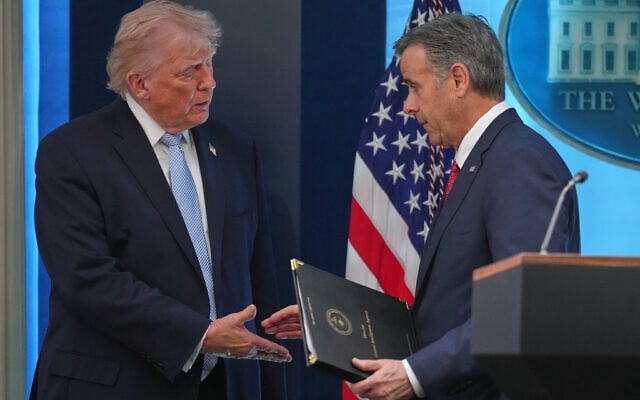
US Secretary of State Marco Rubio reportedly joined Ratcliffe in expressing skepticism, as did Defense Secretary Pete Hegseth, but Kushner and Witkoff expressed support for the agreement.
A White House official, asked for comment on the report, told Axios: “This MOU meets all of the redlines that the administration has long articulated by ensuring that Iran can never possess a nuclear weapon, they cannot keep their highly enriched uranium, and they cannot hold the world’s energy supply hostage.”
Iran has not publicly acknowledged any concessions on the nuclear issue, and has presented the MOU in domestic media as essentially an American surrender.
Vance: Removal of uranium among ‘core parts’ of deal
Speaking to NBC on Monday, Vance said that “one of the core parts of the agreement is that the [International Atomic Energy Agency] and the United States are going to help Iran destroy the highly enriched stockpile, and that’s something that’s spelled out very clearly.”
However, the vice president also said, in a separate interview, that the MOU is “about a page and a half, so it is a very general document,” adding: “On a number of issues, we are going to have to figure this stuff out during the technical negotiation phase.”
The US has demanded Iran give up enriching uranium for at least 20 years, and allow for the removal of its stockpile of an estimated 440 kilograms (970 pounds) of highly enriched uranium, which — if enriched just a bit more — could be used to build 11 or so nuclear bombs.
Iran, whose leaders frequently call for the destruction of Israel, has always maintained that its nuclear program is for peaceful purposes only, but it has enriched uranium to levels far beyond what is necessary for civilian use and has obstructed inspectors from examining its facilities.