World
US ‘taking over’ Hormuz

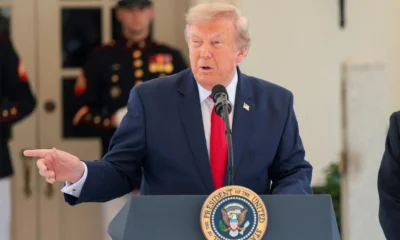
The United States is “taking over” the Strait of Hormuz and will be paid for protecting it, US President Donald Trump declared yesterday, as Washington and Tehran once again fought over the vital waterway.
Trump also said the US was reinstating its blockade of Iranian shipping in the Gulf.
Iran’s military command, however, insisted it would not allow the US to “interfere” in the key conduit for oil and gas, while also warning its Gulf neighbours — who have borne the brunt of its retaliatory attacks — against cooperating with Washington.
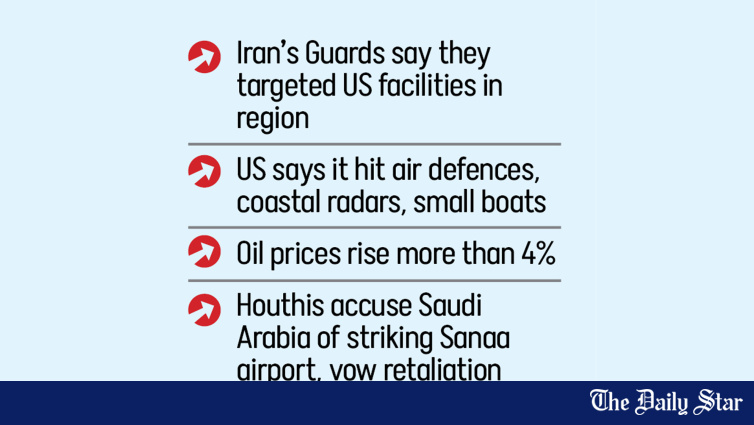
The competing claims came as the two sides traded attacks of a scale unseen since an April ceasefire. The US military said it hit dozens of targets yesterday, while Iran’s Revolutionary Guards announced new strikes in response on Bahrain, Jordan, Kuwait and Oman.
The Strait of Hormuz was not an issue before the United States and Israel began their war with Iran in February, and passage through it was free, but Tehran subsequently blocked the waterway and now sees it as essential leverage over Washington.
“The Hormuz Strait is OPEN, and will remain OPEN, with or without Iran. We are reinstating THE IRANIAN BLOCKADE,” Trump said on Truth Social.
“The U.S.A. will be, from this point forward, known as ‘THE GUARDIAN OF THE HORMUZ STRAIT’, but as such, and as a matter of FAIRNESS, will be reimbursed, at the rate of 20% on all cargo shipped.”
Earlier, in an interview with Fox, he said, “We’re taking over the Strait. They have nothing. They’ve got nothing”.
But the spokesman of Iran’s Khatam Al-Anbiya military command countered that Tehran “under no circumstances will allow… the United States to interfere in the management” of the strategic waterway.
Despite last week declaring the ceasefire with Iran over, Trump has said negotiations aimed at finding a permanent settlement would continue. He told Fox that there were hours of talks on Sunday, but accused Iranian negotiators of going back on what they had agreed.
Iran’s foreign ministry spokesman Esmaeil Baghaei said that the June memorandum of understanding that formed the basis for the negotiations was “in crisis”.
The past week’s hostilities have centred on the critical energy trade route, which Iran’s Guards say is “closed” but which the US maintains is open to maritime traffic and not controlled by Iran.
Iranian state media reported deaths in the latest US strikes, which it said targeted large areas across the south and west. Targets included air defences, coastal radar systems and small boats.
Iran’s Revolutionary Guards said they had struck US military targets and bases in Jordan, Bahrain and Kuwait, state media reported yesterday.
Air raid alerts sounded in Bahrain, while Kuwait’s army said the country’s forces were intercepting “hostile aerial targets”.
Jordan’s army said it had intercepted four Iranian missiles.
Meanwhile, the Houthi movement that controls northern Yemen accused Saudi Arabia on Monday of launching airstrikes against the international airport in Sanaa, and vowed to retaliate.