World
US strikes Iran for sixth consecutive night, as deescalation chances appear to fade

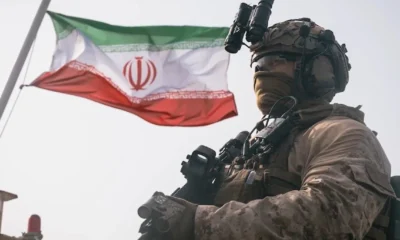
The United States struck Iran and Tehran hit back at US allies in the Gulf on Thursday, as the foes battled over the vital Strait of Hormuz in the renewed Middle East war.
The rekindled fighting came a month after the signing of a preliminary deal that aimed to end the conflict, which broke out in late February with massive US-Israeli strikes on Iran. So far Israel has not been involved in the latest escalation and Tehran has not directly targeted the Jewish state.
On Thursday, Tehran warned it would target infrastructure across the region if Donald Trump followed through on a threat to attack power plants and bridges in Iran — though the White House said the US president remained “open to diplomacy.”
Earlier, Iran’s Revolutionary Guards said they struck a US airbase in Jordan with ballistic missiles in response to what they described as an American attack near a children’s cancer hospital in the Islamic Republic.
Iranian state media said the hospital in Ahvaz, in the southwest, was evacuated following US airstrikes on the area that foreign ministry spokesman Esmaeil Baqaei slammed as “barbaric.”
Hani, a 34-year-old teacher from Ahvaz, said the strikes were “very intense,” adding: “My hands are shaking. There were at least 11 or 12 explosions. My ears are exploding.”
U.S. Air Force F-35A stealth fighter aircraft are refueled by a KC-135 Stratotanker while flying patrols over the Middle East. pic.twitter.com/KSbmYTH2LT
— U.S. Central Command (@CENTCOM) July 16, 2026
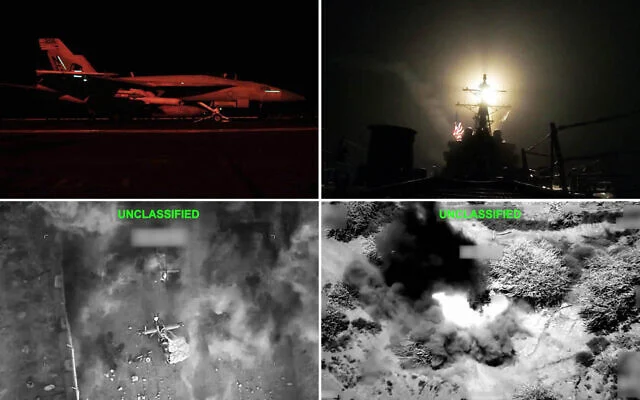
The US military’s Central Command (CENTCOM) said its forces hit military targets in multiple locations to “degrade Iran’s ability to threaten innocent mariners” in the Strait of Hormuz.
Iranian state news agency IRNA said a projectile struck parts of Semnan airport in the north, without injuring anyone. It also reported explosions elsewhere in the country, while air defenses were triggered in parts of Tehran. Other state media outlets said strikes had hid two bridges in southern Iran, after Trump’s threats to do so.
Soon after, US allies in the Gulf began responding to attacks, with Kuwait saying it intercepted Iranian drones and Bahrain sounding air raid sirens.
Iranian news agencies later reported that the United States launched new strikes around the Gulf island of Qeshm near the Strait of Hormuz, as well as on the port city of Bandar Abbas.
CENTCOM announced it was conducting a new wave of strikes on Thursday evening to “further degrade Iranian military capabilities.”
Iranian state media appeared to confirm those strikes, reporting explosions in locations across the south on Thursday night.
State TV reported two explosions in the city of Bushehr — home to Iran’s only civilian nuclear plant — in a “continuation of the American enemy aggression,” as well as a series of unattributed explosions in coastal Bandar Abbas.
The official news agency IRNA also reported “American enemy attacks on areas around Ahvaz,” where fearful residents told AFP they had heard intense strikes for a second night in a row.
A senior Iranian military spokesman later called for the US to withdraw from the region, saying “we will never back down over the Strait of Hormuz,” state TV reported.
Channel 12 news reported on Thursday that Israel is preparing for a possible further escalation in the exchange of fire between the United States and Iran next week.
According to the report, Israel believes the US may begin targeting more of Iran’s civilian infrastructure, in line with Trump’s recent comments. Until now, US strikes have been focused primarily on Iranian military infrastructure.
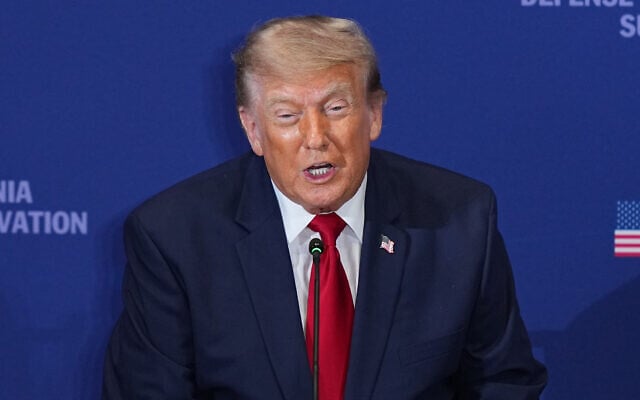
Trump told Fox News in an interview that aired Tuesday night on “Special Report with Bret Baier”: “We’re going to hit them very hard tonight. We’re going to hit them very hard tomorrow night. We’re going to hit them very hard the night after, and then next week it gets really bad for them because next week comes the power plants. Next week comes the bridges. We’re going to knock out all their power plants. We’re going to knock out all their bridges unless they get to the table and negotiate.”
He added: “I’ll save the energy targets for last, but ultimately we’ll hit energy targets.”
Channel 12 also reported, citing two Arab diplomats, that Qatar has submitted a new proposal to Washington and Tehran aimed at resuming negotiations between the two countries and reducing tensions. According to the report, Iranian officials view the proposal as relatively favorable to their position, and attacks on Qatar have reportedly ceased since the proposal was presented.
‘No reason to adhere’
The Strait of Hormuz has been at the heart of the recent fighting and is crucial to global oil and gas flows.
The strait was briefly reopened after the US-Iran deal in June, but Tehran said last week it would be closed again “until the US ends its aggression.”
The United States has also reimposed a blockade of Iran’s ports.
Pakistan’s foreign office spokesman, Tahir Andrabi, said Islamabad would “continue to encourage all sides to end violence and resume technical-level talks” under the memorandum of understanding it helped mediate last month.
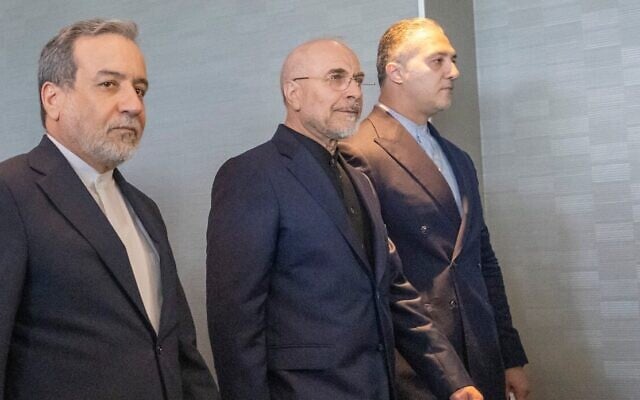
But Iran’s top negotiator Mohammad Bagher Ghalibaf has warned that a deal “only has meaning when its clauses are valid and being implemented.”
White House Press Secretary Karoline Leavitt told reporters Thursday that Trump would hold Iran “accountable” for going back on its word, “but he is always open to diplomacy at the very same time.”
“They have expressed that they still want to make a deal to the president. We’re talking to them, but again, the president is not going to allow them to fire on ships in the strait without paying a consequence for that,” she said.
Trump previously threatened to hit Iranian power plants and bridges unless Tehran returned to the negotiating table.
“Next week it gets really bad for them,” he told Fox News.
On Thursday, the spokesman for Iran’s military headquarters said that if the US followed through on its threats, “all infrastructure in the region” would be “crushed.”
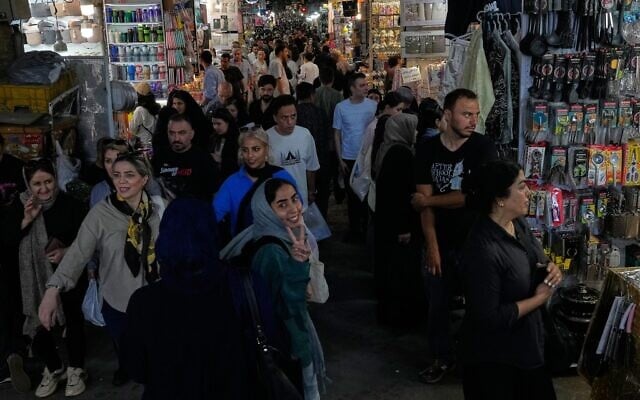
‘Gesture of goodwill’
Iran’s Guards said US forces had “used airbases located in Jordan to target” the Islamic Republic and that its aerospace force had responded by “launching two waves of missile strikes” on a base in the country.
Iran’s military separately said it targeted US facilities in Jordan with drones.
Earlier, the US military said one of its aircraft fired on and disabled an empty oil tanker that was trying to break the naval blockade of Iran’s ports.
In Iraq, Kurdish forces said the US-led coalition downed eight explosive-laden drones over Erbil, the capital of the northern Kurdistan region, where AFP journalists heard explosions and saw smoke near the US consulate.
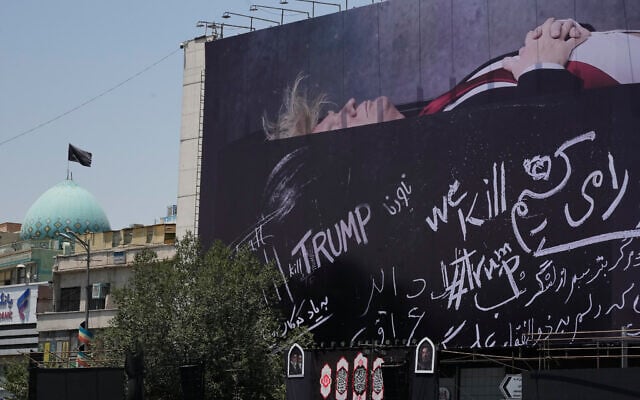
Trump said Wednesday that an American citizen — identified by her lawyer as Dena Karari — had left Iran in “good condition” after being detained there since December 2024.
He said the US appreciated “this gesture of goodwill by Iran.”
Iran’s judiciary however said Thursday that no American prisoner had been released or exchanged from its prisons, Iranian state media reported. The judiciary said checks show no convicted American prisoner, person accused of spying for the United States matching Trump’s description, or any other American detainee has been released from Iranian prisons or exchanged.
Since last week, renewed US attacks have killed at least 30 people in Iran, government spokesperson Fatemeh Mohajerani said.