World
US-led taskforce tells ships to reroute in new effort to reopen Strait of Hormuz

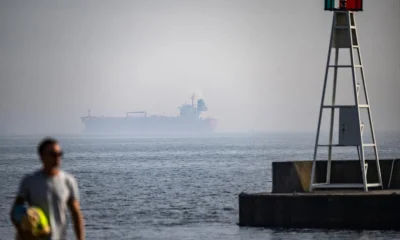
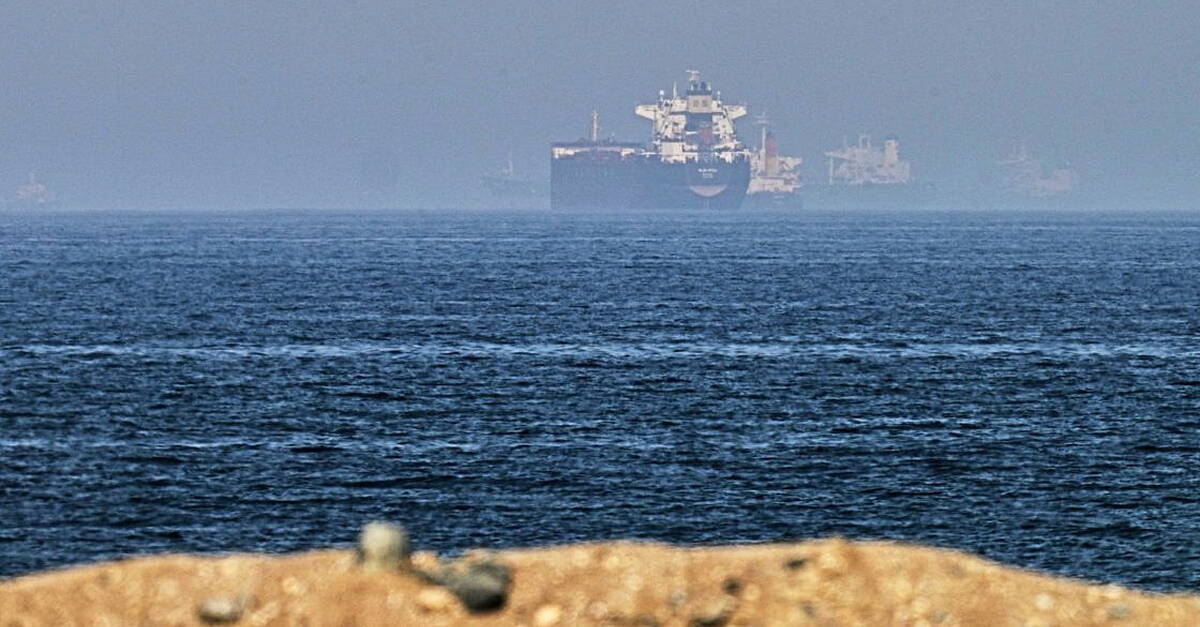
The US has launched an effort to “guide” stranded ships from the Iran-gripped Strait of Hormuz, as it tries to counter economic disruptions which have outlasted the peak of fighting with no peace deal in sight.
A day after US President Donald Trump announced what he called Project Freedom, the Joint Maritime Information Centre said the US had set up an “enhanced security area” south of typical shipping routes and urged mariners to co-ordinate closely with Omani authorities “due to anticipated high traffic volume”. The strait lies between Iranian and Omani territory.
The centre warned that passing close to the usual routes, known as the traffic separation scheme, “should be considered extremely hazardous due the presence of mines that have not been fully surveyed and mitigated”.
We warn that any foreign military force — especially the aggressive US military — that intends to approach or enter the Strait of Hormuz will be targeted
The US-led maritime taskforce’s announcement marked the start of the effort to revive traffic and restore confidence among commercial vessels passing through the strait. It risks unravelling the fragile ceasefire that has held even without progress on the issues that sparked the war.
It was unclear whether any vessels had accepted the US offer and Iran’s military officials told state broadcaster IRIB on Monday that ships must co-ordinate with them.
“We warn that any foreign military force — especially the aggressive US military — that intends to approach or enter the Strait of Hormuz will be targeted,” Major General Pilot Ali Abdollahi said.
The moves came as “unknown projectiles” struck a ship in the Strait of Hormuz, according to the British military, in a second attack in hours.
The United Kingdom Maritime Trade Operations (UKMTO) centre issued the alert, saying a tanker had been targeted off Fujairah, United Arab Emirates, at around 11.40pm on Sunday.
All crew were reported safe and no environmental impact was reported, the centre said.
Earlier on Sunday, a cargo ship travelling north near Sirik, Iran, said it had been attacked by multiple small craft, according to the UKMTO. No injuries were reported.
They were the first reported attacks in the area since April 22.
The disruption of the waterway through which roughly a fifth of the world’s oil typically passes has become one of the most enduring consequences of the war that the US and Israel launched on February 28. It has squeezed countries in Europe and Asia that depend on Persian Gulf supplies and added new volatility to energy prices for households and businesses worldwide.
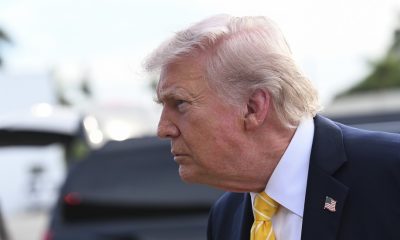
Announcing the ship shepherding effort in a social media post on Sunday, Mr Trump promised “neutral and innocent” countries “that we will guide their Ships safely out of these restricted Waterways, so that they can freely and ably get on with their business”.

US Central Command said the initiative would involve guided-missile destroyers, more than 100 aircraft and 15,000 service members.
Ships and seafarers, many on oil and gas tankers and cargo ships, have been stuck in the Persian Gulf since the war began. Crew members have described seeing intercepted drones and missiles explode over the waters as their vessels run low on drinking water, food and other supplies.
“They are victims of circumstance,” Mr Trump wrote, describing the effort as a humanitarian gesture “on behalf of the United States, Middle Eastern Countries but, in particular, the Country of Iran”.
He also sounded a warning: “If, in any way, this Humanitarian process is interfered with, that interference will, unfortunately, have to be dealt with forcefully.”
Iran’s state-run IRNA news agency called Mr Trump’s announcement part of his “delirium”. Ebrahim Azizi, head of the national security commission of Iran’s parliament, said any interference in the strait would be seen as a ceasefire violation.
Mr Trump spoke hours after Tehran said it was reviewing the US response to its latest proposal to end the war and made clear these are not nuclear negotiations. The fragile three-week ceasefire appears to be holding.