World
US launches fresh strikes on Iran as IRGC threatens to block Mideast energy exports

The United States launched a fresh wave of strikes on Iran on Wednesday afternoon after reimposing a naval blockade of Iranian ports, while Iran threatened to shut off more regional energy exports.
The strikes marked the latest escalation of attacks and counterattacks launched by the two sides as they vie for control of the Strait of Hormuz, which prior to the war saw the transit of about a fifth of global oil and gas shipments.
In a short statement, the US Central Command said it “began launching a wave of strikes” against Iran at around midday Israel time.
“The strikes are designed to further degrade military capabilities Iranian forces have used to attack commercial shipping in the Strait of Hormuz,” CENTCOM added.
Around 90 minutes later, CENTCOM said it had concluded the strikes, which it said targeted coastal defense systems and cruise missile storage and launch sites on Iran’s Greater Tunb Island.
The daylight strikes came hours after the US military concluded an hours-long overnight bombing campaign against dozens of military targets near the Strait of Hormuz and Iranian coastal areas.
Iran’s semi-official Tasnim news agency cited the Iranian military as saying at least seven personnel were killed in US strikes on a military base in Bampur overnight.
The Iranian army alleged that the strikes were intended to cause maximum casualties, with 13 missiles hitting a guesthouse, guard posts, and accommodation facilities at the base near the southeastern city of Iranshahr.
It added that a number of personnel were wounded, and promised a “decisive response” to the attack.
Including those at the barracks, more than 30 people have been killed in recent days, Iranian government spokesperson Fatemeh Mohajerani said, without elaborating.
Hossein Kermanpour, a spokesperson for the Iranian Health Ministry, said that over 260 people were wounded in overnight strikes alone — a figure far larger than for any other round of recent violence between Iran and the US. He did not say how many people were killed overnight.
Neither official differentiated between civilians and military personnel.
Iran subsequently announced that it had struck US military targets across the region, including in Bahrain, Kuwait and Jordan.
Bahrain’s military confirmed that it had intercepted aerial attacks from Iran after warning sirens sounded in the early hours in the tiny Gulf nation.
“The General Command of the Bahrain Defence Force announces that Iran continues its systematic hostile approach through its criminal attacks that target civilians,” it said in a statement, adding the military “succeeded in intercepting and destroying a number of the treacherous Iranian aerial attacks this morning.”
Jordan also said it shot down three Iranian missiles.
Footage shows an Iranian ballistic missile striking Naval Support Activity (NSA) Bahrain. pic.twitter.com/qDV0nxHC82
— OSINTWarfare (@OSINTWarfare) July 15, 2026
US Navy Adm. Brad Cooper, who leads CENTCOM, said in a statement that Iran had launched dozens of missiles and drones at neighboring Gulf Arab countries.
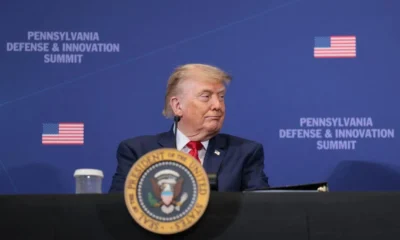
Trump told the Fox News Channel on Tuesday night that more US strikes against Iran would come over the next two days and that bridges and power plants could be targeted by next week unless negotiations resume. Already, the US has struck at least one bridge.
“You better make a deal, or you’re not going to have anything left,” Trump warned.
Iran’s Ambassador to the United Nations Amir Saeid Iravani criticized America’s attacks.
“The US is the aggressor, not the victim,” he wrote to the world body’s leader, according to the state-run IRNA news agency.
Iran threatens energy exports as oil prices rise
Also on Wednesday, Iran threatened to halt energy exports from the Middle East in response to the newly imposed US blockade of the Strait of Hormuz.
When the US and Israel launched the war on Iran on February 28, Tehran effectively closed the waterway to shipping traffic — a move that sent the price of oil, fertilizer, and many other goods soaring far beyond the region and gave Iran major leverage in negotiations.
The US first imposed a retaliatory blockade on the strait in April, and then lifted it last month after signing the interim memorandum of understanding that paused the fighting with Iran and set a 60-day period for negotiations over issues including Iran’s nuclear program.
During the interim deal, some ships began moving through the passage using a route near Oman overseen by the US military that is outside Tehran’s control.
In recent days, Iran attacked ships using that route — and back-and-forth attacks ensued, shredding the interim deal and risking the return to all-out regional war.
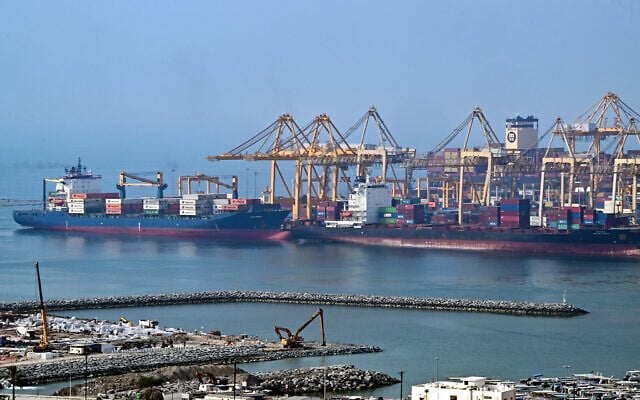
The US has threatened to reopen the strait by force — but experts say that would require a much bigger armada, if not tens of thousands of ground troops. Imposing the blockade is another way to put pressure on Iran.
Iran’s Islamic Revolutionary Guard Corps threatened on Wednesday to halt all energy exports from the Middle East in response to the renewed blockade.
“The export of oil and gas from the region will be either for everyone or for no one,” it said.
The price for Brent crude oil, the international standard, traded above $85 a barrel on Wednesday — more than 15% higher than the price before the war, but still well below the nearly $120 reached at the height of the conflict.
Emanuel Fabian contributed to this report.