World
US-Iran talks in Switzerland shunt Israel to the sidelines, but it’s not out of the fight

Sunday looked like a bleak day for Israel.
As talks opened in Burgenstock, Switzerland, on a US-Iran deal that could hardly be more high stakes for the country, Jerusalem was nowhere to be found, or heard.
Relegated to the role of armchair quarterback, Israel could only figuratively yell at the TV as its closest ally — the country that joined it in war against its arch-nemesis Iran some 100 days ago — began formally negotiating with Tehran on a permanent end to the conflict.
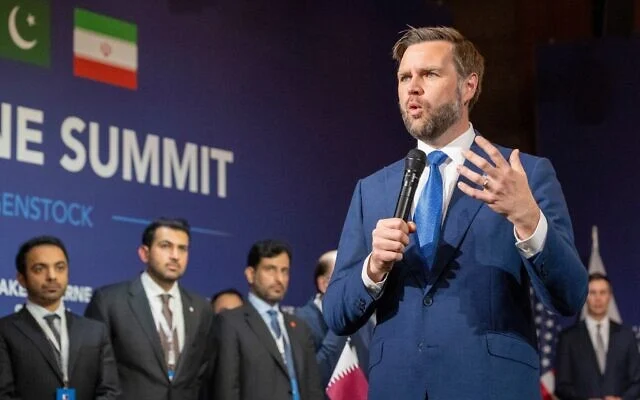
As US Vice President JD Vance arrived at the Qatari-owned resort where talks were being held Sunday morning, he was greeted by delegations from Doha, Islamabad, and Tehran, all of whom have a seat at the table.
The first item on their agenda, according to reports, was an emergency session on Israel’s conflict with the Iran-backed Hezbollah terror group in Lebanon. Of the two states and one terror proxy with skin in the game, only Hezbollah, closely controlled and funded by Iran, could be said to have anything resembling representation in the negotiations.
After two and a half years of steadily weakening Iran and its proxies, and proving itself as a powerful regional actor that could fight as an equal alongside the world’s superpower, Israel is now seeing Tehran gain influence over both Washington and the regional agenda.
The US-Iran memorandum of understanding and the talks now unfolding in Switzerland remain fresh and vulnerable to collapse. Yet even if they hold, they are unlikely to mark the end of Israel’s fight against Iran so much as the start of a new phase — one in which Israel’s next confrontation may be more solitary than it once hoped.
Strait talk
As negotiators in Switzerland prepared to discuss the future of the Israel-Hezbollah conflict, the absence of both Israel and Lebanon suggests worringly that Jerusalem had been placed in much the same category as Lebanon’s weak central government — or, more troublingly, as an American proxy much as Hezbollah is Iran’s.
While many in Israel understood that any end to the war would ultimately require American-brokered compromises, the rhetoric coming out of Washington has been strikingly unsympathetic to Israeli concerns.
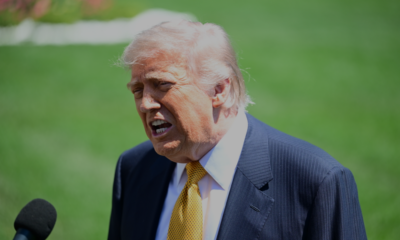
Vance, who did not mention Israel at all in his opening remarks at the negotiations, has made little effort to hide his impatience with the US’s “very small partner,” in the words of his boss US President Donald Trump.
He has dismissed concerns over the memorandum of understanding and emerging nuclear negotiations, telling reporters he found “this whole freakout in Israel a little bit odd” and a sign of unwarranted “mistrust.”
He has argued that “you can’t just kill your way out of solving every single national security problem,” urged Israeli critics to “wake up and smell the reality,” and, at a recent White House briefing, reminded Jerusalem that Trump is now among the few world leaders openly sympathetic to Israel while noting how much of its arsenal is American-made.
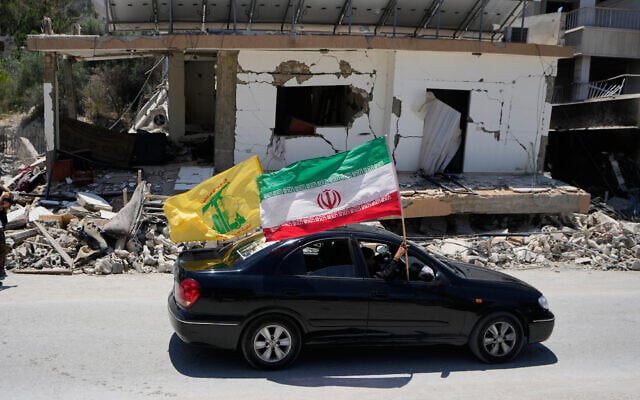
Washington’s growing willingness to pressure Israel in public has boosted the perception that Iran had arrived at these talks carrying the ultimate leverage through the Strait of Hormuz, with Israel seen as an obstacle to getting the vital waterway open.
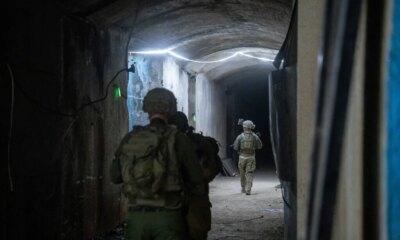
Wednesday’s MOU dictated no more fighting in Lebanon, but Hezbollah has continued attacking soldiers in the southern Lebanon security zone, prompting retaliatory strikes from Israel.
After Tehran declared the Strait of Hormuz shut again on Saturday — citing continued Israeli strikes against Hezbollah in Lebanon — the talks’ opening session was restructured around the Lebanon question rather than the nuclear file, showing Iran’s ability to use the threat of economic disruption to constrain Israeli military action.
Trump’s willingness to go along with Iran on Lebanon may pave the way to short-term gains on Hormuz. But it hardly serves US strategic interests, argued Robert Satloff, executive director of The Washington Institute for Near East Policy.
“Acceding to Iran’s demand on [Lebanon] undermines not one but two American allies — democratically elected governments in Beirut and Jerusalem — as well as the longstanding US policy of supporting direct negotiations between the parties,” he wrote on X.
“In the process, this lends wholly undeserved support to Iran’s baseless claim that its backing of a terrorist organization – Hezbollah – gives it legitimate standing to determine the fate of Lebanon,” he added.
Election tension
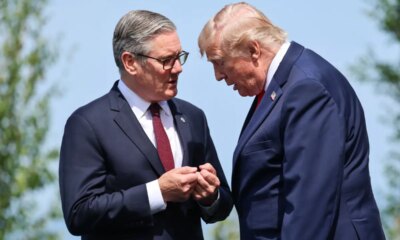
The fact that both Trump and Prime Minister Benjamin Netanyahu are facing upcoming elections only heightens the tense political standoff between Jerusalem and Washington, with both leaders seeking largely mutually exclusive goals to sell to their domestic publics.
“In order for Bibi to avoid his worst-case scenario [of losing elections], he needs to keep up a very strong position on Lebanon,” said Michael Oren, former Israeli ambassador to Washington, using Netanyahu’s nickname. “And Trump, in order to keep his position, to avoid his nightmare, he has to prevent Bibi” from doing so.
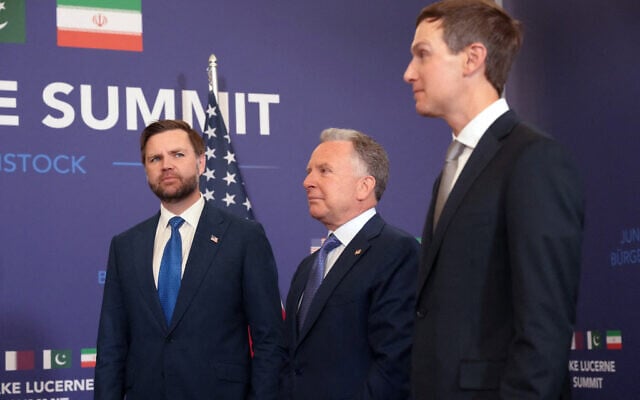
Israel has bit the bullet and accepted diktats from the US in the past, but Oren argued there was a limit to how much Jerusalem would go along with, especially regarding its defense.
“It’s never a question about what Israel can do. It’s what Israel must do. And this country cannot, cannot countenance or endure Hezbollah fire on our soldiers or our civilians,” he said. “You’ll have to strike back… this is a paramount strategic interest of the state of Israel.”
Still, Iran will likely continue to test how far its leverage over Hormuz can go in Lebanon, and it very well may test whether the same formula can shield Hamas, the Houthis and other regional proxies, or influence future policies in Gaza, the West Bank and East Jerusalem.
Too many eggs in US basket
None of this means Israel’s fight against Iran or its proxies is over.
Whatever comes out of Burgenstock will likely be framed by Trump as a victory as he tries to show he’s in control.
Netanyahu, as he largely has been up until now, will be in the uncomfortable position of deciding how loudly to object to an agreement Israel never signed.
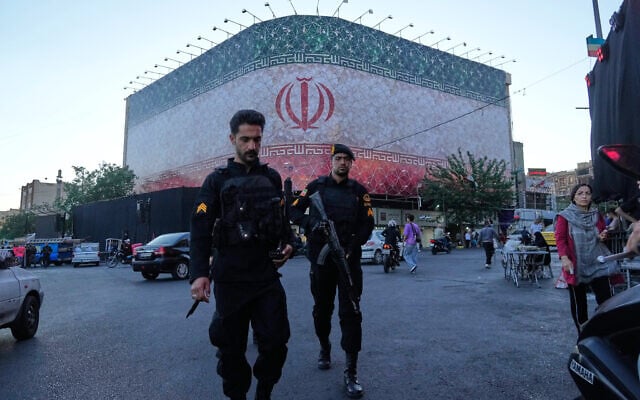
Yet Israel’s exclusion from the talks is not necessarily a liability. If Jerusalem is not formally party to any understanding reached in Switzerland, it can argue that it remains unbound by it — that its military options against Iran’s nuclear program, regional proxies and remaining infrastructure have not been negotiated away.
Washington may even have structured things this way deliberately, to give Israel a plausible distance. There is also the possibility that the public tensions between Trump and Netanyahu mask continued coordination behind the scenes, as they did in previous US-Iran nuclear talks.
But it’s just as likely, if not more so, that Trump is simply keen on finding a diplomatic off-ramp for a war that has angered Americans and driven prices up.
Yet even if negotiations advance, Israel can still realistically hope that Tehran will eventually overplay its hand and force Trump to break off the negotiations, Oren added.
There seems to be no getting around the shift in the broader strategic landscape, though.
The Gulf states have spent months watching the Hormuz crisis unfold and drawing their own conclusions about the durability of American power in the region and the US-Israel security umbrella.
That poses a challenge for the broader logic that underpinned the US-brokered Abraham Accords normalization agreements.
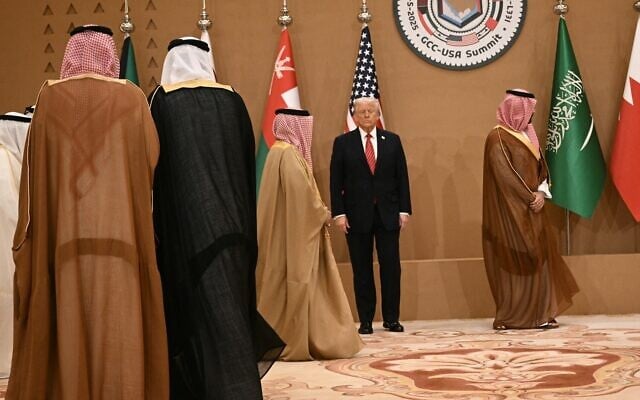
“The cement of the Abraham Accords was the belief in the staying power of American force. And that’s not happening,” Oren said, warning that “there’s a greater possibility that Gulf states will start gravitating toward Tehran now.”
Turkey, Pakistan, and Qatar are now seen as key regional mediators, and none of them is likely to push policies that benefit Israel.
None of this diminishes the importance of the US-Israel alliance. Military and intelligence ties forged during the war remain deeper than ever. But it does reinforce the need for Israel to broaden its strategic options beyond Washington.
“About 97% of our security purchases are from the United States. And that’s too many eggs in one basket… also in view of what’s happening politically in America, we have to diversify our foreign policy portfolio,” Oren said. “It is the only thing we can do.”
Washington remains an indispensable ally for Israel. Yet the conditions that made a genuine wartime partnership possible earlier this year may not return anytime soon. The fight to prevent Iran from rebuilding its nuclear and missile capabilities, rearming Hezbollah and other proxies and consolidating its regional gains could continue for years — and with less help than Israel once expected.