World
US-Iran Lebanon mechanism to include Iran, Qatar, Pakistan, excluding Israel – report

A new deconfliction mechanism for Lebanon established as part of the negotiations between the US and Iran in Switzerland over the weekend would exclude Israel and limit Israeli military action to only responding to “imminent threats,” rather than to the broader category of “emerging threats,” according to a Monday report.
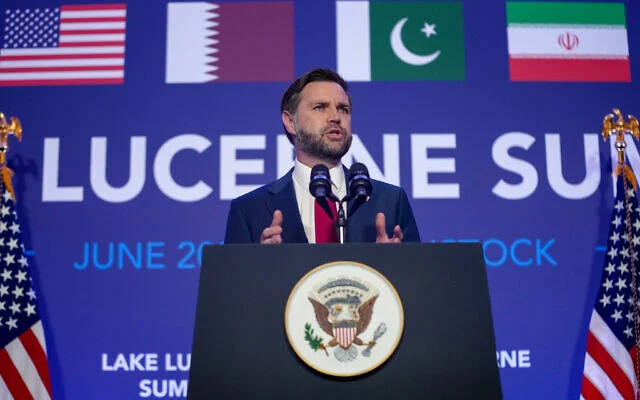
The unsourced Channel 12 report followed remarks by US Vice President JD Vance, who said that a new “deconfliction mechanism” had been established during negotiations in Burgenstock on Sunday.
He offered limited details on how it would operate, but indicated that Hezbollah would be part of the conversation between Israel, Lebanon, and “other partners in the region.”
The inclusion of Hezbollah in any talks on Lebanon’s future would go against the wishes of both Israel and the Lebanese government, which prefers to keep the terror group, and by extension its Iranian backers, out of the conversation.
Channel 12 reported on Sunday that the IDF has been urging the political leadership to ramp up negotiations with the Lebanese government to reach a deal and thereby avoid pressure from Washington to act according to Iranian demands.
Lebanese President Joseph Aoun likewise alluded on Monday to his desire to keep Hezbollah and Iran on the sidelines of any deal his country makes with Israel.
“We negotiate for ourselves, and we do not accept any other party doing so for us,” Aoun said, cautioning that although Beirut welcomes “any assistance that comes from any country to end the war,” it expects those countries to avoid “interfering in our internal affairs.”
Israel out; Iran, Pakistan, and Qatar in
Vance, in his remarks, did not address the fact that a similar mechanism was created as part of the November 2024 Israel-Lebanon ceasefire brokered by the Biden administration.
According to Channel 12, the new arrangement would mark a significant departure from the November 2024 framework. While the original monitoring mechanism included representatives from Israel, Lebanon, the United States, France, and the United Nations, the network claimed that the new oversight body would include the US, Iran, Lebanon, Qatar, and Pakistan — but not Israel.
That would appear to contradict Vance’s own public statements that Israel would be part of the conversation, and the IDF would almost certainly have to be looped in regardless.
If true, the decision to shut Israel out of the monitoring mechanism would be a continuation of the rough treatment it received during negotiations between the US and Iran, from which it was shut out entirely, despite having launched the offensive on Iran together with the US on February 28.
Both Pakistan and Qatar served as mediators during the US-Iran talks.
Netanyahu insists Israel has full freedom of action
Additionally, while the 2024 mechanism effectively gave Israel broad freedom to act in Lebanon against military threats, including those defined as “emerging threats,” the new framework reportedly only allows Israel to respond to “imminent threats.”
A US official familiar with the US-Iran talks did not deny the Channel 12 report, when asked by The Times of Israel to confirm it, but said no further details could be shared at this time.
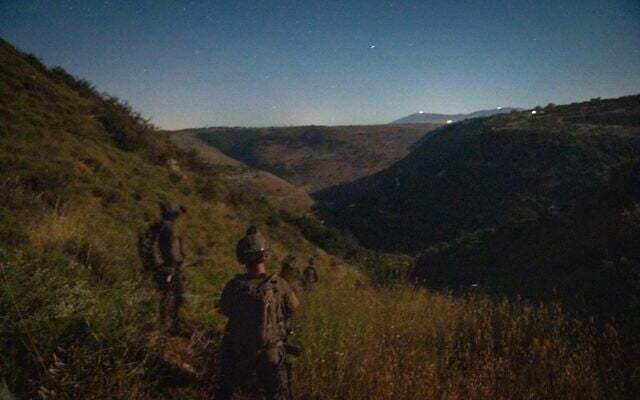
Shortly after the report aired, Prime Minister Benjamin Netanyahu issued a Hebrew-language statement stressing that Israeli troops in southern Lebanon have “full freedom of action” against both “direct or emerging threats” posed to them.
“The directive that the defense minister and I have given the IDF is clear and has not changed: Our forces in southern Lebanon have full freedom of action to thwart any direct or emerging threat against them or against residents of northern Israel. The IDF faces no restrictions in this regard,” Netanyahu said.
“I remain firmly committed to maintaining the security zone in southern Lebanon for as long as necessary in order to protect the residents of the north and all citizens of Israel,” he reiterated.
Israel and the US have publicly disagreed over the IDF’s offensive in Lebanon, and the decision to tie it to the controversial memorandum of understanding between the US and Iran.
Jerusalem has agreed to US President Donald Trump’s demand that it refrain from attacking Beirut but has kept its troops in a large buffer zone in southern Lebanon, which would appear to violate the terms of the US-Iran deal, given that the agreement states that all military operations in Lebanon must cease.
In response to the continued IDF presence in Lebanon, viewed by Iran as a violation of its agreement with the US, Tehran announced on Saturday that it was once again closing the Strait of Hormuz, although on Monday, tracking firms indicated that maritime traffic was moving through it as expected.
Times of Israel staff and AFP contributed to this report.