World
US envoys in Qatar to meet mediators, but no direct talks with Iran set for coming days

Top US envoys Steve Witkoff and Jared Kushner were in Doha on Tuesday for meetings with Qatari mediators to discuss negotiations with Iran, but Qatar and Iran said there would be no high-level meeting between Washington and Tehran on Tuesday or in the coming days, contradicting a Monday claim by US President Donald Trump.
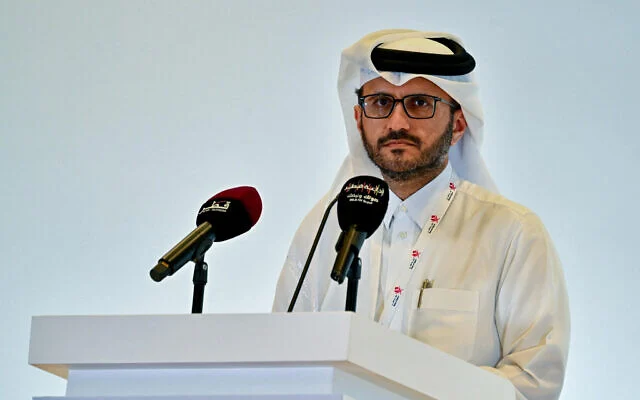
“Mr. Steve Witfoff and Mr. Jared Kushner are here in Doha to meet with mediators, with Qatari officials, and the talks will be around all regional issues… including, of course, negotiations with Iran, but also including Lebanon,” Qatari foreign ministry spokesman Majed Al Ansari said.
“They are not here for their negotiations with the Iranians,” he told a media briefing.
Ansari clarified that no high-level meetings or direct talks between the United States and Iran were planned in Doha.
“To the best of my knowledge, there are no direct meetings scheduled between the two parties in the coming days,” he said, adding that no high-level Iranian delegation was in Qatar.
Instead, there will be so-called technical talks this week on issues including regional security that could later be elevated to senior level, Ansari said, saying the technical meetings “are ongoing… and they haven’t stopped.” They include “tracks on the nuclear side… a track on the economic and state performance issue” as well as security, the spokesman said.
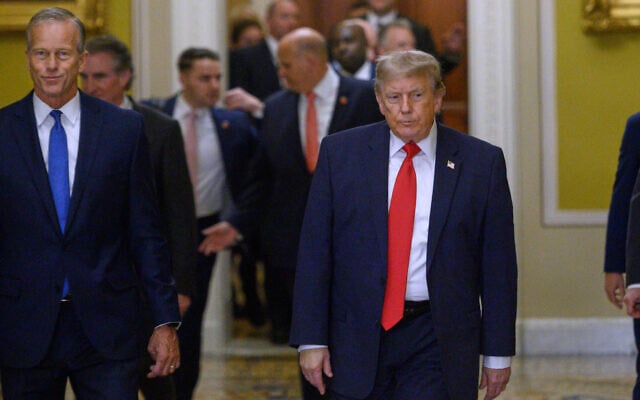
Trump had said Monday that his country’s next meeting with Iran would take place in Qatar on Tuesday.
“Iran has requested a meeting. It will take place tomorrow in Doha!” Trump said in a post on Truth Social.
The standoff follows exchanges of fire over the weekend that tested the June 17 interim accord between the United States and Iran. The 14-point pact allowed 60 days for the two sides to negotiate a permanent truce in the conflict that began with US and Israeli strikes on Iran on February 28 and to resolve thorny issues including the future of Iran’s nuclear program.
Israel had no part in negotiating the memorandum of understanding, and Prime Minister Benjamin Netanyahu has distanced himself from it. Still, the terms of the opening clause, permanently ending the war and ruling out any resumption, assert that it is binding on the US, Iran “and their allies.” Israeli officials are bitterly opposed to the deal’s terms, which resolve none of the war’s key goals — notably, eliminating Iran’s nuclear and ballistic missile programs and creating the conditions for the fall of the regime.
Both the US and Iran had said they would send officials for meetings in Qatar to discuss the MOU signed by the two sides aimed at ending the war.
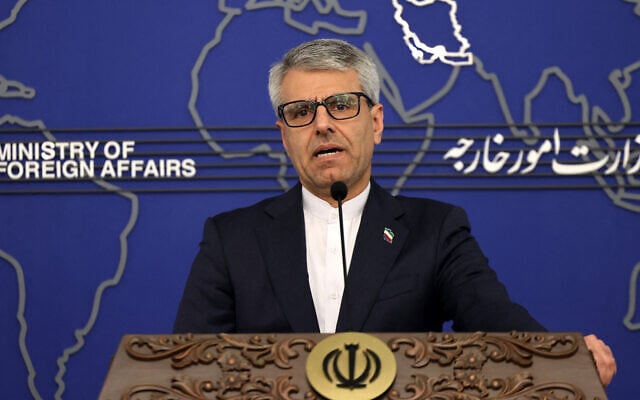
Iranian foreign ministry spokesperson Esmaeil Baghaei said dialogue with mediator Qatar on the implementation of the interim deal, including on the release of frozen Iranian assets, was likely to take place in Doha on Wednesday.
But he added that “no meeting at any level with the American side has been scheduled for the coming days.”
“We have not yet entered the stage of negotiating a final agreement,” he said.
“What will take place in Doha tomorrow is a discussion with the Qatari side about implementing parts of the memorandum of understanding, including the release of Iran’s blocked assets,” Baghaei told journalists at his own briefing.
However, that left open the possibility of messages being passed to the Qataris between the two sides.
Such indirect negotiations have happened in the past between Iran and the US. However, the two previous rounds of talks collapsed into the 12-day war Israel launched against Iran in 2025 and the recent Iran war.
Baghaei also warned that Iran would respond to any US violation of the memorandum of understanding.
“We will not leave any action unanswered. As Iran’s powerful armed forces have demonstrated, any act of aggression against the objectives of the Islamic Republic of Iran will be met with an immediate and decisive response,” he said.
“Such actions would constitute a violation of Article 1 of the memorandum of understanding. Naturally, if such violations are repeated and continue, the continuation of this process will encounter difficulties.”
Meanwhile in Iran, where the theocratic leadership survived the war but faces domestic anger over a battered economy, two members of the Revolutionary Guards were killed in what the elite force described as a “terrorist” shooting in a western province.
Separately, Politico reported Monday that Witkoff and US Secretary of State Marco Rubio had held a tense, broad briefing to congress members during which lawmakers pressed them on the nature of the sanctions relief included in the deal and the fate of Iran’s stockpile of enriched uranium.
The report, which cited unnamed participants and administration officials, said Witkoff and Rubio clarified that the goal is for the final deal to bar Tehran from keeping the uranium.
It said Democrats pressed the two on the lifting of oil sanctions, and Senate Minority Leader Chuck Schumer said in a statement that they “confirmed to me that Iran will reap billions in oil revenue while retaining dangerous leverage over the Strait of Hormuz,” urging them to say so publicly and calling the briefing “delayed, deficient, and devoid of details.”