World
US carries out fresh wave of strikes on Iran, insists Tehran doesn’t control Strait

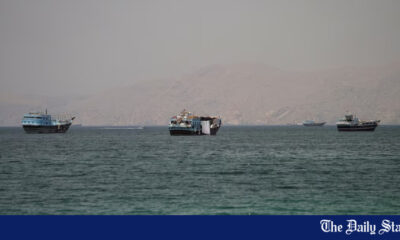
The United States launched a new wave of strikes on Iran into Monday morning, following an Iranian attack on a container ship in the Strait of Hormuz that set it ablaze and left a crew member missing over the weekend. Tehran retaliated with further strikes on countries across the region.
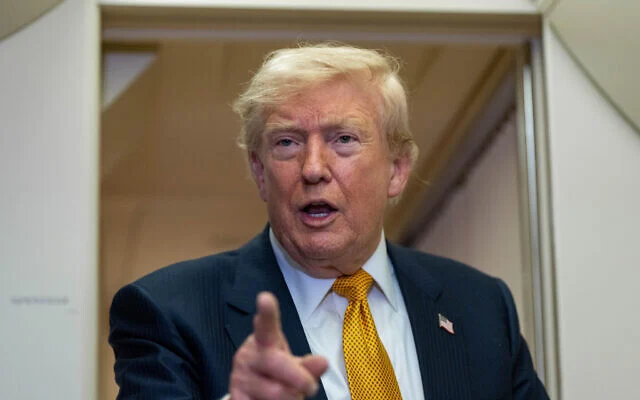
The fresh US strikes came hours after US President Donald Trump said the American military had “hit them hard,” and claimed that Iran had agreed to a diplomatic deal before it attacked a ship in the Strait of Hormuz. With rhetoric and tensions sky high, an Iranian foreign ministry statement suggested in the wake of the latest strikes that the time for diplomacy was now over.
Despite the escalation in violence, Israel still remained on the sidelines of the fighting as of early Monday morning, without joining the US strikes in Iran nor becoming a target for Tehran’s response. Israel had no part in negotiating the Iran-US memorandum of understanding, which sought to reopen the strait and launch talks as part of a deal that appears shakier than ever.
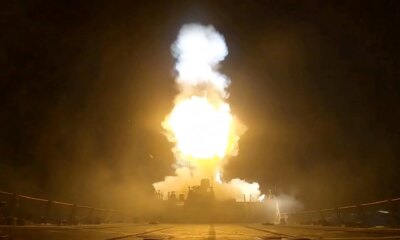
In a statement amid a third round of strikes late Sunday night and into Monday in Iran, following separate Iranian strikes on ships in Hormuz, the US military said it was seeking “to degrade” Iran’s “ability to attack commercial ships freely transiting” the strait.
Later announcing that the latest wave of strikes had ended, CENTCOM said it had used fighter jets, ships, aerial drones and naval drones to hit Iran’s air defense systems, radar sites, missile and drone equipment and small boats.
“The Strait of Hormuz is a vital maritime corridor for global trade,” US Central Command said. “Iran does not control it.” It added: “US forces are postured and prepared to ensure that freedom of navigation remains available to commercial shipping despite Iran’s continued unwarranted aggression, harassment, threats and arbitrary declarations.”
A U.S. Air Force F-35A stealth fighter jet is refueled over the Middle East. U.S. forces are constantly present and ready when called upon. pic.twitter.com/HI4iyrbQAa
— U.S. Central Command (@CENTCOM) July 12, 2026
Iranian state media acknowledged the latest attacks on its soil early Monday, describing explosions in several locations with at least one person being killed and four reported wounded at a water pumping station in the southwest city of Mahshahr. State media reported strikes targeting large areas across southern and western Iran, including Qeshm island and Bandar Abbas near the strait, and in Khuzestan province bordering Iraq.
Iran’s paramilitary Revolutionary Guard acknowledged in a statement early Monday it had begun a new round of strikes across the Middle East. Missile alert sirens sounded at dawn Monday in Bahrain, home to the US Navy’s 5th Fleet. There was no immediate word on damage.
The Strait of Hormuz, the narrow mouth of the Persian Gulf, which once saw a fifth of all oil and natural gas pass through it, has become the key issue challenging an interim deal between the US and Iran. Iran and the US are nearly at the midway point of the 60-day period of that deal, which was supposed to set up talks for a permanent end to the war. Instead, it has devolved into a series of attacks over the strait and its future, worrying world leaders the Iran war could resume.
In an interview on Sunday, Trump claimed Iran “agreed to a deal” on Saturday before striking a ship in the Strait of Hormuz with a drone.
“We had meetings with them. They agreed to a deal yesterday. A perfect deal for us. No nuclear… They gave up everything, and then… within an hour, they launched a drone at a ship,” Trump told NBC’s “Meet the Press.” It was not immediately clear what deal Trump was referring to.
“I said, ‘You people are sick, and so it’s one of those things,’” Trump added of Iran. He insisted that the Strait of Hormuz remained open — despite Iran’s claims to the contrary — and that the US “bombed the hell out of them last night.”
Iran early Monday condemned the latest wave of US attacks on its territory, saying they have “rendered futile” all the diplomatic efforts of the last few months.
“The US regime has also caused the return of insecurity in the Strait of Hormuz and disruption of international commercial shipping by openly interfering in the process of Iran implementing the necessary arrangements in the Strait of Hormuz,” a foreign ministry statement said.
The governor of Qeshm Island near the strait told Iran’s state-run IRNA news agency that projectiles were fired at military targets, with no casualties. Explosions were also heard in the coastal city of Bandar Abbas and Hajiabad city to the north.
A US official said a few strikes targeted missile and air defense systems and paramilitary Revolutionary Guard boats. The official spoke on condition of anonymity because they were not authorized to publicly discuss military operations.
The US military earlier Sunday said it hit some 140 targets, including missile and drone launch sites, ammunition dumps, communication equipment and other sites.
“A return to full-scale hostilities would have catastrophic consequences,” United Nations Secretary-General António Guterres said in a statement.
The attacks were heavier than in recent days. The US has launched three rounds of airstrikes targeting Iran in the past week over attacks on ships heading through the strait using a route off Oman, seeking to avoid the Islamic Republic’s territorial waters.
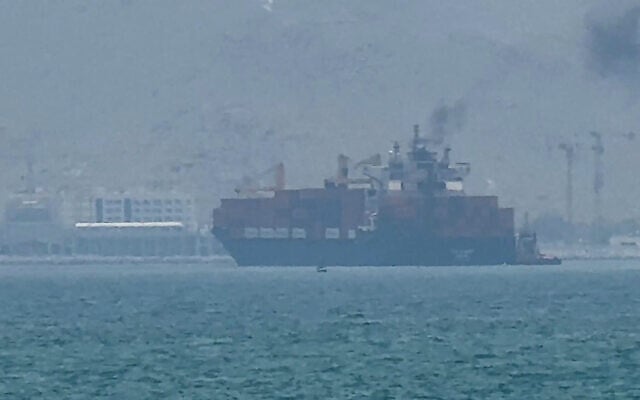
Semiofficial Iranian news agencies reported that a navy officer was killed. Iran retaliated by attacking nations in the region hosting US military forces, while insisting it alone must control the strait and potentially charge vessels for traveling through it.
“The era of one-sided deals is OVER,” Mohammad Bagher Ghalibaf, the speaker of Iran’s parliament and a main negotiator, wrote. “We told you: keep your word or pay the price. Reality is knocking.”
Iran said the strait was closed until calm is restored, and Tehran would consider targeting “additional enemy bases in the region” if it faced more attacks. The US military and Trump asserted that the strait remained open.
The US military said more than 140 ships had transited over the past week. A multinational body overseen by the US Navy said traffic continued “at reduced levels” off both Oman and Iran, and that nearly 140 vessels transited daily before the war.
The top diplomat for Pakistan, which has been mediating, called for “deescalation” on Sunday during a phone call with his Iranian counterpart, Islamabad said.
“Dialogue and diplomacy remain the only viable path to resolving disputes and achieving lasting peace,” said Foreign Minister Ishaq Dar.