World
UN deems Israel’s detention of Hamas doctor ‘arbitrary’ as health fears mount

A UN human rights body on Monday called Israel’s detention of Gazan doctor Hussam Abu Safiya, a colonel in the Hamas terror group, arbitrary and urged his immediate release, as rights groups and his lawyer warned that his life was in imminent danger.
In its finding, the UN Working Group on Arbitrary Detention said that Israel’s actions contravened multiple articles of the Universal Declaration of Human Rights as well as the International Covenant on Civil and Political Rights.
“The appropriate remedy would be to release Mr. Abu Safiya immediately and accord him an enforceable right to compensation and other reparations,” it said.
The panel also raised broader concerns, saying the case — one of several submitted to it — “may indicate a widespread or systematic practice of arbitrary detention in the country.”
The Israel Prison Service and the Israeli diplomatic mission in Geneva did not immediately respond to a request for comment. Israel did not respond to the UN working group when approached about the case last July, it said.
MENA Rights Group, which filed the complaint, said the 52‑year‑old pediatrician and director of Gaza’s Kamal Adwan Hospital has been held since December 2024. It said he has faced repeated solitary confinement, lengthy interrogations, and beatings with batons and electric shock sticks.
Abu Safiya was arrested by Israeli forces during the war against Hamas in Gaza in December 2024 and is one of the most prominent Gazan detainees. He is being held in solitary confinement, and rights groups have called for his release.
He holds the rank of colonel in the Hamas Military Medical Services, according to the service itself and Palestinian media reports. A photograph from 2016 showing him wearing a Hamas uniform and sitting next to senior members of the terror group emerged after his arrest.
Earlier on Monday, his lawyer, Nasser Odeh, said via a prisoners’ group that Abu Safiya’s health was in grave danger and that he had been subjected to daily abuse.
Video footage of him from a Supreme Court hearing last month showed him looking visibly thinner.
“If Dr. Abu Safiya dies in that cell, it will be murder, and everyone who had the power to stop it — and did nothing — will be complicit,” said Steve Cutts, CEO of charity Medical Aid for Palestinians.
The Israel Prison Service previously rejected allegations that Abu Safiya and other doctors have been mistreated in prison.
Last month, the Supreme Court rejected Abu Safiya’s appeal against his ongoing detention, ruling that he can continue to be held under Israeli law for unlawful combatants despite criminal charges not having been brought against him. The text of the decision and its reasoning have yet to be released.
The IDF has previously said that Abu Safiya was a high-ranking Hamas operative, but did not accuse him of participating in any specific acts of terror.
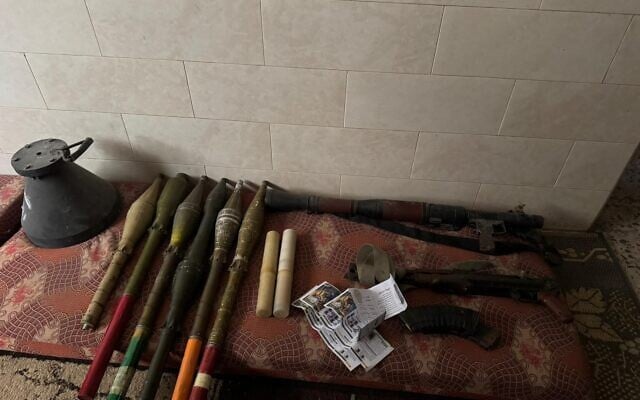
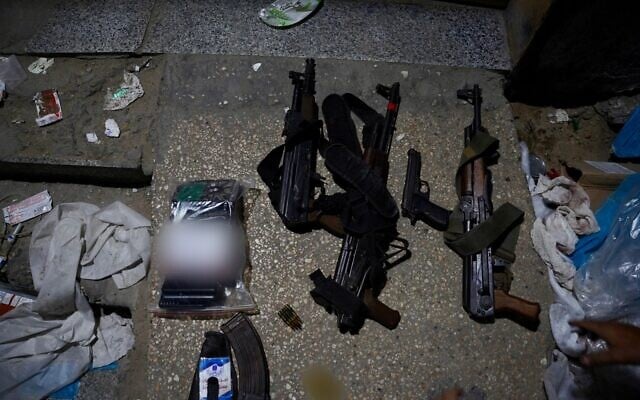
Another director of Kamal Adwan, Ahmed Kahlot, who was captured by the IDF earlier in the war, revealed in an interrogation that the MMS-affiliated hospital was turned into a military facility under Hamas’s control and that at one point it housed a kidnapped soldier.
According to Kahlot, who himself has been a lieutenant colonel in Hamas since 2010, some 16 members of the hospital’s staff – including doctors, nurses, and paramedics – are also Hamas operatives who serve in the al-Qassam Brigades.
Over 240 members of Hamas and Islamic Jihad were detained by troops at Kamal Adwan during an operation there in December 2024, according to the military.
In January 2025, the IDF released interrogation footage of a Hamas operative detained by troops at Kamal Adwan in which he said that the terror group uses the medical center as a shelter.
Anas Mohammad Faiz a-Sharif said Hamas operatives would move weapons to and from the hospital, as well as set out from the medical center at night to carry out surveillance operations and patrols.
It was unclear whether the statements were made under duress and whether they represented the stances of the other detainees.
The war was triggered by the Hamas-led October 7, 2023, invasion of southern Israel.
Abu Safiya is among at least 14 doctors from Gaza who have been detained in Israel without charge for more than a year.
His case is emblematic of “Israel’s systematic targeting of Palestinian healthcare workers, which has contributed to the collapse of Gaza’s healthcare system,” Tanya Boulakovski, research lead at MENA Rights Group, told Reuters.
In 2023, Abu Safiya was among the doctors who refused to leave the dozens of newborn infants they were treating after the Israeli military ordered them to leave.
The UN working group’s legal interpretations are non-binding but are sometimes cited as evidence in cases before international courts.
Israel currently holds over 1,300 Palestinian detainees under the terms of the law for unlawful combatants, in a practice known as “administrative detention.”
Such detainees include those arrested by the IDF and security services inside Gaza during military operations, but who have not been charged with a crime.
The measure sees individuals held without charge for up to six months at a time, under limited court review. The detentions can be renewed indefinitely, while allowing military prosecutors to keep suspects from being able to see the evidence against them.
The tool is typically used when authorities have intelligence tying a suspect to a crime but do not wish to reveal the source of the information.