




News
UK monarch urges Nigeria to take central role in Commonwealth trade network

… King Charles III seeks barrierless UK–Nigeria commerce for shared prosperity
… Monarch hails Nigeria’s global influence, diaspora impact
King Charles III on Wednesday called on Nigeria to take its “rightful place at the heart of the Commonwealth of Nations,” urging deeper collaboration with the United Kingdom to build barrierless trade connections that will drive mutual economic growth.
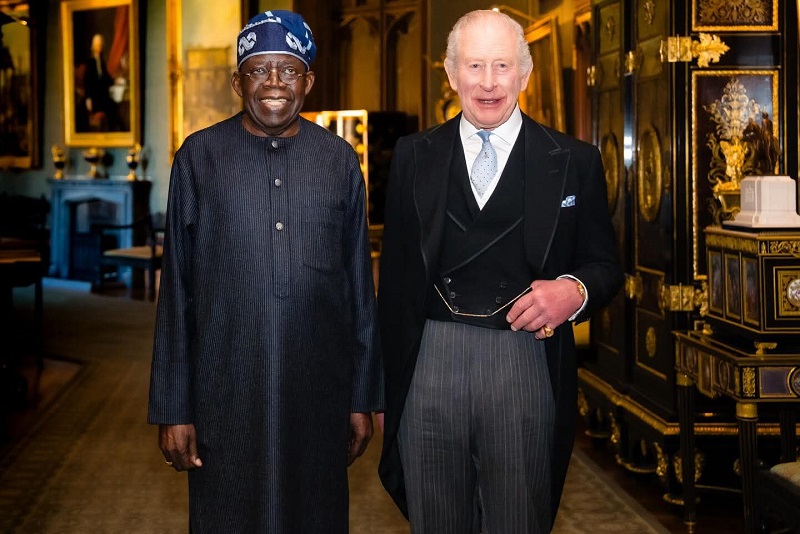
The British monarch made the call during a state banquet held at Windsor Castle in honour of President Bola Ahmed Tinubu and his wife, First Lady Oluremi Tinubu, describing Nigeria as an indispensable partner in shaping the future of the Commonwealth and global commerce.
He emphasised that strengthening intra-Commonwealth trade through harmonised standards, regulatory alignment and removal of investment barriers would unlock vast economic opportunities for both nations.
“As we look towards the Commonwealth Heads of Government Meeting this year, I hope… we can demonstrate that the Commonwealth’s time has come. In achieving that, my wife and I will gain strength from seeing Nigeria take her rightful place at the heart of the Commonwealth and standing alongside you as a friend who believes the future is best when built together”, the King said.
Highlighting the United Kingdom–Nigeria Enhanced Trade and Investment Partnership, the monarch noted that both countries are already laying the foundation for a more integrated economic future, anchored on shared systems, cultural ties and longstanding diplomatic relations.
King Charles described Nigeria as “an economic powerhouse, a cultural force and an influential diplomatic voice,” stressing that its leadership within the Commonwealth carries both responsibility and opportunity in a rapidly changing global environment.
He pointed out that Nigeria’s large and youthful population, over 230 million people, with half under the age of 18, positions the country as a critical driver of innovation, enterprise and solutions to global challenges.
The monarch also underscored the deepening economic ties between both nations, noting that Nigerian businesses are increasingly investing in the UK, with leading banks establishing operations in London and top companies listing on the London Stock Exchange.
According to him, UK Export Finance is supporting investments in Nigeria’s ports, while partnerships between British and Nigerian technology firms continue to expand.
Providing further insight into bilateral economic exchanges, King Charles revealed that Nigerian visitors spent £178 million in the UK in 2024, while about 251,000 Britons travelled to Nigeria, spending a comparable amount.
“In January this year, Nigeria became the United Kingdom’s biggest export market in Africa,” he said, adding that the longstanding reputation of British goods in Nigeria is now complemented by a growing Nigerian imprint on UK commerce and culture.
Beyond trade, the King paid glowing tribute to Nigerians in the diaspora, describing them as a “living bridge” of over half a million people whose contributions have enriched British society across sectors including business, healthcare, academia, sports and the creative industries.
From Afrobeats music dominating global charts to Nollywood films gaining international recognition, he noted that Nigerian culture has become deeply embedded in British life.
“We are blessed that so many people of Nigerian heritage… are now at the heart of British life,” he said, recalling his interactions with young Nigerians who have excelled through initiatives such as the King’s Trust.
Reflecting on his visits to Nigeria, including a 2018 trip where he engaged with traditional rulers such as the Sultan of Sokoto, the Ooni of Ife, and the Emir of Kano, the monarch said Nigeria’s transformation has been remarkable.
“Nigeria hasn’t merely changed. It has arrived,” he declared.
While acknowledging that historical ties between both countries are not without painful chapters, King Charles stressed the importance of learning from the past to build a future anchored on hope, cooperation and shared prosperity.
“I do not seek to offer words that dissolve the past… but I do believe that history is a lesson in how we go forward together,” he said.
The monarch also highlighted ongoing collaboration in security and humanitarian support, including assistance to Nigeria’s Quick Reaction Forces and interventions in northern Nigeria to address food security and community protection challenges.
Earlier, King Charles and President Tinubu met with Christian and Muslim leaders in the UK, an engagement he described as symbolic of Nigeria’s long-standing example of religious coexistence and harmony.
Invoking African proverbs to underscore his message, the King stressed the importance of unity and adaptation in a changing world, noting that both nations must “learn new dance steps together” to remain competitive globally.
As he concluded his remarks, the monarch extended goodwill to Muslims observing Ramadan and wished Nigerians a joyous Eid-el-Fitr in advance.
He then raised a toast to Nigeria and its people, ending on a note of admiration: “Naija no dey carry last.”