World
UK defense secretary resigns, pans Starmer as not spending enough to keep country safe

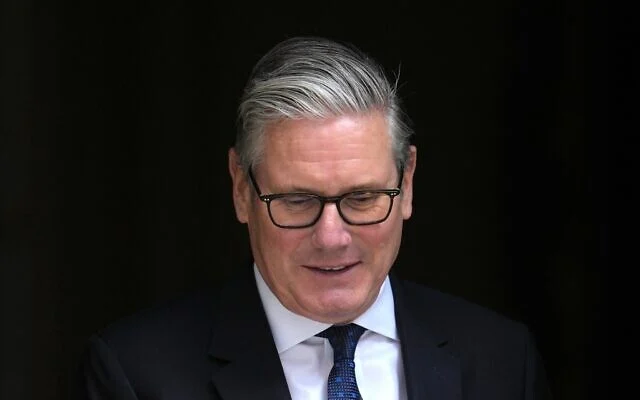
LONDON (AP) — UK Defense Secretary John Healey unexpectedly quit on Thursday, saying the British government is unwilling to spend enough on the military at a time of “rising threats.” The resignation dealt another blow to embattled Prime Minister Keir Starmer, who is already facing demands from Labour colleagues to step down.
Healey told Starmer in a letter that the government’s Defense Investment Plan falls “well short of what is required at this dangerous time.”
Publication of the plan has been delayed amid reports of disagreement between the Defense Ministry and the Treasury.
Starmer said in a letter to Healey that he was sorry to see him go, but insisted that the funding plan would provide the necessary military resources to keep the United Kingdom safe.
“The increases in spending that underpin this plan will be sustainable and fair,” Starmer said. “They will mean significant reallocations of funding from across government departments and the right choices to protect our nation.”
Starmer has pledged to boost UK defense spending to 2.5 percent of gross domestic product by 2027 and 3% by 2035. But many in the military say that isn’t fast enough.
The United Kingdom and other NATO member nations have faced pressure from US President Donald Trump to increase military spending. Trump has also criticized Starmer for not being more involved in the US-Israeli war with Iran. He has long questioned the value of the NATO military alliance and complained that the United States provides security to European countries that don’t pull their weight.
Healey wrote in his resignation letter that the spending plan put forward by the Treasury, and presented to him on Monday, would see defense spending rise to just 2.68% in 2030, after hitting 2.6% next year.
“You have been unable, and the Treasury has been unwilling, to commit the resources that the nation needs to defend the country at this time of rising threats,” he wrote.
Healey said that the increase isn’t enough with growing demands on defense and British military commitments, citing the Iran war, Russia’s invasion of Ukraine and threats from Moscow.
“I am now left with no other option than to submit my resignation,” he said.
Gen. Richard Barrons, who helped lead a defense review that underpins the investment plan, said the government is “actively going backwards” by refusing to fund its own review.
“It diminishes the UK’s standing within NATO, weakens our credibility with allies, and increases our vulnerability to the realities of 21st-century conflict,” he said. “Allies and adversaries alike will be paying attention.”
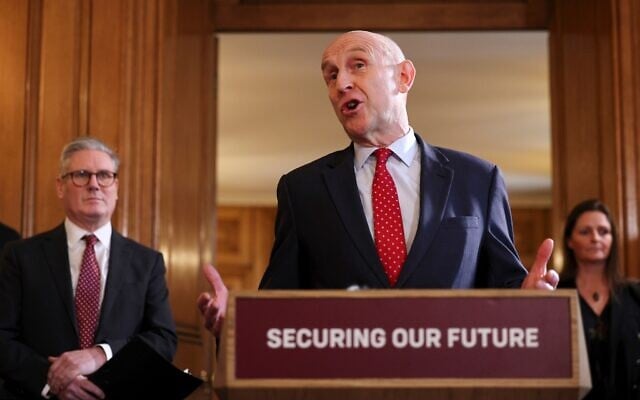
The government said that it was delivering “the largest sustained boost to defense spending since the Cold War.”
“This country is safer because of the decisions Keir Starmer has made and we will continue to act in our national interest,” it said in a statement.
Healey considered a safe pair of hands
Healey has been UK defense secretary since the Labour Party government was elected in July 2024, and he’s regarded as a capable and serious minister.
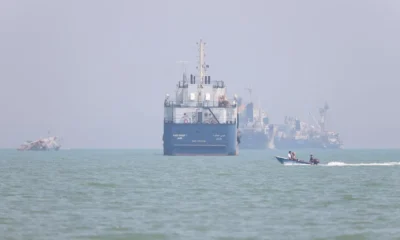
He has played a key role in bolstering international support for Ukraine and assembling a multinational coalition to help guarantee security if a ceasefire is reached. Healey also has helped spearhead a maritime security force that would help keep the Strait of Hormuz open to shipping if the Iran war ends.
The UK military is also seeking to reverse years of decline in the face of an increasingly assertive Russia, which fully invaded its neighbor Ukraine on February 24, 2022, and increasingly tests the defenses of European nations with overt and covert activity.
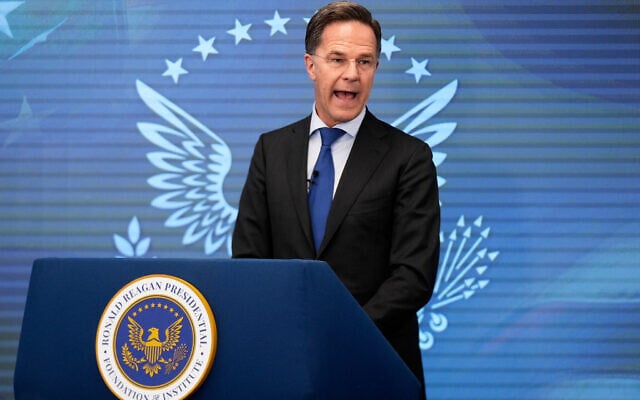
NATO Secretary-General Mark Rutte, informed of Healey’s resignation by The Associated Press during a news conference in Brussels, said that Healey is someone “I respect very much.”
“What we are seeing all over the alliance is countries increasing their defense investments, and of course it is not easy, because in the end there is always a trade-off with other expenses, which are also important,” Rutte said.
Healey’s resignation is likely to further stoke talk that Starmer’s days as prime minister are numbered. Already bruised by a series of missteps since Labour returned to power less than two years ago, Starmer has faced calls within his party’s ranks to stand down.
In a sign of his waning authority, Starmer appears to have been unable to bridge the gap between Healey’s department and Treasury chief Rachel Reeves over defense spending.
Olivia O’Sullivan, head of the UK in the World program at the Chatham House think tank, said the resignation “significantly undermines Starmer,” especially since the prime minister has had “a relatively assured track record on defense and foreign affairs.”
Greater Manchester Mayor Andy Burnham is widely expected to challenge Starmer for the leadership if he returns to Parliament in a June 18 special election.
Justin Crump, a former British tank commander who heads security consultancy Sibylline, said that Healey’s resignation “should not have been allowed to occur in a well-run government.”
“It just further underlines a lack of control here, a lack of clarity, a lack of resolution, a gap between words and delivery,” he said.