World
Trump’s Lebanon deal puts Iran agreement to the test with ‘wild card’ Hezbollah: US official

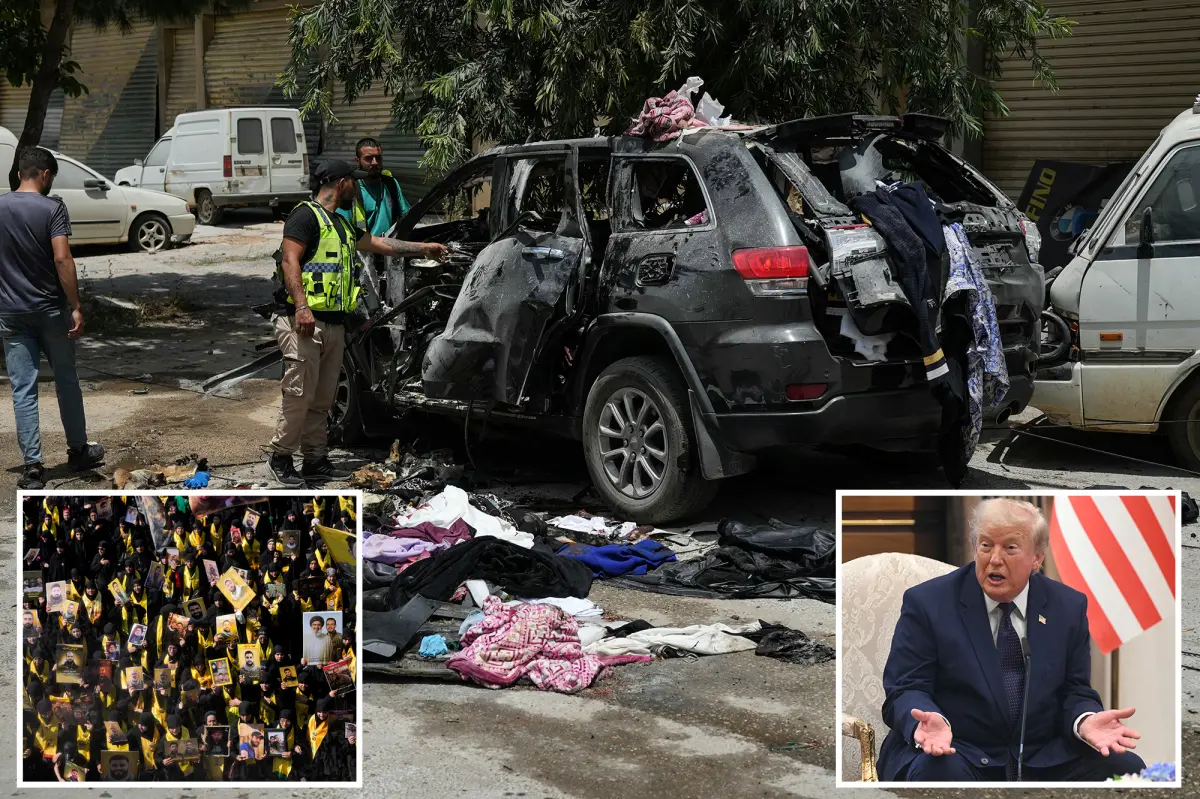
The Trump administration’s new Israel-Lebanon deal isn’t separate from its landmark memorandum of understanding with Iran — it’s the first major test of whether the agreement can prevent another regional war that could again drag the US back into conflict, a US government official told The Post.
The deal allows Israel Defense Forces to remain in southern Lebanon until Hezbollah is disarmed and the Lebanese Armed Forces can manage the terror group’s threat to both countries — a provision the official said reinforces Beirut’s sovereignty, as envisioned in the MOU.
“The Trump Administration is working to achieve a sovereign Lebanon that isn’t being threatened internally by Hezbollah, and Hezbollah cannot use southern Lebanon to pose a threat to neighbors,” the official said.
The big test now is whether the LAF can achieve “the disarmament of Hezbollah and dismantlement of the terrorist infrastructure in a way that is conducive to long-term stability,” the person said.
The arrangement has quickly become an early flashpoint between Washington and Tehran, boiling down to one question: Does “Lebanese sovereignty” mean Israel must leave immediately — as Iran argues — or does it mean Lebanon’s desire to crack down on Hezbollah is respected and supported, as the US contends.
Iran — Hezbollah’s chief backer — rejects the latter interpretation, with Foreign Minister Abbas Araghchi arguing last month that the Israel-Lebanon agreement itself violates the US-Iran MOU.
“Without the withdrawal of Israeli forces from the territories they occupied during this war, the war has not fully come to an end,” he said.
While the document calls for “ensuring the territorial integrity and sovereignty of Lebanon” — which the US official claimed was accomplished with the agreement — Iran considers the language about “sovereignty” to mean Israel leaves the country immediately.
The US believes the agreement reflects the decisions of two sovereign governments — Israel and Lebanon — rather than terms imposed by Tehran, making Iran’s objections a challenge to the very Lebanese sovereignty the MOU seeks to protect.
The disagreement isn’t just semantic. If Iran pressures Hezbollah to reject the arrangement and step up strikes on Israel, it threatens to derail the fragile ceasefire — potentially drawing the US back into war.
The agreement called for the Lebanese Armed Forces to gradually take over the fight against Hezbollah in two southern Lebanon “pilot zones” where the IDF is currently targeting the terrorist group.
The official said Lebanese officials and members of the LAF are eager to find a path forward, but acknowledged the challenge of confronting a group as deeply embedded in Lebanon’s institutions as Hezbollah.
“Nobody is under any illusion that it’s going to be easy because of how deeply Hezbollah is integrated into some of the country’s institutions,” the official said.
Everything hinges on whether Lebanon’s army can do something it has largely failed to do for decades: disarm Hezbollah without the Israeli military stepping in.
Originally predicted to start late last month, the launch of the pilot zones was postponed as Israel and Lebanon developed joint monitoring mechanisms to verify the LAF’s control over the zones and prevent Hezbollah from re-entering the area, according to Israeli state media.
The pilot zones will test more than just the military’s ability to keep Hezbollah from returning.
The test will explore not only if the LAF “is capable of keeping Hezbollah out and from reconstituting,” but also whether the Lebanese government can offer “not only security to the residents of southern Lebanon, but actually being able to provide a quality of life right through investment, rebuilding of infrastructure, etc.”
The official said ensuring the Lebanese takeover succeeds is more important than speeding through the implementation process.
“An artificial timeline for withdrawal that doesn’t actually address the core issues will almost certainly allow Hezbollah to reconstitute in the South,” the official said.
“The goal is for Israel and Lebanon to work collaboratively through this process, so that they as sovereign countries control the outcome as opposed to empowering Iran to dictate the terms,” the person added.
The official acknowledged that Hezbollah remains the biggest unknown. If the Iranian-backed terror group chooses to fight instead of standing down, months of diplomacy could unravel, and the region could once again find itself on the brink of a wider conflict.
“How Hezbollah reacts is a wild card,” the official said.