Society
Trump, Xi send strong message to Iran over Strait of Hormuz

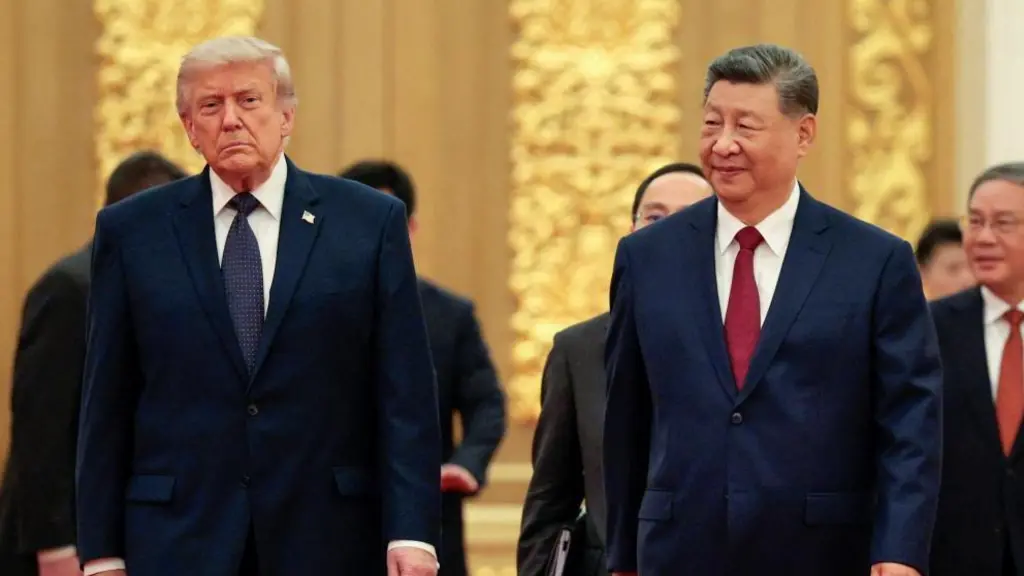
U.S. President Donald Trump and Chinese President Xi Jinping have reached a rare point of agreement over the increasingly volatile Strait of Hormuz, declaring that the strategic waterway “must remain open” amid rising tensions involving Iran and growing fears over global energy supplies.
The agreement emerged during high-level talks between both leaders in Beijing on Thursday, with the White House confirming that Washington and Beijing jointly opposed any attempt to militarise the vital shipping route or impose tolls on vessels passing through it.
The Strait of Hormuz, located between Iran and Oman, remains one of the world’s most critical oil transit chokepoints, with nearly a fifth of global crude oil shipments passing through the narrow waterway daily.
The region has witnessed months of instability following the escalation of the Iran conflict earlier this year, triggering attacks on vessels, soaring oil prices and fears of wider economic disruption.
According to the White House readout of the Trump-Xi summit, both leaders agreed that uninterrupted access through the Strait was essential to protect the “free flow of global energy.”
They also reiterated a shared position that Iran must never acquire nuclear weapons.
The discussions come at a time when global oil markets remain on edge due to persistent disruptions in the Gulf region.
Oil prices have hovered above $100 per barrel amid uncertainty over the security of shipping routes and fears that any prolonged closure of Hormuz could trigger a major global energy crisis.
Reports indicate that China, which depends heavily on Middle Eastern oil imports, pushed strongly for stability in the waterway.
Beijing reportedly opposed any form of toll collection or restrictions on international shipping through the strait.
In a further sign of shifting regional dynamics, Iran recently allowed some Chinese-linked vessels to pass through the Strait after diplomatic engagement between Tehran and Beijing.
A Chinese supertanker carrying nearly two million barrels of Iraqi crude reportedly crossed the route after being stranded for more than two months.
Analysts believe the Trump-Xi understanding on Hormuz reflects growing international pressure on Iran to ease restrictions around the waterway and avoid actions capable of destabilising global energy markets.
Despite the agreement, tensions remain high across the Gulf. Reports of fresh attacks on ships near Hormuz surfaced shortly after the Trump-Xi meeting, underlining the fragile security situation in the region.
The talks also touched on broader geopolitical and economic issues, including trade relations, energy cooperation and China’s possible increase in imports of American crude oil as Beijing seeks to reduce its dependence on Gulf transit routes.