World
Trump weighed return to full war against Iran, but prefers diplomatic efforts – report

US President Donald Trump has in recent days considered options for a return to full-scale war in Iran, but has decided to instead focus on diplomatic efforts, the Wall Street Journal reported.
Trump has additionally told aides that it would not be a problem if a nuclear deal is not reached by the 60-day August 18 deadline, the newspaper said.
According to the late Tuesday report, which cited US officials, Trump held talks in recent days with Defense Secretary Pete Hegseth and Chair of the Joint Chiefs of Staff Gen. Dan Caine on whether the US should quit negotiations for a deal and instead carry out strikes.
Unnamed individuals described fresh attacks on the Iranian regime to the Journal as potentially “finishing the job.”
However, the US president reportedly appears disinclined to take military action beyond occasional strikes in response to Iranian violations of the understandings between the sides, as he fears a renewed military conflict could harm the prospects of an eventual diplomatic solution and the dismantling of the Islamic Republic’s nuclear program.
The Journal suggested that the discussions on a potential return to war signaled that Trump was becoming frustrated with the deadlock in the talks, but said that the president indicated a willingness to let the negotiations extend past the 60-day deadline on August 18.
Additionally, an unnamed White House official told the outlet that the deconfliction channel Washington and Tehran agreed to set up, including representatives from Iran’s Islamic Revolutionary Guard Corps and the US Army’s Central Command, has already been used by both sides.
The US has designated the IRGC as a Foreign Terrorist Organization.
The issues between the sides came into sharp relief on Tuesday when top US envoys Steve Witkoff and Jared Kushner were in Doha for meetings with Qatari mediators to discuss negotiations with Iran, but Qatar and Iran said there would be no high-level meeting between Washington and Tehran, contradicting a Monday claim by Trump.
Meanwhile, Iran’s chief negotiator Mohammad Bagher Ghalibaf said Tuesday that Iran was prioritizing diplomacy with the United States, but remained ready for war.
“We are pursuing dialogue, but if the dialogue is not implemented, we are also prepared for war and will respond accordingly,” he said in an interview on Iranian state television.
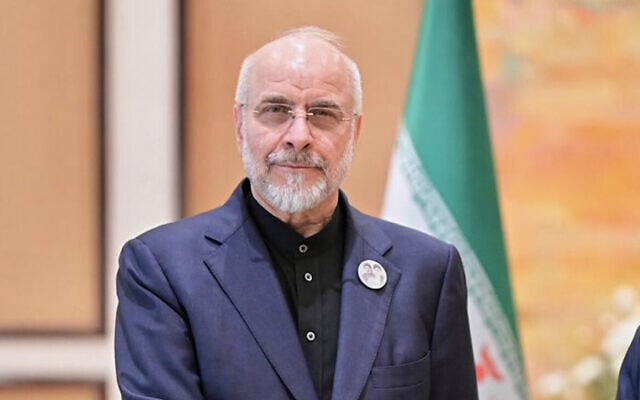
Ghalibaf said that while Iran was unable to export any oil during the US blockade on its ports, exports have since surged.
“From the day the blockade was lifted until today, we have exported more than 40 million barrels of oil,” he said. “By contrast, during the previous 50 to nearly 60 days, we were genuinely unable to export even a single barrel of oil.”
“The sovereignty of the Strait of Hormuz lies with Iran and Oman, and traffic in the strait is subject to arrangements determined by Iran,” he said.
US Vice President JD Vance also discussed the key waterway in an interview released Tuesday, claiming that Iran would be prevented from levying tolls on ships passing through it.
“This is not going to end in a place where the Iranians are collecting tolls on ships going through the Strait of Hormuz,” Vance said.

The developments indicated the two sides are far apart on key pillars of the initial framework, which calls for Iran to lift its chokehold on the Strait of Hormuz in exchange for financial incentives, and sets up 60 days of negotiations to work out a permanent deal.
Iranian officials say they have a right to manage traffic on the waterway along with US ally Oman, which lies on the other side of the strategic waterway, and will impose tolls in mid-August when the 60-day period expires.
The June 17 interim accord between the United States and Iran has been tested by recent exchanges of fire between the sides. The 14-point pact allowed 60 days for the two sides to negotiate a permanent truce in the conflict that began with US and Israeli strikes on Iran on February 28 and to resolve thorny issues including the future of Iran’s nuclear program.
Israel had no part in negotiating the memorandum of understanding, and Prime Minister Benjamin Netanyahu has distanced himself from it. Still, the terms of the opening clause, permanently ending the war and ruling out any resumption, assert that it is binding on the US, Iran “and their allies.” Israeli officials are bitterly opposed to the deal’s terms, which resolve none of the war’s key goals — notably, eliminating Iran’s nuclear and ballistic missile programs and creating the conditions for the collapse of the regime.