World
Trump Warns Taiwan On Independence Push After Closed-Door Talks With Xi

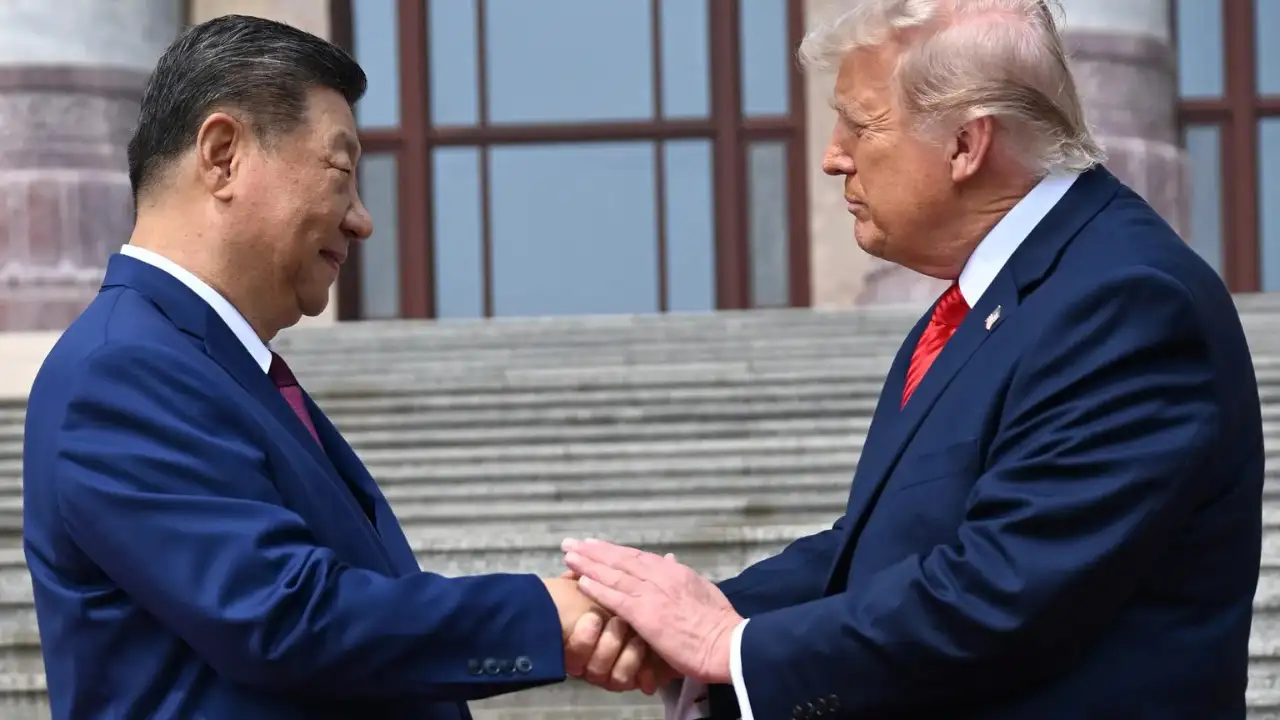
US President Donald Trump has warned Taiwan against formally declaring independence from China during his recent summit with Chinese President Xi Jinping in Beijing. “I’m not looking to have somebody go independent,” Trump told Fox News on Friday after the two-day meeting with Xi.
Taiwanese President Lai Ching-te has earlier said Taiwan does not need to formally declare independence because it already considers itself a sovereign country.
Also Read: Trump Hails Meeting With Xi, Then Mentions Taiwan
The United States has long supported Taiwan and is legally required to help it defend itself. At the same time, Washington also maintains diplomatic ties with China under the “One China” policy.
Earlier, Trump said he had “made no commitment either way” on Taiwan. China claims Taiwan as part of its territory and has not ruled out using force to take control of the island.
The US officially says it does not support Taiwanese independence. Its relationship with Beijing is based on recognising that there is only one Chinese government.
China has repeatedly criticised Taiwan’s President Lai, calling him a “troublemaker” and a “destroyer of cross-strait peace”.
Many people in Taiwan see themselves as belonging to a separate nation. However, most support maintaining the current status quo, where Taiwan neither formally declares independence nor unites with China.
In the Fox News interview, Trump said US policy on Taiwan had not changed.
“You know, we’re supposed to travel 9,500 miles (15,289km) to fight a war. I’m not looking for that. I want them to cool down. I want China to cool down,” he said.
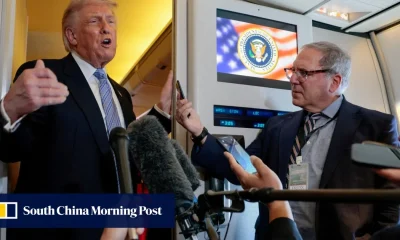
While returning to Washington, Trump told reporters that he and Xi had discussed Taiwan “a lot”, but he avoided saying whether the US would defend the island in the event of a conflict.
Trump said Xi “feels very strongly” about Taiwan and “doesn’t want to see a movement for independence”.
According to Chinese state media, Xi told Trump during the talks: “The Taiwan question is the most important issue in China-US relations.” He added, “If mishandled, the two nations could collide or even come into conflict.”
When asked whether he expected a conflict with China over Taiwan, Trump replied: “No, I don’t think so. I think we’ll be fine. [Xi] doesn’t want to see a war.”
China has increased military drills around Taiwan in recent years, raising tensions in the region.
Last year, the Trump administration announced an $11 billion weapons package for Taiwan, including advanced rocket launchers and missiles. China strongly criticised the move.
Trump said he would soon decide whether the sale would go ahead and added that he and Xi had discussed the matter “in great detail”.
He also said: “I’m going to say I have to speak to the person that right now is, you know, you know who he is, that’s running Taiwan.”
The US does not have formal diplomatic relations with Taiwan, though it maintains strong unofficial ties. American presidents usually avoid speaking directly with Taiwan’s leader because China views such contact as support for separatism.
Trump further said: “We’re not looking to have wars, and if you kept it the way it is, I think China’s going to be OK with that. But we’re not looking to have somebody say, ‘Let’s go independent because the United States is backing us.’”
Earlier this year, the US State Department removed a line from its website that repeated Washington’s opposition to Taiwanese independence. China criticised the move, saying it “sends a wrong… signal to separatist forces”.
US officials in Taiwan later clarified: “We have long stated that we oppose any unilateral changes to the status quo from either side.”
Taiwan’s Foreign Minister Lin Chia-lung said Taipei had been closely monitoring the US-China summit and remained in close contact with the US and other countries “to ensure the stable deepening of Taiwan-US relations and safeguard Taiwan’s interests”.
Lin added that Taiwan had always been a “guardian of peace and stability” in the region and accused China of increasing tensions through “aggressive military actions and authoritarian oppression”.