World
Trump says Iran ceasefire on ‘massive life support’ after rejecting Tehran’s response

WASHINGTON – The ceasefire between the US and Iran reached a particularly precarious moment on May 11 as President Donald Trump said the agreement was on “massive life support” after he rejected Tehran’s latest peace offer.
Speaking to reporters on May 11 in the Oval Office, Mr Trump called Iran’s response to his proposal a “piece of garbage” and that he “didn’t even finish reading it.”
Iran responded to last week’s US peace proposal by demanding a lifting of Washington’s naval blockade and sanctions relief, while maintaining a degree of control over traffic through Hormuz, according to a person familiar with the matter, who asked not to be identified discussing sensitive information.
Mr Trump didn’t indicate whether the US would resume military attacks on Iran as he previously has threatened if the Islamic Republic’s leadership didn’t agree to his terms. Mr Trump said earlier on May 11 that he’s looking at reviving a plan to escort ships through the vital Strait of Hormuz.
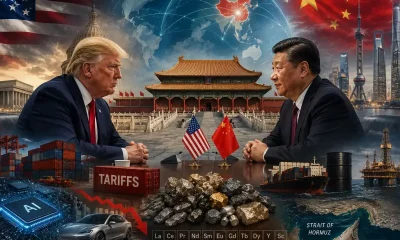
The developments marked the latest failure by Mr Trump to engineer a resolution to the 10-week war, which touched off a global energy crisis and continues to pose grave domestic political risks for him and his Republican party. The conflict also has strained relations with China, whose president, Xi Jinping, and Mr Trump are slated to meet in Beijing later this week.
Tehran has also insisted that any agreement result in an immediate end to fighting, including in Lebanon, where Israel is waging a parallel war against militant group Hezbollah, the person said. The conflict has killed thousands of people across the Middle East and upended oil and gas markets.
The impasse means Hormuz remains largely blocked, with Iran and other Persian Gulf countries unable to export energy supplies through the waterway – a conduit for a fifth of the world’s oil and liquefied natural gas before the war.
The US Navy faces millions of dollars of extra costs each time it sends one of its destroyers through the waterway, in a fraught voyage that requires added surveillance measures and support from fighter jets and helicopters. The total for repeatedly escorting commercial shipping in and out of the Gulf would add billions to the price of a conflict.
Fox also cited Mr Trump as saying Iran’s leaders are going to surrender and that they are leaving it up to the US to transport uranium stockpiles out of the Islamic Republic. There’s been no public indication during the war to date that Tehran is about to back down.
Iran has deployed its Ghadir-class midget submarines in the Persian Gulf to act as an “invisible guardian” of Hormuz, the semi-official Tasnim news agency reported.
The home-grown model, capable of firing anti-ship cruise missiles, will add to concerns among shipowners about transiting the chokepoint.
A tanker loaded with LNG from Qatar appeared to have turned back from the strait on May 11. Still, some vessels managed to get through, including a Qatari ship.
The reputation of the strait as a reliable artery for global energy trade may be permanently damaged by its prolonged closure, International Energy Agency Executive Director Fatih Birol said.
Even if movement is restored, “the vase has been broken. You can’t glue it back together,” he said. “If it was once closed, it can be closed again.”
Global oil markets are losing 100 million barrels every week Hormuz is shut, Saudi Aramco’s Chief Executive Officer Amin Nasser said. The world’s largest oil company warned over the weekend it would take several months for the market to return to normal even if Hormuz reopened immediately.
Failed attempts to reach a basic framework for further discussions between Washington and Tehran jeopardise the prospects for successful negotiations over future curbs on Iran’s nuclear programme – a key aim of the US-Israeli military campaign.
Iran offered to transfer some of its stockpile of highly enriched uranium to a third country, while rejecting the idea of dismantling its nuclear facilities, the Wall Street Journal reported on May 10. Tasnim disputed the report, and the person familiar with the discussions said Tehran’s counter-proposal didn’t mention the nuclear programme.
Iran’s other demands include the release of its frozen assets and the lifting of US sanctions on its oil sales, the person said. Iran’s state-run IRIB News described Mr Trump’s plan, conveyed last week, as tantamount to surrender and said the US must also pay war damages.
Mr Trump had proposed that Iran permit shipping to pass through Hormuz while Washington ends its blockade of Iranian ports, with month-long nuclear talks to follow.
Oil rose on May 11, with global benchmark Brent gaining 2.2 per cent to trade above US$103 a barrel. Higher oil prices weighed on bonds, with the 10-year Treasury yield climbing three basis points to 4.39 per cent.
The conflict with Iran will be on Mr Trump’s agenda when he meets Mr Xi later this week. Revenue that China provides to Iran as well as potential weapons exports would be among the topics discussed at the summit, according to a US official who briefed reporters on a conference call over the weekend. They spoke on condition of anonymity because of the sensitive nature of the preparations.
The US has sanctioned multiple Chinese firms for purchasing Iranian oil or providing satellite imagery to the Islamic Republic, as the Trump administration comes under increasing pressure to address the unfolding energy crisis.
There were intermittent attacks on shipping and states around the Persian Gulf over the weekend.
A drone strike briefly set a cargo vessel ablaze on May 10 in Qatari territorial waters, the country said. The vessel, which came from Abu Dhabi, continued to Mesaieed Port in Qatar after the fire was extinguished. The United Arab Emirates and Kuwait also reported aerial attacks.
Foreign ministers of Iran and Saudi Arabia held a phone call on May 11 to discuss the talks between Tehran and Washington, according to Telegram post by Iranian Foreign Minister Abbas Araghchi.
More than 40 nations will meet on May 11 to outline their military contributions to a European-led mission to escort ships through Hormuz once a stable ceasefire is in place.
The countries are expected to offer demining, escorting and air-policing capabilities as part of a defensive naval mission led by the UK and France that’s designed to reassure commercial ships that it will be safe to pass through the waterway. BLOOMBERG