World
Trump said leaning toward expanding military offensive against Iran, which he warns ‘better behave’

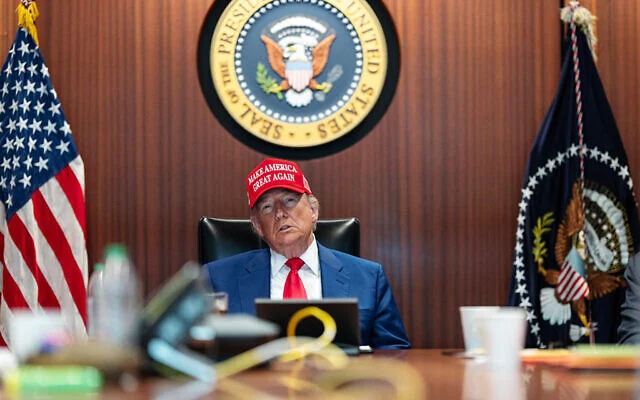
US President Trump is leaning toward further expanding US military operations in Iran, according to reports Wednesday, after huddling with top aides in the White House Situation Room the previous night to discuss potentially launching a major offensive against Iran in the coming days.
The attacks under consideration would be wider in scope than the recent US strikes around the Strait of Hormuz, with military officials having presented a series of options against strategic targets inside Iran that Washington has not previously attacked, the Axios news site reported, citing three sources with knowledge.
The Wall Street Journal reported that those options intensified airstrikes, deploying ground troops to seize Iranian islands near the Strait of Hormuz or bombing the Pickaxe Mountain nuclear site, the latter of which he has publicly mused about doing in recent days.
But some US officials quoted by the newspaper said Trump was reluctant to deploy ground troops after walking back previous threats to seize Kharg Island.
Both reports stressed Trump has yet to make a final decision on the matter, with Axios saying he was expected to seriously consider military options if there was no diplomatic breakthrough with Tehran in the coming days.
Among the officials who reportedly attended the Situation Room deliberations were US Vice President JD Vance, Defense Secretary Pete Hegseth, Secretary of State Marco Rubio, Chairman of the Joint Chiefs of Staff Dan Caine, CIA Director John Ratcliffe, and special envoy Steve Witkoff.
In the hours before the meeting, Trump told Fox News that the US may strike bridges and power stations next week, adding that he would “save the energy targets for last,” but would “ultimately” hit them.
Asked Wednesday by reporters whether he had given Iran a deadline to respond before the US starts bombing bridges in the country, Trump said, “I don’t like giving deadlines, but they pretty much know the story.”
“They better behave,” he added.
Speaking at a roundtable event at the Pennsylvania Defense and Innovation Summit, Trump also claimed the Iranians want to “settle so badly.”
“They don’t like what we’re doing, and they do want to settle. We’ll find out whether or not we settle with them, or we just finish it off,” Trump said.
He separately asserted to Fox News that “We received a call [from the Iranians] just as I was coming here, and they want to meet.” There was no corroboration of Trump’s claim, which came a day after he said his negotiators were in touch with their Iranian counterparts regularly, including the past hour.
Asked if he has decided to wipe out the leadership of Iran’s Islamic Revolutionary Guard Corps, Trump responded that he had, before appearing to backtrack.
“They’re nasty people, but they want to make a deal,” he said.
His remarks came as Iran continued to strike a defiant tone, hanging a massive poster in Tehran depicting Trump in a coffin, following calls to assassinate the American leader during the recent funeral of supreme leader ayatollah Ali Khamenei.
“We are in an essential and existential war with America,” said Parliament Speaker Mohammad Bagher Ghalifbaf, who is serving as Iran’s top negotiator in talks with the US.
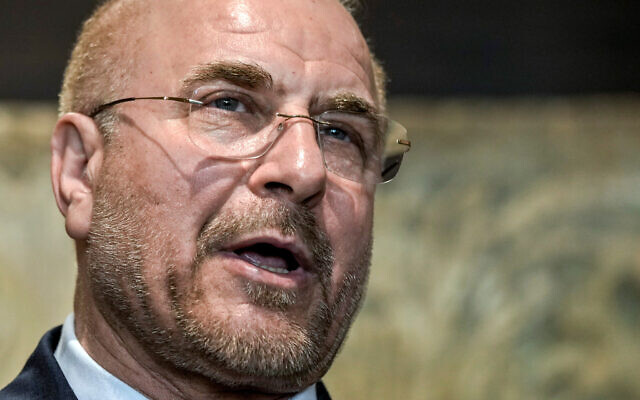
Ghalibaf, said that if the Islamic Republic did not benefit from the 14-point memorandum of understanding the sides signed in June, “we have no reason to adhere to such an understanding.”
Iran’s national security depends on maintaining “Iranian arrangements” in the Strait of Hormuz, Ghalibaf added in a statement posted on Telegram.
Iran’s military spokesperson meanwhile warned the only way to reopen the Strait of Hormuz was for the US to comply with the MOU and the implementation of “Iranian regulations” regarding ship traffic in the strait.
Trump says Iran released wrongfully detained US citizen
Nearly a month after Washington and Tehran signed a memorandum of understanding aimed at ending the Middle East war, the two foes have resumed fighting across the region. At the heart of the renewed hostilities is the Strait of Hormuz, a waterway crucial to global oil and gas flows.
Iran blockaded Hormuz after the war erupted with US-Israeli strikes on February 28, using the waterway for leverage against its foes for months.
The strait was briefly reopened after the US-Iran deal last month, before Tehran vowed last week it would be closed again “until the US ends its aggression.”
The US military in response reimposed a blockade of Iran’s ports and on Wednesday said one of its aircraft fired on and disabled an empty oil tanker that was trying to break the naval quarantine.
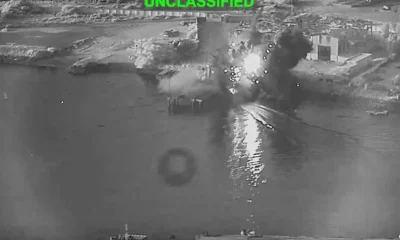
Central Command said the Curacao-flagged M/T Belma was stopped after the aircraft fired Hellfire missiles into the ship’s smokestack. “The ship is no longer transiting to Iran,” it said on X.
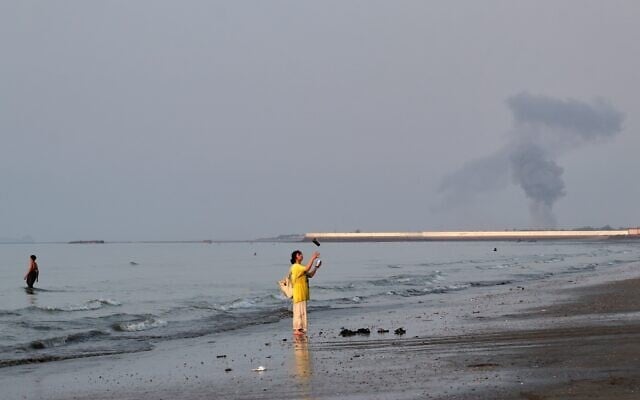
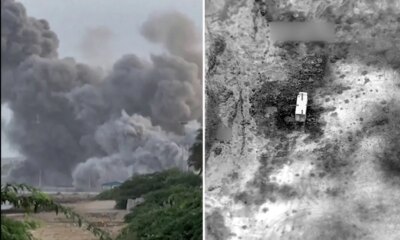
CENTCOM earlier Wednesday evening announced the launch of another wave of strikes targeting Iranian military capabilities used to threaten vessels freely transiting Hormuz. Iranian state media reported explosions in several cities, including Bandar Abbas, Rask and Chabahar. Earlier reports also cited blasts around southern sites including Qeshm and Bandar Imam Khomeini, while state media later said fresh US strikes hit Bushehr, home to Iran’s only civilian nuclear plant.
The Islamic Revolutionary Guard Corps said on Wednesday it had struck US military targets in the region, including in Jordan, Bahrain and Kuwait, with the latter two reporting fresh Iranian attacks early Thursday.
There was no immediate word on damage or casualties from the Iranian strikes.
Even amid the hostilities, there was a possible sign of goodwill. Trump said Iran had allowed an American who was “wrongfully detained” under the Biden administration in 2024 to leave the country.
“The United States of America appreciates this gesture of Goodwill by Iran,” Trump wrote on Truth Social.
Human rights attorney Jared Genser identified the released American as Dena Karari, who had been prevented from leaving Iran since December 2024.
“Dena is now safe and traveling back to the United States,” Genser wrote on X, thanking Trump for his efforts to free her.