World
Trump: MOU with Iran ‘not final,’ we’ll go ‘back to dropping bombs’ if talks fail

US President Donald Trump on Wednesday said that the memorandum of understanding digitally signed this week with Iran is “not final,” warning that Washington would resume military strikes against Iran if “they don’t behave” and adding that a deal to reopen the Strait of Hormuz was unavoidable.
Referring to the preliminary agreement with Tehran expected to be physically signed in Switzerland on Friday, Trump reiterated that “it’s not final – it’s a memorandum of understanding,” and that Washington’s military threat remains in place.
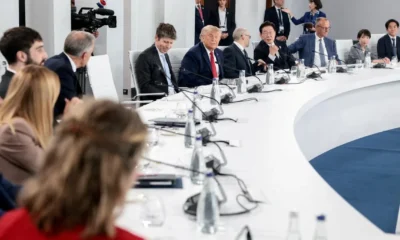
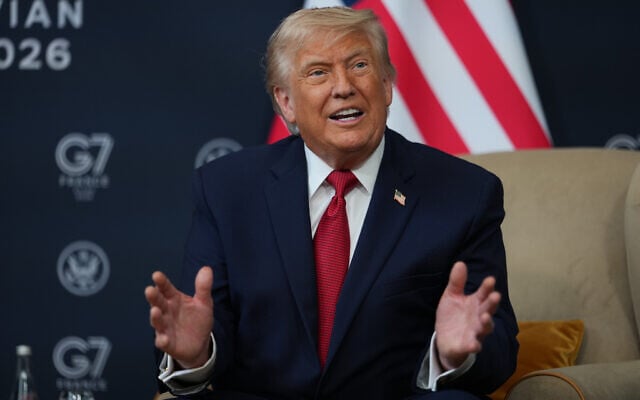
“It’s a memorandum of understanding. If I don’t like it, if they don’t behave, we’ll go right back to dropping bombs right smack in the middle of their head, okay? Because they’ve misbehaved for 47 years,” he warned, speaking alongside Egyptian President Abdel-Fattah el-Sissi at the G7 summit in France.
The agreement is “a great deal for a lot of reasons,” he said, “but number one by far — 99.9 percent of it — is that they will never have a nuclear weapon.”
“It’s a very strong deal. Nobody knows what it is, but it’s very strong, and most people seem to be very happy,” he added, without specifying which people he was referring to.
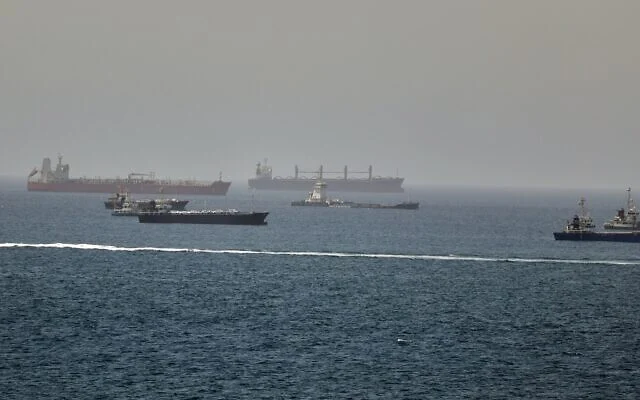
“The Strait [of Hormuz] is going to be opening. It’s already partially opened. It’s going to be opening up soon in full over the next day or two,” Trump said.
Despite Washington’s blockade of Iranian ports and earlier threats to use force to reopen the vital shipping lane, Trump suggested a negotiated arrangement on Hormuz was unavoidable: “The alternative would be a worldwide depression.”
“You know, the stupid people want to have a worldwide depression, and they’re stupid people. So you can only go so far,” he said. “You drive somebody into the ground, and a lot of bad things happen… the Strait would never open, because they don’t like floating billion-dollar ships up and down a strait when there are rockets flying over them and mines all over the place… It wouldn’t be open for a long time.”
Trump also denied recent reports that a final deal with Iran would include a $300 billion fund for investment and reconstruction in the country.
“That’s false,” Trump said in response to a reporter’s request to confirm the reports. The reporter noted that the fund would reportedly be funded by Gulf allies, though the Financial Times reported that it would be created for companies eager to invest in the country and not for governments.
“People can invest if they want. I mean, what am I going to do — say nobody’s ever allowed to invest? We’re not investing. We’re not putting up ten cents. People can decide to do that, but that’s up to them… We do not have a fund,” Trump continued.
When asked by the reporter to clarify if he is asking Gulf countries to fund such an initiative, Trump replied, “No, I’m not,” adding that such support would likely not come soon and would depend on Iran’s behavior.
“If they do it, fine, but I would say they won’t be doing it for a while until they find out the behavior [of Iran]. It’s a behavior thing,” he said.
He added that he will discuss the Iran deal more at a press conference at 4 p.m. local French time (5 p.m. Israel time).
MOU leaks say Iran can sell oil immediately
While the text of the MOU between the US and Iran has not yet been published, leaked copies of the deal suggested that Iran will immediately take steps to reopen the Strait of Hormuz and will be allowed to sell its oil without restrictions.
While the leak was not verified, officials said it broadly matches the document that the two sides agreed on earlier in the week.
The US agreement to immediately allow Iran to sell its oil freely and the offer to eventually lift all sanctions represent major concessions that outstrip the terms of Iran’s 2015 nuclear deal with world powers, which Trump unilaterally withdrew America from in his first term, declaring it the “worst deal ever.” This new accord likely will draw intense criticism in Washington — and appears to be a major setback for Israeli Prime Minister Benjamin Netanyahu, who launched the war along with Trump on February 28.
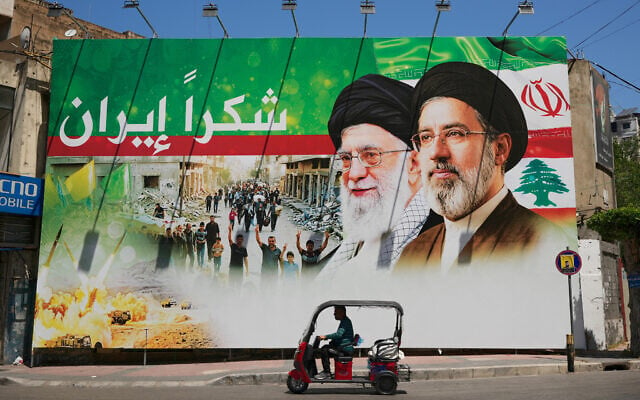
The deal also calls for an immediate end to all fighting in Lebanon between Israel and the Iranian-backed militia Hezbollah. That is one of the most delicate parts of the agreement because Israel has maintained it will continue to defend itself against the terror group — which has been raining missile fire on northern Israel since the war against Iran started — including by occupying swaths of southern Lebanon. Iran has said Israel must withdraw under the deal, although the leaked versions make no mention of withdrawal.
The two sides are to start 60 days of negotiations over a final deal that the Trump administration insists will prevent Iran from ever developing a nuclear weapon. The US offers appear aimed at enticing Iran to strike an agreement.
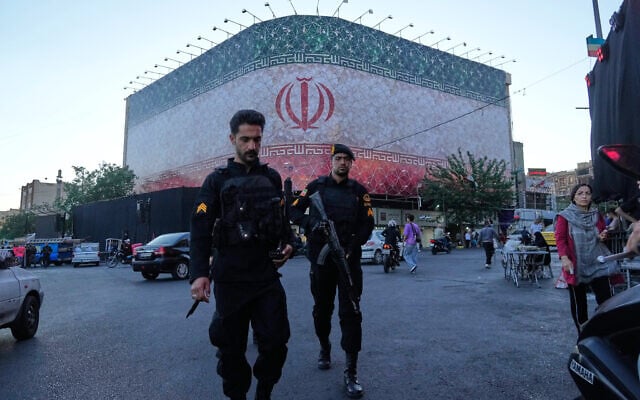
But in the meantime, Iran appears to be getting benefits up front while making few concessions. Much of the agreement would restore the status quo before the war, including ending hostilities and reopening the strait, which is a crucial passage for the world’s oil and natural gas and whose closure created a historic energy crisis.
Other concessions to Iran — some of which are extraordinary, including the money for rebuilding, the full lifting of sanctions and the release of frozen assets — appear dependent on the progress of further negotiations on Iran’s nuclear program.
A person who was briefed on the memorandum of understanding after it was signed and another who viewed a copy beforehand said it largely matched the text of what was published by the Saudi-owned broadcaster Al Arabiya, which reported details of the deal Tuesday. The two people spoke on condition of anonymity because of the sensitivity of the discussions.
Another two officials in the Mideast, who spoke on condition of anonymity for the same reason, also said the versions published by Al Arabiya and Bloomberg broadly matched the final agreement.
The White House and other American officials have not published the terms and did not immediately respond to questions. Iran also has not published an official version of the deal. Iran’s semiofficial Tasnim news agency, close to its paramilitary Islamic Revolutionary Guard Corps, claimed Wednesday that Bloomberg’s version had missing portions, without offering a full accounting.
The deal provides global economic relief, major concessions to Iran
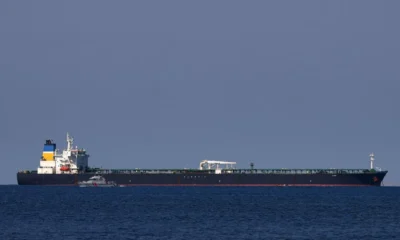
The deal provides a major relief for the global economy — the reopening of the Strait of Hormuz, the narrow mouth of the Persian Gulf through which a fifth of all oil and natural gas traded once passed before the war began. Since then, Iranian attacks on shipping and the threat to vessels effectively shut the strait.
The strait’s closure drove up energy prices around the world and made many basics, including food, more expensive. Iran let out some vessels that paid tolls, something never done before in the strait, which sits in the territorial waters of Iran and Oman and long has been considered an international waterway. The US later provided military support to get other tankers out, but traffic through the strait was nowhere near levels before the war.
The deal calls for the US to lift a blockade imposed on Iranian ports and for the strait to return to its prewar traffic levels in 30 days, while acknowledging Iranian mines may still be in its waters and would need to be destroyed. While the deal says that the eventual lifting of sanctions on Iran will depend on future negotiations, the US will immediately issue waivers on Iranian oil sales.
Granting oil waivers directly at the start of the 60-day talks strips the US of a major point of leverage over Iran. In the years before the 2015 nuclear deal, Iranian oil faced international sanctions limiting its sales. Only at the conclusion of the overall deal in 2015 were those sanctions lifted.
The interim deal also opens the door to ending all sanctions Iran faces from the US and at the UN — though it says the schedule for that will be worked out later. Still, that is far beyond the 2015 deal, which only lifted some sanctions in exchange for Iran drastically reducing its enrichment and stockpile of uranium.
Leaves much to be resolved
The interim deal sets a 60-day window, which can be extended, to negotiate over limiting Iran’s nuclear program, which has been discussed at multiple rounds of talks during Trump’s second administration without success. Iran maintains its nuclear program is peaceful, though it has enough highly enriched uranium to build multiple atomic bombs, should it choose to do so, according to the International Atomic Energy Agency.
In the interim deal, Iran reiterates that it will never produce nuclear weapons — a promise that it also made in the 2015 nuclear accord. Iranian diplomats have long pointed to statements from the late ayatollah Ali Khamenei that Iran wouldn’t build an atomic bomb. It remains unclear whether Khamenei’s son, Iran’s new Supreme Leader Ayatollah Mojtaba Khamenei, will follow that or not.
Trump has cited shifting goals for the war, including at times vowing it would end Iran’s nuclear and missile programs and its support for Hezbollah and other proxy groups in the region. He also suggested it could lead to toppling the Iranian government.
The interim deal falls short of all of these goals. The negotiations also exposed a rift between Netanyahu and Trump, the Israeli leader’s closest and most important ally, just as Netanyahu is seeking reelection. Netanyahu has come under heavy domestic criticism over the emerging deal but will be hard pressed to go against Trump, given Israel’s heavy reliance on the US for diplomatic and military support.