World
Trump issues big statement after meeting Xi Jinping, warns Taiwan against declaring independence due to…, says ‘Not looking for…’

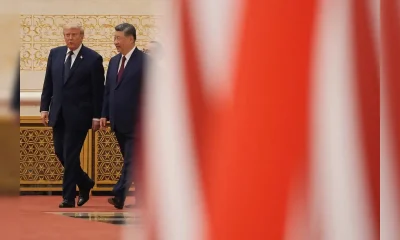
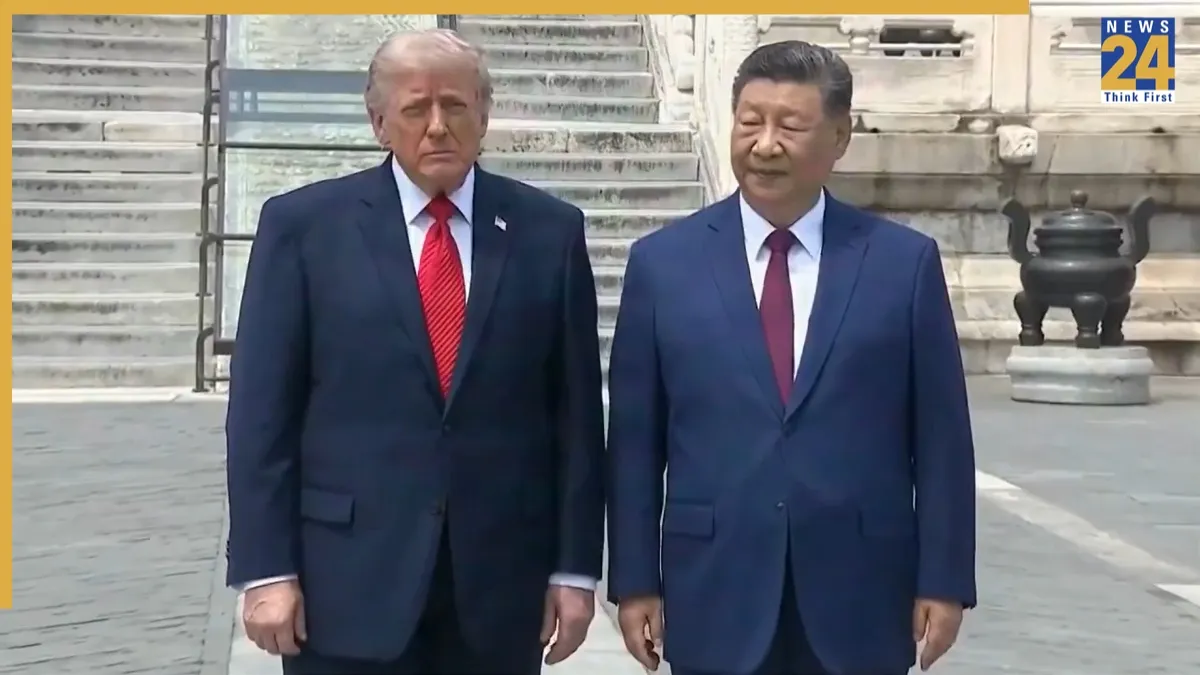
Tensions over Taiwan have once again come into focus after fresh remarks by US President Donald Trump following his high-profile meeting with Chinese President Xi Jinping in Beijing.
Speaking after the summit, Trump indicated that the United States is not looking to support moves toward Taiwanese independence. He said Xi does not want a war over Taiwan and warned that any push for independence could lead to serious confrontation. Trump also added that the US does not need another conflict “9,500 miles away,” signalling a cautious approach on the issue.
His comments came after Xi reportedly warned that mishandling Taiwan could lead to “clashes and even conflicts” between the two global powers.
What makes Taiwan such a sensitive issue for China?
China considers Taiwan a part of its territory under the “One China Principle.” Beijing has consistently said that the island must eventually be reunified with mainland China. While it prefers a peaceful process, it has not ruled out the use of force. Chinese leadership sees any support for Taiwanese independence as crossing a major red line.
What does Taiwan independence actually mean?
Taiwan independence refers to formally declaring Taiwan as a separate country from China. However, the situation is complex. Taiwan already functions like an independent nation with its own government, military, constitution, currency, and elections. It operates under the name Republic of China (ROC), while mainland China is the People’s Republic of China (PRC). Many people in Taiwan prefer to maintain the current status quo to avoid provoking China.
Where does the US stand on Taiwan?
The United States follows the “One China Policy,” officially recognising Beijing while maintaining unofficial relations with Taiwan. At the same time, Washington remains Taiwan’s biggest arms supplier and has pledged to support its defence. Trump’s latest remarks suggest a careful balancing act rather than a major policy shift.