World
Trump fumes at ‘dishonorable’ Iranians amid leaks on emerging deal’s purported terms

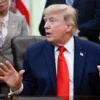
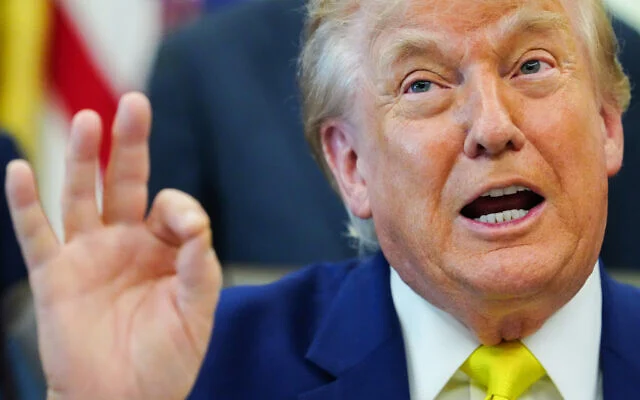
US President Donald Trump lashed out at Iran on Friday as the Islamic Republic and his administration leaked conflicting details to media outlets about their emerging diplomatic agreement, warning the “dishonorable” Iranians “better get their act together” after declaring the deal could be signed as soon as this weekend.
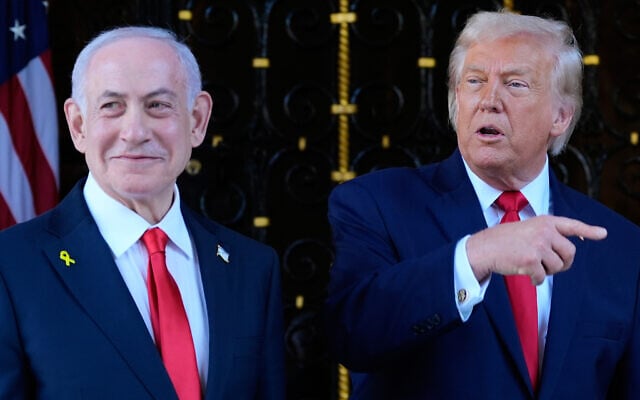
Prime Minister Benjamin Netanyahu, meanwhile, again vowed the Iranian regime will never get its hands on nuclear weapons while asserting full alignment between himself and Trump, despite reportedly being kept in the dark about the agreement during negotiations.
Writing on his Truth Social platform, Trump said reports by Iranian state media were “Fake News,” stating they “have NOTHING to do with the terms that were agreed to, in writing,” without further specifying.
“What they said, including their weak and pathetic statement on having a deal, bears no relation to the truth,” Trump continued. “Very dishonorable people to deal with. With them, there is no such thing as dealing in good faith. AMAZING!”
He also said the Iranians “totally rebuffed Drone attack last night against Indian Ships leaving the Hormuz Strait is TOTALLY UNACCEPTABLE,” after the US reported downing a pair of drones targeting a commercial vessel transiting the key waterway.
“They better get their act together, and FAST!” Trump added, a day after calling off strikes on Iran and claiming a deal was at hand.
The US president’s post came after the official Islamic Republic News Agency reported Tehran will not give up its right to enrich uranium under any deal, while reiterating Iran has not yet made a final decision about the draft agreement. IRNA said Tehran would “negotiate only the nuclear program solely within the framework of the Islamic Republic’s fundamental principles.”
“Issues such as Iran’s right to enrich uranium and the retention of enriched material by the Islamic Republic of Iran will be emphasized with a view to their inclusion in the final agreement,” it said.
According to Iranian state media, the draft agreement would let the Islamic Republic keep control of the Strait of Hormuz, a vital global shipping route that Iran seized in the wake of the US-Israeli bombing campaign that began on February 28.
Iran, which has only allowed a trickle of ships to pass through the strait, has insisted that vessels obtain permission from its armed forces before transiting.
Quoting a source close to Iran’s negotiating team, Iran’s Mehr news agency published what it said was a text of the draft deal currently being finalized.
The draft, it said, would end the war on all fronts, including Lebanon, see the release of $24 billion in Iran’s frozen assets, and set a 60-day period for negotiations on Tehran’s nuclear program.
It also includes the “suspension of sanctions on the sale” of Iran’s oil and petrochemical products, and “the complete lifting of the US naval blockade” on Iranian ports, which has been in place since April 13.
Mehr said the draft underscores the necessity for the US and its allies to pay Iran reparations for damage caused by the war and “to present reconstruction plans for Iran amounting to at least $300 billion.”
“Final negotiations will not begin before the release of half of Iran’s blocked funds, suspension of Iran’s oil sanctions and lifting of the naval blockade,” it added.
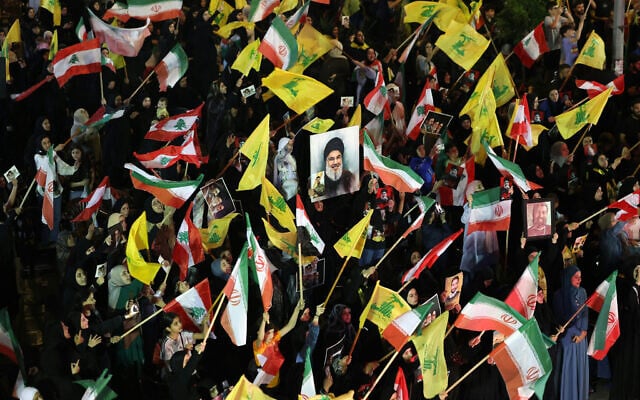
Lebanon’s Al-Akhbar newspaper, which is aligned with Iran’s Lebanese proxy Hezbollah, said the draft agreement with the US would require Israel to halt its offensive in Lebanon and give up any territory it has captured in the country’s south.
The deal includes a plan for the “rapid withdrawal” of IDF troops, the report said.
‘Satisfies all US requirements’
Rushing to perform damage control after the Iranian leaks, a senior administration official said in a statement to querying reporters that “nuclear material will be destroyed and removed and (Iran’s) nuclear program will be dismantled.”
But those would only appear to be concessions that the US is seeking to secure from Iran during subsequent nuclear talks that the sides will hold during the 60-day truce extension inked as a result of the Memorandum of Understanding slated to be signed in the coming days.
The MOU doesn’t actually see Iran make any major nuclear concessions, beyond pledging to never obtain a nuclear weapon — something Tehran has long claimed it wasn’t pursuing.
The senior administration official added that the agreement will see to it that the Strait of Hormuz is open and that Iran will not provide any funding to terror groups.
The latter clause is not believed to be in the MOU and is more likely to be something that the US will try to raise during the subsequent negotiations during the 60-day ceasefire extension, though Iran is unlikely to embrace the idea.
Nonetheless, the senior administration official said in a statement, “This is what they have agreed to. This is a performance-based deal.”
The dynamic appeared similar to what played out after the Gaza ceasefire agreement brokered by the US, which effectively divided the accord into two phases, with the first still being difficult, but thornier issues were left for later that have yet to be resolved.
In the weeks and months following the Gaza ceasefire deal, US officials insisted that Hamas had agreed to give up its weapons, something that is expected of the terror group in the second phase of the deal, and something that Hamas has shown little indication that it is prepared to do. Accordingly, Trump’s Gaza plan has stalled.
In the case of Iran, the US is again claiming that the Islamic Republic made all sorts of major concessions up front about its nuclear program, including that the US will be allowed to extract all of Tehran’s stockpiles of highly enriched uranium, even though Tehran has made no such concession.
That issue, along with the dismantlement of Iran’s nuclear facilities, will surely be at the top of the agenda during subsequent nuclear talks, but the US appeared determined to frame these issues as already settled as it seeks to sell a deal that critics say falls well below what was promised when the war was launched.
The MOU “goes into details on all the nuclear issues,” a senior US official insisted to the Axios news site, and “satisfies all US requirements.”
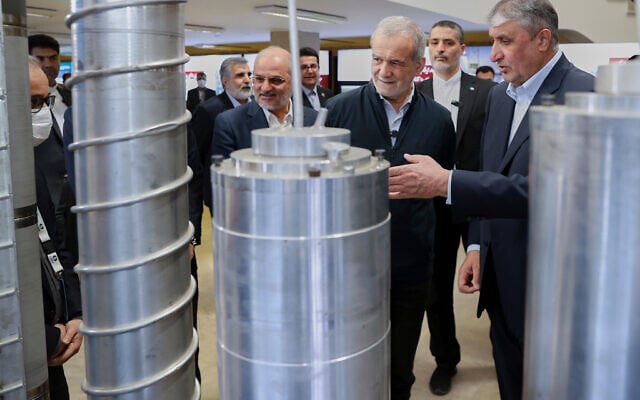
According to that official, Trump accepted an Iranian demand that the uranium would not leave the country, but would instead be blended down inside Iran under UN supervision if a more comprehensive deal is reached.
‘Complete agreement’
Diplomats from mediating countries and from the US said the deal — to be called the Islamabad Agreement — was reached on Wednesday night in talks between Iran’s Foreign Minister Abbas Araghchi and Qatar’s Ali Al-Thawawdi, who spoke by phone several times with Trump’s top envoys, Steve Witkoff and Jared Kushner.
A source with direct knowledge told Axios that Netanyahu was not updated and had to call contacts in the Trump administration to learn details of the emerging deal.
A diplomat from one of the mediating countries said to the news site that both the US and Iran have agreed on the text of the MOU, but two sources cautioned that Iranian Supreme Leader Mojtaba Khamenei has likely not approved it yet.
The MOU does not deal with the fate of Iran’s billions of dollars of frozen assets around the world, according to the report.
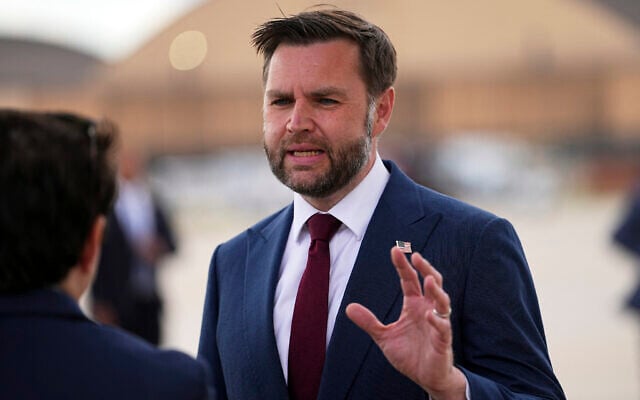
Speaking later, Vice President JD Vance said funds would not be released to Iran for signing the deal with the US or attending a meeting, adding that the potential agreement is structured to ensure that economic benefits would flow to Tehran if it meets its obligations.
“The Islamabad Memorandum of Understanding has never been closer. Pending its finalization, the media should refrain from entering speculation about its content,” Araghchi tweeted Friday in a post shared by Trump. “In line with our responsible and transparent approach, all details will be shared with the public in due course.”
Amid the conflicting accounts of the deal’s terms, Netanyahu on Friday released a statement claiming he and the US president were in complete agreement regarding the talks. The Prime Minister’s Office earlier said Jerusalem will not be bound by the deal.
“As long as I am prime minister of Israel, Iran will not have nuclear weapons,” Netanyahu pledged. “There is complete agreement between President Trump and me on this issue.”
The statement appeared aimed at portraying a potential agreement as an achievement for Israel, or at least limiting the political damage of a deal that doesn’t address most Israeli concerns.
Also Friday, Defense Minister Israel Katz hinted that Jerusalem will have to use military force in the future to stop Iran from attaining an atomic bomb.
“Israel must ensure that, in the future as well, we retain the ability to act independently to prevent Iran from obtaining nuclear weapons,” Katz said in a statement, adding that he and the prime minister had instructed the IDF to prepare accordingly.
He said Trump was “leading efforts toward an agreement with Iran based on American interests, including the shared interest with Israel of preventing Iran from obtaining nuclear weapons.”
“We expect him to uphold this principle, as well as additional principles concerning missiles and terrorist proxies,” Katz continued, while stressing Israel will remain in Lebanon, Syria and Gaza, and in the northern West Bank.
“Our security doctrine is sharp and clear. We act against both nearby and distant threats, and we strive for decisive outcomes rather than compromises and concessions,” said Katz. “A great deal is at stake during this period, and we are determined to continue leading a firm security policy that will prevent harm to our security achievements and will not endanger our ability to fight against the Shiite axis of evil led by Iran and the Sunni axis of evil led by the Muslim Brotherhood.”
US aircraft said dispatched to Europe for possible signing ceremony
With an agreement to end the war ostensibly close, four US Air Force planes were dispatched to Europe to prepare for a possible signing ceremony between the US and Iran on a deal to end the war, Axios reported Friday morning.
The planes carried equipment for Vance, who would sign on behalf of Washington in case there was a deal, the report said.
Speaking virtually to supporters of a Georgia gubernatorial candidate,” Trump said overnight, “I don’t know if you heard, but we ended the war with Iran today,” according to remarks recorded by CNN.
He claimed Iran has “agreed never to have a nuclear weapon, something that we insisted on.”
Iran has disputed Trump’s claim, with foreign ministry spokesman Esmaeil Baghaei saying that the Islamic Republic “has not reached a final conclusion on the agreement.”
Israel and the US launched the war on Iran in a bid to destabilize its regime and destroy its ballistic missile and nuclear programs. Iran, whose leaders are sworn to Israel’s destruction, denies seeking nuclear arms, but has amassed uranium enriched to levels with no peaceful application.
While the fighting entered a truce on April 8, Israel and Iran exchanged fire for some 12 hours earlier this week, and the US and Iran have in recent weeks exchanged fire over the Strait of Hormuz. An unnamed US official told Reuters early Friday that US forces had shot down two one-way Iranian attack drones that appeared to target the Strait of Hormuz. The official said “traffic flow through the strait continues.”
On Tuesday, Trump accused Iran of having downed a US aircraft, and ordered strikes on Iran the following two nights. He threatened Thursday to strike again that night “very hard” and seize Iran’s oil production hub in the Strait of Hormuz.
Two US officials cited by NBC News said the US military was about three hours away from launching the strikes when Trump announced he was calling off the attack, leaving it “confused.”
The US military had already selected its targets, and the US Navy had already adjusted its operational plans and readied munitions for the strikes, NBC said.
The report added that despite Trump’s hyperbole and talk of taking Kharg, the planned strikes Thursday night would have been similar to the two previous nights and would not have targeted the island.