World
Trump Drops Proposed 20% Hormuz Transit Fee, Opts For 'Gulf Deals' Instead As Strait Tensions Simmer

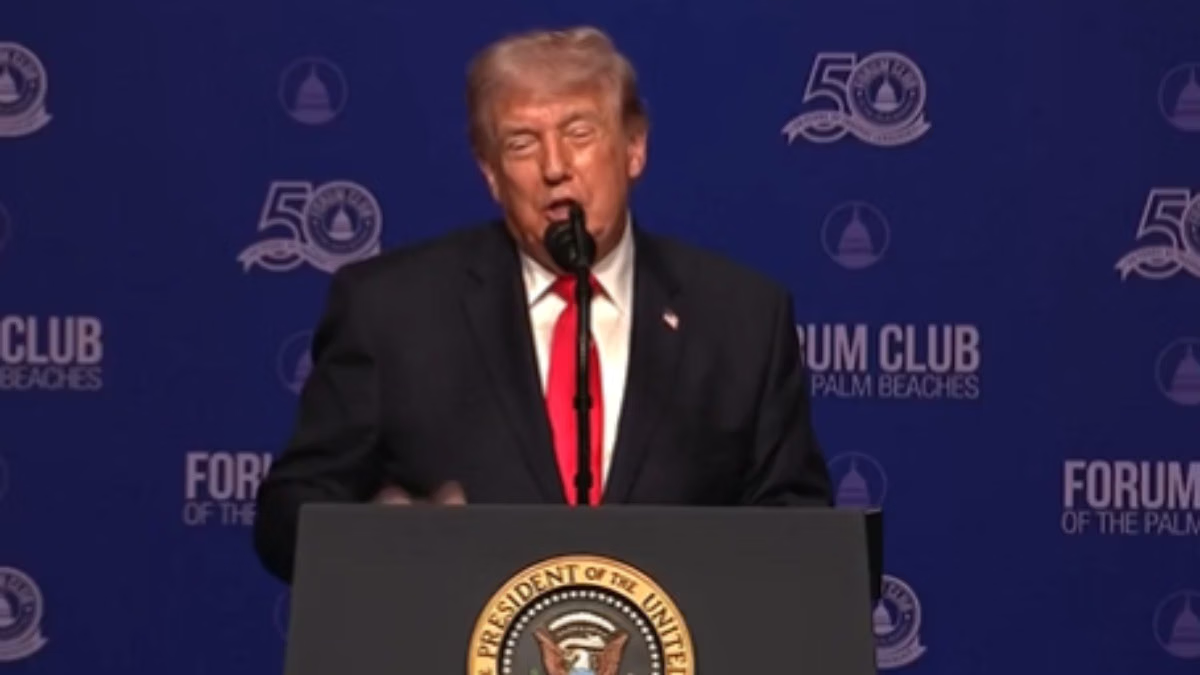
Tehran: US President Donald Trump on Tuesday reversed course on a plan to levy a 20% fee on vessels transiting the Strait of Hormuz, announcing instead that Washington would pursue trade and investment agreements with Gulf nations. In a post on Truth Social, Trump stated that oil was moving through the strategic waterway “like never before” and credited the US military for keeping the passage open. He also reiterated that a blockade targeting Iranian ports and oil trade would remain firmly in place.
Trump’s U-turn on the announcement was crucial as the Middle East remained on edge amid renewed jostling between Washington and Tehran for influence over Hormuz. He said that the decision followed “highly productive conversations with Middle East leadership” and framed the shift as a win for American jobs and Gulf investment.
U-Turn On Proposed Transit Fee
The move that could have been a major hit to shipping companies, Trump had on Monday floated a 20% ‘United States reimbursement fee’ for vessels using the Strait for energy and cargo trade, only to scrap the idea on Tuesday. “Based on highly productive conversations with Middle East leadership, I have decided to replace the 20% United States Reimbursement Fee with Trade and Investment Deals that the various Gulf States will be making into the United States,” Trump wrote.
He added that the new arrangements would bring massive investments that were “extraordinarily good for them, and their future”. The US President stressed that the deals would push US-bound investment to record levels. “As everyone is aware, we have the largest dollar investment into the United States, of any country in history, but these new investments will make that number even larger, and we will see factories, plants, and equipment pour into the United States at historic levels, which will create additional millions of high paying AMERICAN jobs!…..“America is winning again, winning like never before,” he said.
Trump also linked the economic pivot to his stance on Iran, declaring, “The days of Iran killing hundreds of thousands of people, including 52,000 protestors, are over and, most importantly, IRAN WILL NEVER HAVE A NUCLEAR WEAPON.”
‘Oil Is Flowing Like Never Before’
Defending the security situation in the Gulf, Trump praised the US military commanders and said that traffic through Hormuz was at an all-time high. “Oil is flowing like never before, thanks to the awesome Power of the United States Military. A special salute to Secretary of War, Pete Hegseth, Chairman of the Joint Chiefs of Staff, Dan Caine, and Commander of the United States Central Command, Admiral Brad Cooper……..Because of them, and all members of the Most Powerful Military anywhere in the World, BY FAR, the Strait of Hormuz is open to ALL Ship traffic except for Iran,” he wrote.
According to Trump, the waterway would remain closed to Tehran due to its leadership. “Hormuz is closed for Iran because of their lying, violent, malicious leadership, which is taking them down the path of TOTAL DESTRUCTION……We will therefore have a FULL Blockade, but only on Ships coming to and from Iranian ports, or carrying anything that has to do with Iranian cargo,” he added.
Gulf Leaders Pushed For Investment Over Fees
Explaining why he abandoned the fee, Trump stated that he had been contacted directly by regional rulers, saying, “I was called by different people, different countries — kings, emirs, and all of the people that we all know…….They said we’d love to do it a different way. We’d love to invest in the United States — billions and billions of dollars. And continue our record-setting. And I like that, actually, because I don’t think anybody should be able to charge a fee for the Strait.”
Despite the President’s claim that oil flows are booming, maritime tracking data presents a different picture. Various navigation monitoring sites indicated that traffic through the strategic passage has fallen to its lowest level since the start of the US-Iran confrontation.