World
Trump claims Iran wants ‘to make a deal so badly’ after second straight night of US airstrikes

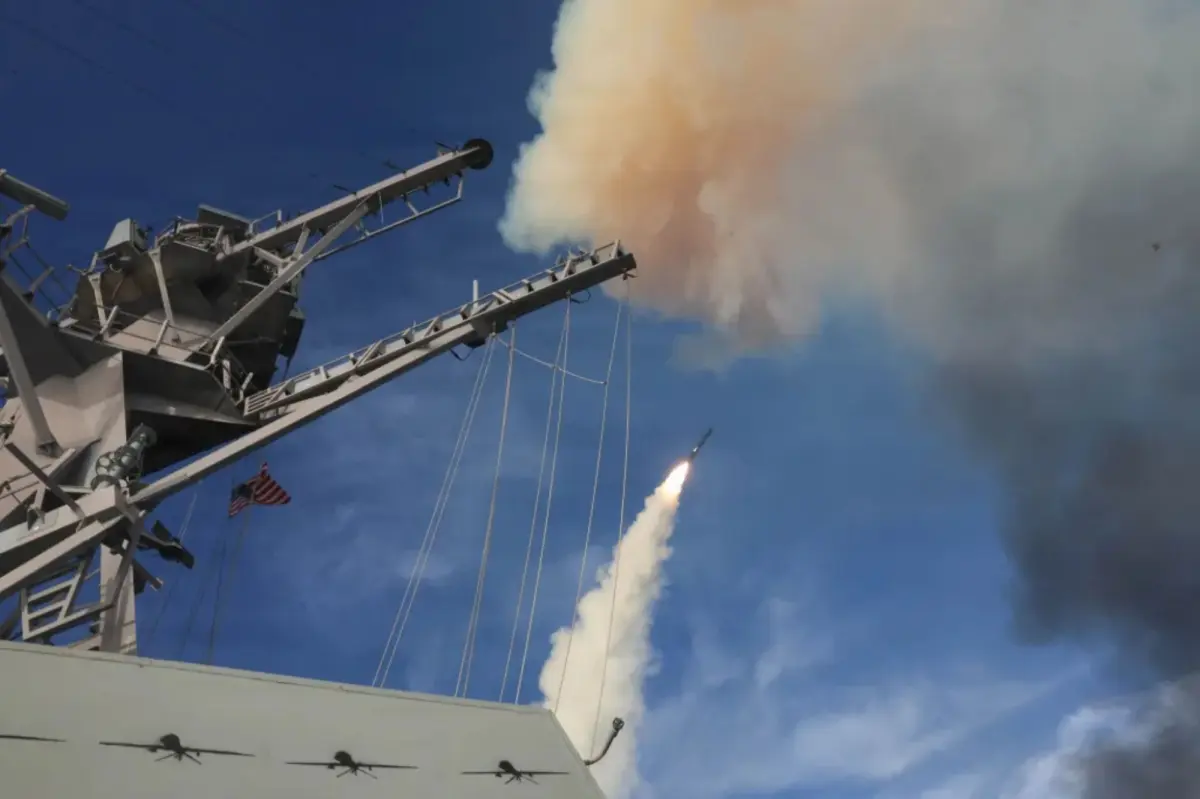
President Trump insisted late Wednesday that Iran was ready to come back to the bargaining table after the US military struck approximately 90 targets across the Islamic Republic in a second consecutive day of attacks.
“We just hit them very hard,” Trump told reporters aboard Air Force One after leaving the NATO summit in Turkey. “We hit them 20:1. Every time they hit us we’re going to hit 20 [targets].”
“They have very little left and they want to make a deal so badly,” the president continued. “They called a little while ago. They want to make a deal so bad.
“I just don’t know if they’re worthy of making the deal. I don’t know if they’re going to honor the deal.”
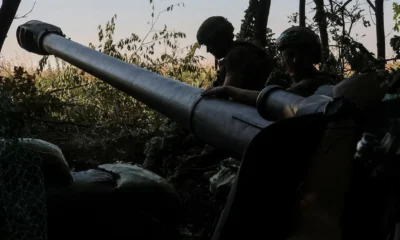
US Central Command (CENTCOM) released black-and-white footage of strikes on an airport runway and missile launchers, saying the attacks were meant to “further degrade [Iran’s] ability to threaten freedom of navigation in the Strait of Hormuz.”
Trump also posted a series of videos to his Truth Social account purporting to show explosions in Iran, warning: “This is in retribution for yesterday’s bombing of ships by Iran. If it happens again, it will get much worse!”
“The United States is holding Iran accountable for recent unjustified aggression against commercial shipping and civilian crews freely navigating a vital international waterway,” added Tampa, Fla.-based CENTCOM in a statement, confirming that the strikes targeted “air defense systems, coastal surveillance assets, missile and drone storage sites, naval capabilities, and military logistics infrastructure along Iran’s coastline.”
Iranian state media reported explosions in the southern port city of Chabahar – about 300 miles south of the Strait of Hormuz – Konarak, Bandar Abbas, Sirik and the Persian Gulf islands of Qeshm and Abu Musa.
Blasts were also reported in the northern Persian Gulf port city of Bushehr.
State media reported a strike on a railway bridge in Iran’s northeastern Golestan province, and the regime’s Islamic Revolutionary Guard Corps (IRGC) said two bridges were attacked on the route to Mashhad, where officials plan to bury the late Ayatollah Ali Khamenei later Thursday.
If confirmed, the bridge attacks would be the first by the US since before an initial cease-fire deal was reached with Iran April 8.
Tehran retaliated Thursday by launching missiles and other projectiles at Bahrain, home to the US Navy’s 5th Fleet headquarters, as well as Kuwait and Qatar.
Follow The Post’s live coverage of President Trump and national politics for the latest news and analysis
In Kuwait, the military said falling debris wounded one person as it shot down three ballistic missiles, a cruise missile and 10 drones. Bahrain said it shot down incoming fire, without elaborating. There was no immediate word of damage in Qatar.
Mohammad Bagher Ghalibaf, speaker of Iran’s parliament and a key negotiator in peace talks, was defiant in a post on X Thursday morning, writing: “America still hasn’t learned that bullying and breaking promises are no longer cost-free. Let me put it plainly: If you strike, you’ll get hit.”
Iran’s Health Ministry claimed Thursday the two days of American airstrikes had killed at least 14 people and wounded 78 more, most of those reportedly members of the armed forces.
Trump had previewed military action earlier Wednesday, telling reporters on the sidelines of the NATO leadership summit that the cease-fire was “over” and he no longer wanted to deal with “sick” regime leaders.
“I don’t like them at all. And frankly, I think we wasted a lot of time with them, I think we should just do our business,” Trump said.
When asked by a reporter if the preliminary peace deal Trump signed on June 17 was dead, the president replied: “To me, I think it’s over. I don’t want to deal with them anymore. They’re scum.”
The president also threatened to take out Iran’s critical infrastructure, including bridges and even desalination plants, the latter of which could constitute a war crime.
Along with punishing strikes, Trump once again suggested that the US could take over Kharg Island, the oil hub where the bulk of Iran’s crude is produced.
The president did say Wednesday that he would allow negotiations to continue, but “I think they’re wasting their time,” he said.
Iranian Deputy Foreign Minister Kazem Gharibabadi, also a top negotiator, retorted on X that Trump’s remarks “are not a sign of power but an admission of the failure of the failure of a policy built on brute force, sanctions, and threats for years, which could not bring the Iranian nation to its knees.”
The 14-point memorandum of understanding agreed to last month called for a 60-day window to reopen the Strait of Hormuz while negotiations continued over the fate of Iran’s nuclear program, sanctions relief and the unfreezing of Iran assets.
Despite the repeated attacks, Trump maintained that all-out war would not reignite because the US would always be able to hit Iran harder.
“I don’t think it’s going to start again. I think it’s going to go very quickly,” he told reporters in Ankara.
“They hit a couple of ships, and so we hit them much harder. When they hit, we hit 10 times harder, you know. We hit much harder than they do,” he added.
Tehran has insisted that commercial shipping vessels use regime-approved sea routes while transiting the strait and has attacked tankers that have opted to take a route along the Omani coast, preferred by the US and its allies.
The current crisis was precipitated by Iran attacking three tankers in the Strait of Hormuz Tuesday.
With Post wires