World
Trump accuses Iran of downing US helicopter over Hormuz, vows retaliation

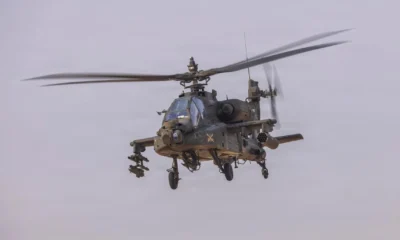
US President Donald Trump announced on Tuesday that Iran had shot down a US Apache helicopter that was patrolling the Strait of Hormuz overnight and vowed retaliation, casting doubt on his previous claims that Washington and Tehran were on the verge of reaching an agreement to permanently end the fighting.
“I have just been informed by our great military that last night the Iranians shot down one of our highly sophisticated Apache Helicopters while patrolling over the Strait of Hormuz,” Trump wrote on Truth Social. “There were two pilots involved, both are safe and uninjured.
“Nevertheless, the United States must, of necessity, respond to this attack,” he continued, without elaborating on what the response could look like.
Trump however also downplayed the incident during a phone interview Tuesday with Wall Street Journal, saying the downing of the helicopter “wasn’t a big deal” and that “the pilot is fine.” The report did not specify whether Trump made the comments before or after he declared the US “must” respond.
The development came just a day after the US restored a ceasefire between Israel and Iran, although both countries hinted on Tuesday at the possibility of further military action down the road, if deemed necessary.
A major US response to the downing of the helicopter may harm efforts to achieve that deal, which Trump for weeks has claimed is on the verge of being signed despite little to no outward signs of progress having been made.
The fact that Trump is telegraphing Washington’s plans to respond to Iran indicated, however, that he was still trying to prevent the talks from collapsing completely.
The helicopter crash happened at about 3:30 a.m. local time Tuesday off the coast of Oman while the aircraft was on a patrol, US Central Command said.
It went down near the critical Strait of Hormuz shipping lane that Iran has effectively closed since the start of its war with the US and Israel on February 28.
An unmanned boat located the two aviators after they spent about two hours in the water, said Capt. Tim Hawkins, a spokesman for CENTCOM. He said it was the first known drone rescue at sea by the US military.
US military officials have not confirmed Trump’s account of the helicopter having been shot down by Iran, saying the cause was still under investigation.
AH-64 Apache helicopters have been a key asset for the American military as it enforces a blockade on Iranian crude oil shipments and tankers, seeking to pressure Tehran into a deal. The helicopters have also been used by the United Arab Emirates to shoot down Iranian drones.
The drone used to perform the rescue was a 24-foot (7.3-meter) vessel called a Corsair, Hawkins said. It’s manufactured by Saronic Technologies.
The drone was assigned to the Navy’s Task Force 59, established in 2021 as the Navy’s first uncrewed and artificial intelligence unit that focuses on maritime security in the Middle East, including the Strait of Hormuz and the Suez Canal.
Iran, Israel ready for new fighting if need arises
Despite the fragile ceasefire having been reinstated on Monday after several bouts of Iranian ballistic missile fire and retaliatory Israeli airstrikes that began on Sunday night, neither Israel nor Tehran ruled out the possibility of returning to all-out war in the future.
In a visit to troops taking part in a military drill, IDF Chief of Staff Lt. Gen. Eyal Zamir told them that Israel has planned a “more significant and severe blow” to the regime, and would carry it out if the opportunity arises.
“The Iranian attempt to dictate equations and change reality will fail. We will continue to operate and deepen the damage to the Hezbollah terror organization and defend the northern communities,” he said, referring to Iran’s demand that Israel cease its offensive in Lebanon or face more Iranian missile fire.
“The IDF maintained and continues to maintain immediate readiness and preparedness for a return to fighting in Iran,” Zamir said, adding that during the bout of fighting on Sunday night and Monday, “all of our defense and offensive systems were alert and prepared. We intercepted the threats launched at us and struck in Iran quickly and forcefully.”
The strikes Israel launched on Monday were “preparation for a much more significant and severe blow,” he said, adding that the IDF was “prepared to return and deliver another hard and deep strike against Iran.”
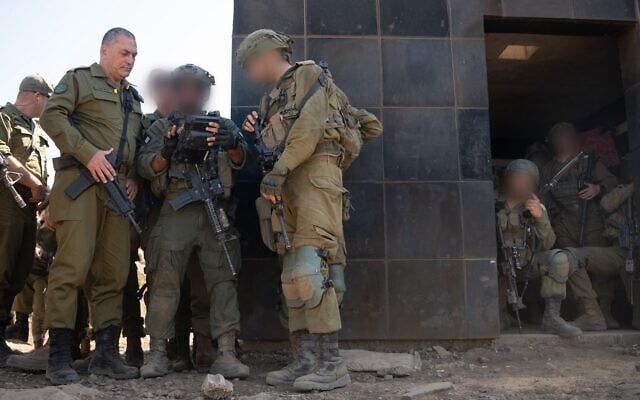
According to reports, Prime Minister Benjamin Netanyahu approved a deeper strike on Iran but called it off under pressure from Trump.
Zamir’s public comments came after he reportedly warned ministers in a closed-door cabinet discussion on Monday against accepting new “equations” after US pressure halted a planned large-scale IDF strike, according to Channel 12.
The report said Zamir was asked by Shas chair Aryeh Deri whether he thought it was worth risking tensions with Washington, to which the IDF chief replied: “No, but can we allow ourselves to be fired upon and be limited in response?”
Meanwhile in Iran, parliament speaker Mohammad Bagher Ghalibaf suggested that if the US doesn’t commit fully to negotiations for a deal to end the war, the Islamic Republic would consider returning to military action to get what it wants.
“We prefer the language of diplomacy, but we speak other languages far more fluently,” the hardliner warned. “Break your commitments, and we’ll switch to what we speak best. You ride the horse you saddled!”
It was not clear which commitments Ghalibaf was accusing the US of violating, although he had claimed the previous day that comments made by Trump on the possible deal “contradicted the agreed-upon sections,” showing that the US was “neither seeking a ceasefire nor dialogue.”
His remarks were echoed later on Tuesday by Iranian foreign minister Abbas Araghchi, who was responding to Trump’s threat of retaliation for the downing of the Apache helicopter.
“The Strait of Hormuz is NOT international waters but shared between Iran and Oman,” Araghchi began, pushing the blame for the incident back on to the US. “Foreign forces in proximity to our territory are at constant risk on account of their own human errors, plain accidents, or potentially being caught in crossfire.”
“To reduce risk, the best solution is for foreign forces to exit, as soon as possible, an environment which will never be hospitable to a hostile presence,” he warned.
“Iran prefers the language of diplomacy,” Araghchi reiterated. “However, as our Brave Warriors have shown the world, we know how to speak other languages too.”
Foreign forces in proximity to our territory are at constant risk on account of their own human errors, plain accidents, or potentially being caught in crossfire.
To reduce risk, best solution is for them to leave.
We prefer language of diplomacy but speak other languages too. pic.twitter.com/5DDgHAscBj
— Seyed Abbas Araghchi (@araghchi) June 9, 2026
Before he accused Iran of downing the US helicopter, Trump had expressed renewed optimism over negotiations with the Islamic Republic.
“We have a good chance” of signing a deal in “two or three days,” Trump said late Monday. But he didn’t provide any details on why there was reason for new optimism.
“We’re very close to having a very, very good, strong, powerful deal,” the president said. “If we go and bomb — which we could do very easily if we want, and we spend another two or three weeks bombing — they’ll have nothing left whatsoever. But you won’t have the strait open for months.”
He added: “If we do the bombing, you know, a lot of people are going to be killed. Who wants to do that? I don’t.”
Oil prices responded to Trump’s remarks, falling around 5 percent to below $90.
The international benchmark Brent crude fell below $90 for the first time since April 14, while its US counterpart, West Texas Intermediate crude, fell to around $86 a barrel.
Tehran has continued to block most shipping through the Strait of Hormuz, which before the war carried a fifth of the world’s crude oil and liquefied natural gas. Washington, in turn, has imposed its own blockade of Iranian ports.
US Energy Secretary Chris Wright nevertheless said on Tuesday that ship traffic through the strait was rising “very meaningfully” during the ceasefire.
He added, though, that it would take many months to get back to normal flows of energy once the war is over.
The US wants to see Iran abandon its nuclear ambitions and give up its stockpile of highly enriched uranium, which is believed to be entombed in the aftermath of American airstrikes that happened during the 12-day war in June 2025. But Iran is refusing that and demanding relief from sanctions. It also wants the release of frozen assets even before a final agreement is in place, something rejected by Trump.