







News
Tim Curry Had No Idea He Was Suffering The Stroke That Would Change His Life

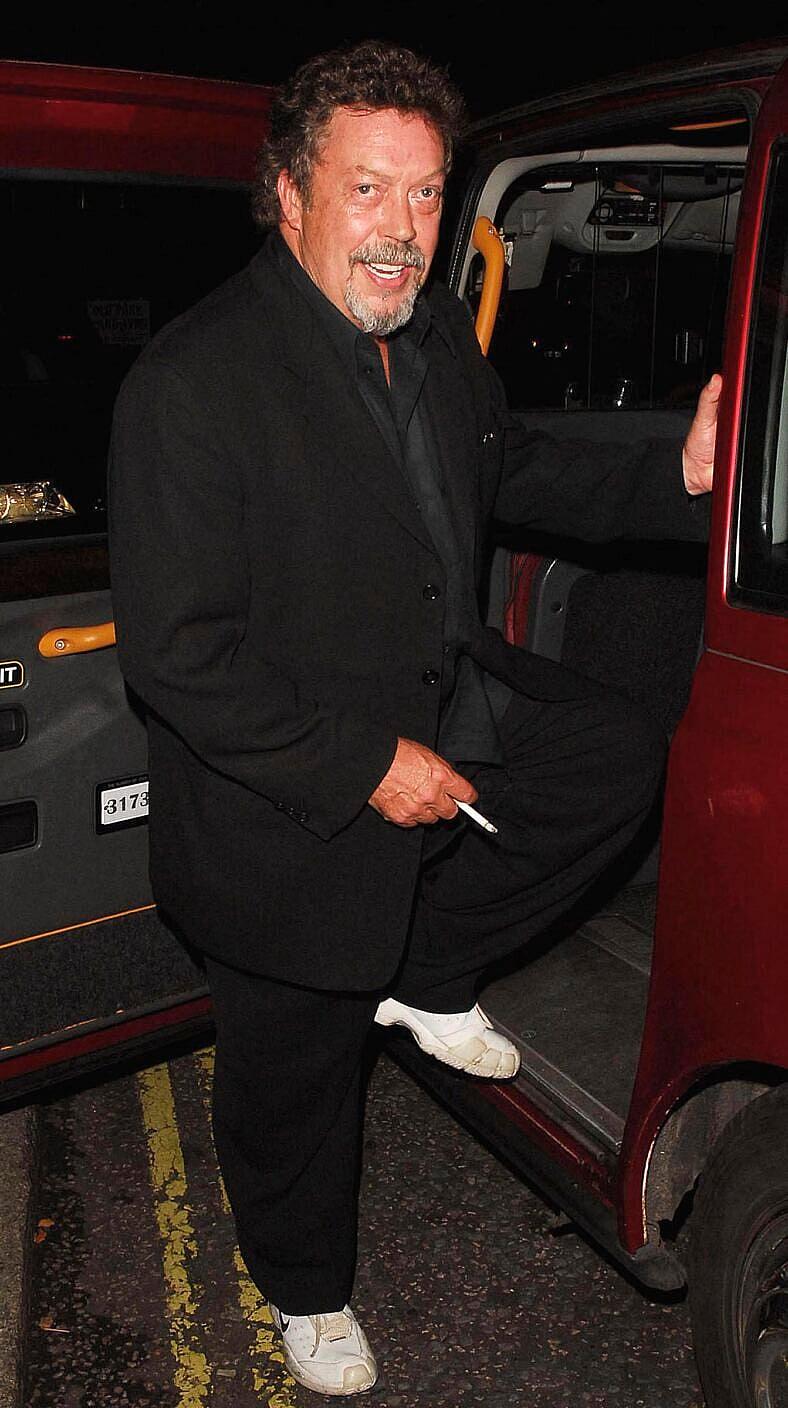
Tim Curry spent the final 14 years of his life navigating the lasting effects of a devastating stroke that left him unable to walk and temporarily took away his ability to speak. The “Rocky Horror Picture Show” star suffered the medical emergency in July 2012, but initially had no idea anything was wrong. He later revealed that two blood clots were discovered in his brain, leading doctors to perform emergency surgery.
Curry survived, underwent extensive rehabilitation, and continued working from his wheelchair until shortly before his death at age 80. Although the stroke defined many of his later health struggles, no official cause of death has been announced, and there is no confirmation that it directly caused his death.
Curry was receiving a massage on July 13, 2012, when his massage therapist became concerned about his condition. The actor did not believe he needed medical attention because he was not experiencing pain or any symptoms he immediately recognized as signs of a stroke. “I felt fine,” Curry recalled during a 2025 interview with “ThePress Nigeria Sunday Morning,” revealing, “I had no symptoms that I was aware of. I wasn’t in pain.”
His massage therapist trusted his instincts and called for an ambulance despite Curry’s objections. The actor later credited that decision with potentially saving his life. By the time he arrived at the hospital, doctors had determined that he had suffered a serious stroke.
The diagnosis carried an especially personal significance for the actor. Curry’s father had suffered a stroke when Curry was a child and later died from pneumonia. Curry said thinking about what happened to his father left him frightened as doctors prepared to treat him.
Doctors Discovered Two Blood Clots
 5
5Curry underwent emergency brain surgery after doctors discovered two blood clots. In his 2025 memoir, “Vagabond,” the actor described receiving a craniectomy, a procedure in which surgeons temporarily remove part of the skull to access the brain and relieve potentially dangerous pressure.
Curry recalled the procedure in characteristically blunt terms, writing that his skull had been “smashed in” during the effort to save his life. When he emerged from the hospital, Curry was required to wear a protective helmet because part of his skull had not yet been replaced. He later admitted that the helmet was not his “best look,” using humor to describe an experience that had nearly killed him.
The emergency procedure removed the blood clots, but the stroke had already caused permanent neurological damage.
The Stroke Left Tim Curry Partially Paralyzed
 5
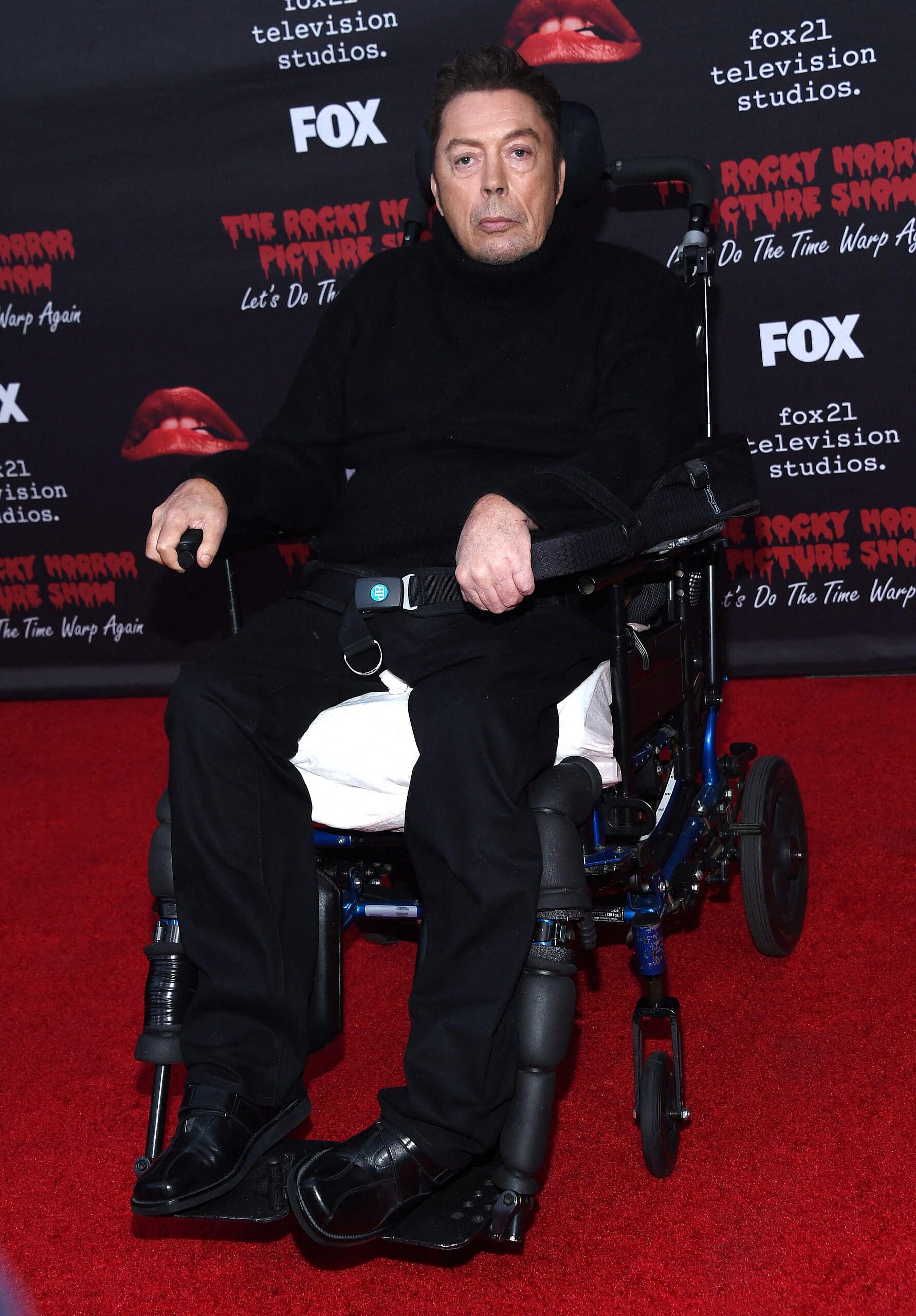
5Curry was left with paralysis on the left side of his body. The stroke affected his face, arm, and leg, permanently limiting his mobility. He became dependent on a wheelchair and was ultimately told that he would not walk again. His short-term memory was also affected.
For an actor whose career depended heavily on physical expression, stage movement, and his famously distinctive delivery, the changes were profound. Curry had built his reputation by commanding every scene, whether strutting across a stage as Dr. Frank-N-Furter, racing through an elaborate explanation in “Clue,” or terrifying viewers as Pennywise. After the stroke, simply communicating became one of his most immediate challenges.
Tim Curry Had To Learn How To Speak Again
 5
5Curry spent time in the hospital before beginning a lengthy rehabilitation process. He underwent physical therapy to adjust to his limited mobility and speech therapy to recover a skill that had been central to his life and work. “I had to learn how to speak again,” Curry revealed. “That was very weird. I hated not being able to speak.”
Although Curry eventually recovered his ability to communicate, his speech and facial movement remained affected. The rehabilitation allowed him to regain enough independence to resume portions of his career, but he never recovered the ability to walk.
In September 2025, more than 13 years after the stroke, Curry candidly told an audience that he still could not walk and referred to his wheelchair as his “silly chair.” He nevertheless continued attending selected events and meeting fans.
Humor Became Essential To His Recovery
 5
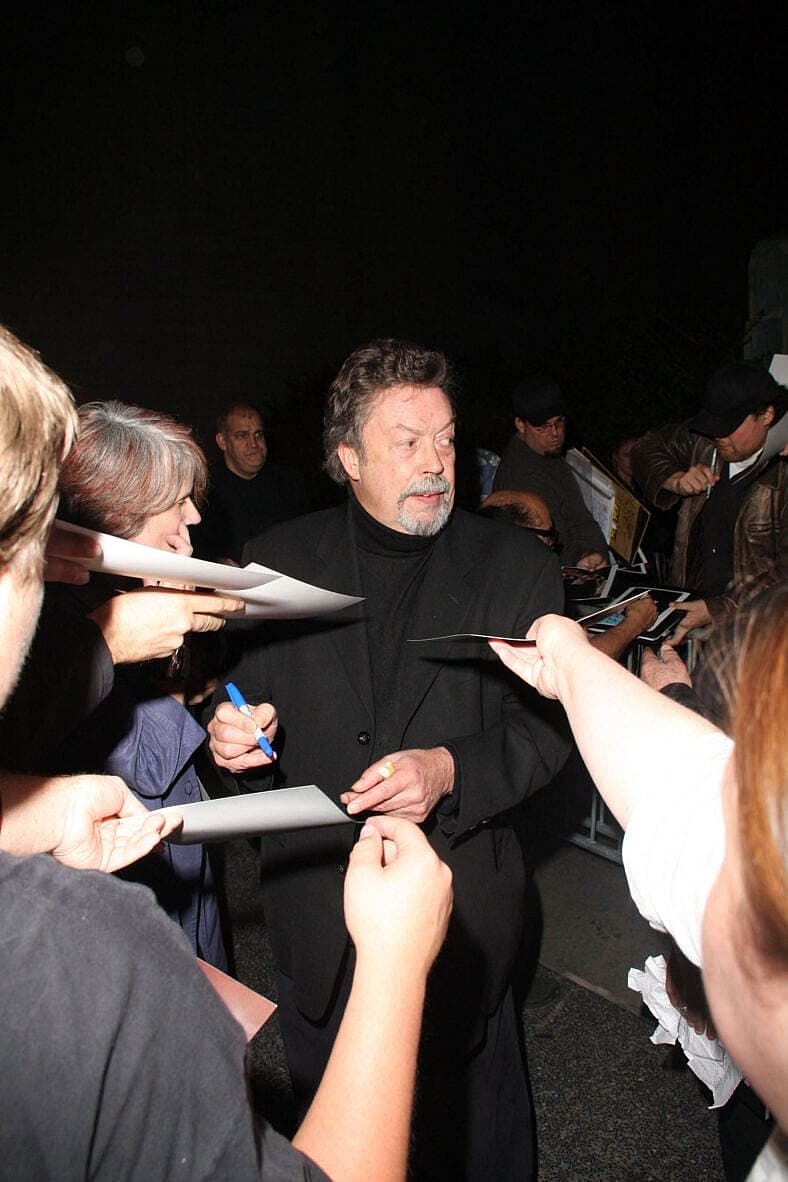
5Curry refused to allow his physical limitations to erase the wit that had helped define his performances. When he made a rare red-carpet appearance in 2015 to receive a lifetime achievement award from the Actors Fund, he described humor as “absolutely vital” to his recovery. “It is just part of my DNA,” he told Los Angeles Magazine.
His refusal to indulge in self-pity also became central to his outlook. During his final major interview, Curry said he did not admire self-pity and questioned why any person should consider themselves important enough to demand it from others.
That attitude did not mean the recovery was easy. Curry acknowledged fear, frustration, and the enormous challenge of losing his mobility and speech. Humor just gave him a way to retain control over how those experiences were discussed.