World
The wild card: How Netanyahu could still wreck Washington’s Iran deal

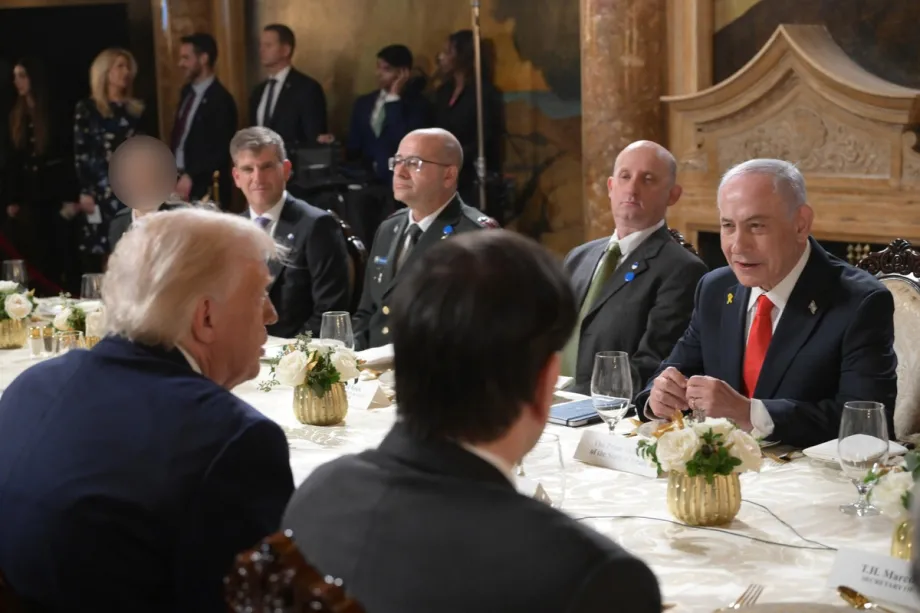
There is a particular kind of danger in Middle East diplomacy that no memorandum of understanding can fully insure against: a leader with nothing left to lose and an army still under his command. That is Benjamin Netanyahu today. Washington and Tehran have signed a framework meant to end the active hostilities that have consumed the region since March. Israel was not a party to it. And Netanyahu has made it unambiguous that he does not consider himself bound by its terms.
His defense minister, Israel Katz, went further, vowing the IDF would remain in Lebanon, Syria, and Gaza “without any time limit.” Iran’s foreign minister has called for a complete halt to Israeli military action in Lebanon and placed responsibility for enforcing the framework squarely on Washington. Hezbollah has continued to engage Israeli forces along the border. The agreement that took months to negotiate is, in practice, already being tested by the one regional actor it was never able to bind.
What makes this moment different from previous Netanyahu defiances is the tone now coming out of the White House itself. President Trump, who once treated Netanyahu as an unconditional ally, has reportedly described him in private as “crazy” and publicly suggested Israeli strikes in Lebanon have gone too far: “I say it’s possible to act a little more moderately. Maybe you don’t need to bring down a building every time a Hezbollah member walks into it.” Vice President JD Vance has been still blunter, rebuking members of Netanyahu’s own cabinet for treating Trump as expendable, and reminding them publicly that roughly two-thirds of the defensive weapons supplied to Israel were “built and paid for by American tax dollars.” As the political theorist Hans Morgenthau warned long before this conflict, in the logic of realpolitik, a patron’s tolerance is never unconditional — it is calibrated to interest, and interest is now visibly shifting in Washington.
“You don’t have to knock down a building every time somebody walks into it that’s from Hezbollah.”
The boomerang: How America’s semiconductor war backfired
Netanyahu’s intransigence abroad is inseparable from his vulnerability at home. He has not achieved the maximalist goals he set for this war — neither regime change in Tehran nor the dismantling of Iran’s nuclear infrastructure materialized, even after dragging the United States into confrontation with Iran. What followed was a spike in global energy prices, a jolt of inflation, and the kind of international alarm that accompanies any war involving a nuclear-armed state’s neighbors. At home, he faces an electorate that may turn on him in the fall, a corruption trial that has not gone away, and a coalition held together by ministers further to his right than he is. Opposition leader Yair Lapid has accused the government of “absolute failure” in its handling of the endgame. For a prime minister in that position, capitulating to an American-brokered deal that does not visibly deliver Israeli security gains is not just unpalatable — it may be politically fatal.
This is the paradox at the heart of the U.S.-Israel relationship: Washington supplies the weapons, the funding, and the diplomatic cover, yet still cannot dictate terms to the prime minister who depends on all three. Realist scholars such as John Mearsheimer have long argued — most notably in his and Stephen Walt’s analysis of the “Israel lobby” — that the structure of U.S. domestic politics grants Israeli leaders a degree of latitude no other American client enjoys, even when American interests diverge from Israeli ones. Netanyahu’s durability is not mysterious; it is structural. He retains the backing of the Republican donor class, including megadonor Miriam Adelson, a bloc of pro-Israel hawks in the Senate, and a friendly ecosystem of right-wing commentary that frames any American pressure on Israel as betrayal.
Here is the mechanism by which Netanyahu could unravel the Iran framework without ever formally rejecting it. Continued Israeli operations in southern Lebanon — strikes that have already killed thousands and that Hezbollah is actively resisting — risk drawing Iran back into the conflict it just agreed to exit. Tehran’s negotiators have made clear they view a Lebanon withdrawal as central to the deal’s spirit, even if it is not explicit in its text. If Hezbollah casualties mount and Iran concludes that Washington cannot or will not restrain its own ally, the incentive for Tehran to honor a fragile, untested framework evaporates. Netanyahu does not need to tear up the agreement. He only needs to keep doing what he is already doing in Lebanon, and let Iranian patience do the rest.
READ: Trump’s strategic mistakes in his war against Iran
Diplomats have a name for actors who can sabotage an agreement they are not bound by and have no formal veto over: spoilers. Netanyahu is functioning as one, whether by calculation or by conviction that Israel’s security needs supersede Washington’s diplomatic timeline. No peace settlement is more fragile than one built around the silent restraint of a party that was never asked to sign it.
The views expressed in this article belong to the author and do not necessarily reflect the editorial policy of Middle East Monitor.