World
The Strategic Value of Kurdish Gas for Europe’s Energy Security

Europe’s Energy Challenge is Far From Over
Europe has made significant progress in reducing its dependence on Russian natural gas since the outbreak of the Ukraine war. Through increased liquefied natural gas (LNG) imports, expanded purchases from Norway, and greater reliance on the Southern Gas Corridor, European governments have managed to mitigate some of the vulnerabilities that once defined the continent’s energy landscape.
Yet the notion that Europe’s energy security challenge has been resolved is misleading. Diversification is not a one-time achievement but a continuous strategic process. As geopolitical tensions continue to reshape global energy markets, Europe must identify new sources of supply capable of strengthening resilience and reducing dependence on a limited number of producers and transit routes.
In this context, one potential contributor remains largely overlooked in European energy debates: the Kurdistan Region of Iraq.
Why Kurdish Gas Matters
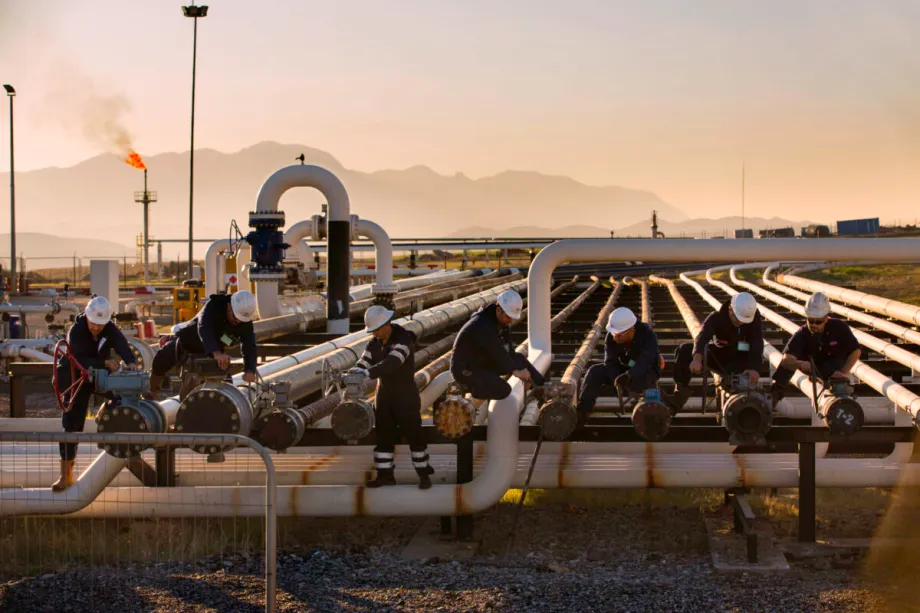
The Kurdistan Region possesses some of the most promising undeveloped gas reserves in the Middle East. Fields such as Khor Mor and Chemchemal already contribute to regional energy production, while additional projects including Miran and Topkhana-Kurdamir have the potential to significantly increase output in the coming years.
READ: Japan sets 3 conditions for joining Hormuz mission: Report
Unlike many energy producers in the Gulf, whose exports depend heavily on maritime routes vulnerable to regional instability, the Kurdistan Region enjoys a unique geographic advantage. Its proximity to Turkiye creates the possibility of direct pipeline connections to existing energy infrastructure serving European markets.
For Europe, the importance of Kurdish gas extends beyond additional supply volumes. Every new source of energy reduces strategic dependence on existing suppliers and enhances the flexibility of the broader energy system. The lessons of the Ukraine crisis demonstrated that excessive reliance on a single supplier can quickly evolve from an economic issue into a geopolitical vulnerability.
Kurdish gas offers Europe an opportunity to strengthen diversification before another crisis emerges.
Turkiye’s Ambition and the Emerging Energy Corridor
No discussion of Kurdish gas can be separated from Turkiye’s growing role in regional energy geopolitics.
Existing infrastructure already connects Caspian resources to European consumers through Turkiye, while new initiatives continue to expand the country’s importance within regional energy networks.
The Southern Gas Corridor has become one of the European Union’s most significant non-Russian energy routes. Carrying natural gas from Azerbaijan through Turkiye into European markets, the corridor has demonstrated both technical feasibility and geopolitical relevance.