Trends
The Royal Offspring Who Shifted Women’s Rights In Her Own Way

Written by: Matilda Inioluwanimi Adegbola
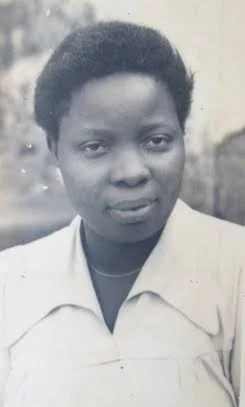
Women have been remarkable in Nigeria’s history, from protesting for their rights to agitating for girls’ education and increasing their socio-economic access. However, their key contribution to the Nigerian nationalist movement and the fight towards independence remains less widely told. One such story is that of Elizabeth Adekogbe.
A member of the royal lineage of the Ajaloorun, the traditional monarch of Ijebu-Ife in southwestern Nigeria, she was born in 1919. Her academic journey included studies at St. Agnes Catholic Training School and the Yaba College of Technology. Following her marriage to Alademerin Akija Adekogbe in 1940, she served as an Assistant Inspector of Prices in Lagos during the Second World War.
Adekogbe lived in Kano for two years before relocating to Ibadan in 1946. In Ibadan, her husband worked in the cocoa trade with the Ibadan Cooperative Progressive Marketing Union, while she headed Saint James Primary School as headmistress. Her experiences during this period exposed her to the challenges women faced, including limited access to education, economic disadvantage, and restricted political agency, particularly the denial of the right to vote, prompting her to take action in her own way.
In December 1953, alongside 14 educated women, Elizabeth established the Women’s Movement of Nigeria (WM). The WM focused on removing systemic political, economic, and social barriers facing women, while fostering collaboration among existing women’s societies to advance broader social welfare. Additionally, the movement aimed to prepare women for active citizenship by securing their voting rights and ensuring their political representation in both regional and national legislative bodies.
Serving as the organisation’s leader, Elizabeth organised three specialised committees within the WM. The first committee was tasked with social and educational advancement, working to ensure equal access to education for male and female students. One of its initial objectives was addressing gender disparities in the distribution of merit-based government educational grants. Recognising that the scarcity of girls’ secondary schools led to high dropout rates, she petitioned the colonial government to establish more institutions for girls, serving as the spokesperson for a female delegation that submitted these critical educational grievances to the Ministry of Education in March 1953.
During a July 1953 conference on Nigerian Women held in Abeokuta, Elizabeth Adekogbe collaborated with Funmilayo Ransome-Kuti and Margaret Ekpo to create the Federation of Nigerian Women’s Societies (FNWS), an initiative aimed at expanding women’s representation in governance. Internal leadership conflicts eventually prompted Adekogbe to withdraw from the FNWS, though she maintained her advocacy through the WM.
In 1954, she rebranded the Women’s Movement of Nigeria as the Nigerian Council of Women (NCW) to forge ties with the International Council of Women (ICW). She subsequently represented Nigeria at the ICW conference in Helsinki, becoming the nation’s first female delegate at an international women’s rights symposium.
Seeking to unify regional advocacy efforts, Adekogbe partnered with Wuraola Esan and Tanimowo Ogunlesi in March 1957 to form the Council of Women’s Societies (CWS) in Ibadan and attended the ICW conferences in Montreal and New York in July 1957 on behalf of the CWS. The CWS functioned as an umbrella organisation, consolidating diverse women’s associations to maximise their political and social influence.
Adekogbe also served as the Action Group’s (AG) women’s organiser from 1954 to September 1957, and co-founded the Awo Brigade in 1958 to promote Chief Obafemi Awolowo, the leader of the party, serving as its first secretary. She was an advisor for the Ijebu Eastern Council.
Alongside her political work, she championed women’s issues as a journalist for major newspapers, including the Daily Times and West African Pilot, and also produced radio programmes for the Nigerian Broadcasting Corporation (NBC).