Society
The N13,000 dispute at Randle Hospital: What Lagos investigation found

By Kazeem Ugbodaga
The Lagos State Government has cleared the air over a patient experience incident at Randle General Hospital, saying its investigation established that a 21-year-old woman received free emergency treatment and subsequent financial assistance totalling N93,950.
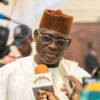
The Commissioner for Health, Prof. Akin Abayomi, disclosed this in a statement on Thursday following an investigation into a social media post made on August 31 by the patient’s mother, Mrs Oshodi, concerning the treatment of her daughter, Alimat Oshodi.
Abayomi said the investigation established that Alimat was 21 years old, contrary to the age of 13 stated in the social media post, and presented at the Mother and Child Centre of Randle General Hospital on August 4 as an emergency case requiring immediate medical intervention.
According to him, she received lifesaving emergency treatment under the Comprehensive Emergency Obstetrics and Newborn Care (CEmONC) programme at no cost to her family and was discharged on August 11.
“The initial value of the emergency care provided was N75,950 free of charge,” Abayomi said.
The commissioner said the patient returned to the hospital on August 27 for follow-up treatment and investigations but continued to face financial difficulties.
He said the hospital’s Social Welfare Unit subsequently provided N5,000 on August 28 and another N13,000 on August 31 to support the patient’s investigations.
The patient herself contributed N10,000 towards the subsequent care, while government assistance provided to her reached N93,950, according to the commissioner.
Abayomi said the controversy surrounding a Point-of-Sale (POS) transaction arose after the patient requested a refund of the N13,000 already paid on her behalf by the Hospital Welfare Fund.
He explained that the patient sought the refund after an NGO indicated that it was prepared to take over the cost of the investigation.
“She was informed that Social Welfare payments could not be refunded at the Paypoint in accordance with established procedure,” Abayomi said.
The commissioner said the investigation found that Lagos State’s social health protection mechanisms had been applied to ensure that the patient’s financial circumstances did not prevent her from receiving necessary medical attention.
He identified three major mechanisms supporting vulnerable patients: Ilera Eko, the state’s social health insurance programme; hospital-based Social Welfare support; and the CEmONC programme for eligible vulnerable patients.
According to Abayomi, Ilera Eko is provided free to indigent patients on the equity fund, while other members of the public access the programme at subsidised rates.
He said each General Hospital also maintains Social Welfare funds to assist patients who require emergency care but are unable to immediately afford it.
The CEmONC programme, he added, provides emergency obstetric and newborn care for eligible vulnerable patients through support from the National Health Insurance Authority.
Abayomi said the ministry was also working to improve payment systems across public hospitals through the rollout of the Smart Health Information Platform (SHIP), alongside regular audits of fee collection practices.
He said the investigation had established the circumstances surrounding the Randle Hospital incident and rejected the suggestion that the patient had been denied access to emergency treatment or subjected to extortion.
“This investigation has established the facts surrounding the incident and confirms that the State’s social health protection mechanisms work seamlessly and, in this case, provide timely support at no cost to the patient when she required emergency care to the tune of N93,950,” Abayomi said.
He said the findings were contrary to the impression created by the social media post that a Lagos State government hospital had attempted to delay treatment or extort money from a vulnerable patient.
The commissioner reaffirmed the state government’s commitment to ensuring that financial hardship does not become a barrier to emergency healthcare in Lagos, while stressing the importance of efficient payment and welfare systems across public health facilities.