World
The legacy of Professor John Esposito: The scholar who refused to turn Islam into an enemy

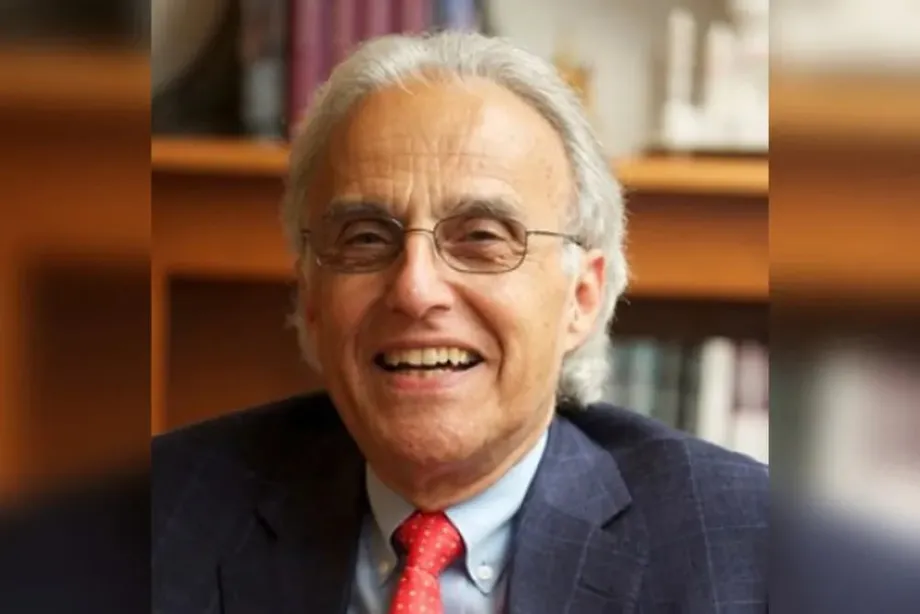
There are scholars who interpret the world, scholars who flatter it, and scholars who quietly make it less cruel. John L. Esposito belonged emphatically to the third category. His passing deprives us not merely of a distinguished academic, but of something now far rarer: a genuine public intellectual — one who understood that scholarship is not an ornamental profession but a moral vocation.
Esposito may well have been the last great public intellectual in the field now called Islamophobia studies, although he used the term less frequently than many who later made an industry of it. Long before Islamophobia became a conference theme, a specialized vocabulary, or an academic career track, he was confronting its most consequential forms: the intellectual caricatures that shaped journalism, diplomacy, public opinion, and American foreign policy.
He did not simply describe prejudice against Muslims. He disrupted the machinery that produced it.
His method was deceptively radical: he studied Muslims in order to understand them.
READ: US strikes on bridges in Iran leave dead and injured
He engaged figures such as Hasan al-Turabi, Rachid Ghannouchi, Hasan Hanafi, and Khurshid Ahmad when much of the West preferred to demonize them. He did not agree uncritically with everything they believed; serious scholars do not confuse understanding with endorsement. But he recognized that scholar-activists could not be comprehended through intelligence briefings, hostile newspaper profiles, or inherited Orientalist categories. They had to be read, questioned, challenged, and encountered as thinking human beings.
Through books such as Voices of Resurgent Islam and Makers of Contemporary Islam, Esposito introduced Western audiences to a vast intellectual world they had scarcely been told existed. He developed friendships across the Muslim world because he went there not as an anthropologist examining exotic specimens, but as an interlocutor. In
societies accustomed to Western experts arriving with prefabricated conclusions, his seriousness felt revolutionary.
His mentor, Ismail al-Faruqi, helped shape this disposition, but Esposito made it unmistakably his own. He became perhaps the first Western scholar of contemporary Islam to be welcomed across Muslim societies with something approaching popular affection. He was not merely respected. In Pakistan, Malaysia, Turkey, and elsewhere, he was embraced.
When he visited Pakistan in 2017 to deliver the inaugural memorial lectures for my father, Dr. Mumtaz Ahmad, the reception was extraordinary. The lectures, co-organized by the US-Pakistan Intercultural Coalition, took him to the Lahore University of Management Sciences, the University of Management and Technology, the National Defence University, and the Institute of Policy Studies. The halls were packed. Audiences stood wherever they could find space. John Esposito, an Italian-American Catholic scholar from Brooklyn, arrived in Pakistan and was received like a rock star.
But the enthusiasm was not celebrity worship. Pakistanis understood what he had done. Here was a Western scholar who had spent decades explaining Islam without condescension, Islamic politics without hysteria, and Muslim grievances without treating Muslims themselves as guilty until proven moderate. They regarded him, quite simply, as the greatest living Western scholar of Islam.
For our family, however, he was also Uncle John — or at least the sort of figure who occupies that emotional territory.
Before my father and one of his closest friends, Dr. Mumtaz Ahmad, passed away in 2016, I knew Prof. Esposito primarily through telephone calls. He was hilarious. He would announce, with theatrical exasperation, that he was still waiting for my father’s hopelessly overdue essay for yet another edited volume. This happened repeatedly over the years. My father’s deadlines were elastic; John’s irritation was affectionate; and both men seemed to understand that the ritual would recur indefinitely.
READ: UN chief says Muslims face discrimination, urges action to combat Islamophobia
His humor extended to his own career. He liked to say that before 1979 he barely had one and could hardly imagine writing a book. Then came Ayatollah Khomeini and the Iranian Revolution, producing what John jokingly called his first Lexus. Osama bin Laden and September 11, he would add, were responsible for the Mercedes. Behind the joke was a devastating observation: Western interest in Islam expanded most dramatically when Muslims could be represented as a crisis.