World
The Battle Within: Bangladesh Air Force Confronts TTP Infiltration

An alarming situation is currently developing inside the military establishment of Bangladesh, and the full magnitude of it only became apparent quite recently.
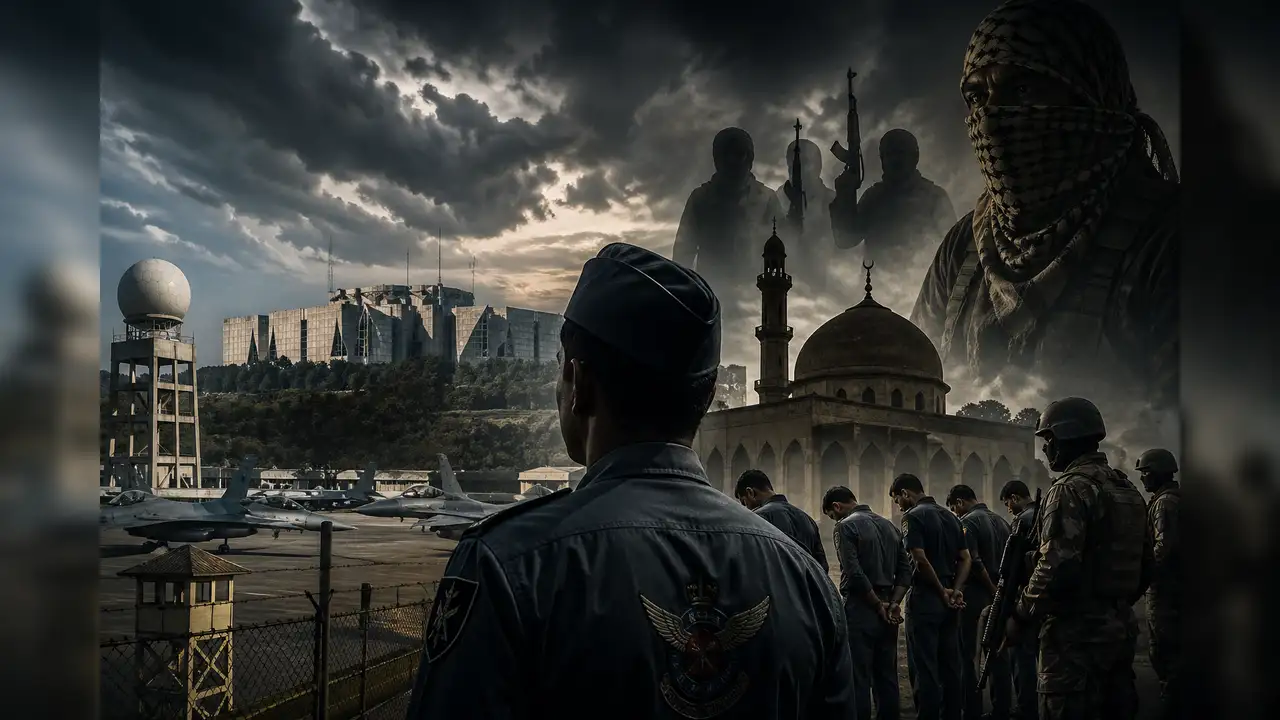
The process, which began in mid-April 2026 with a counterintelligence operation on the territory of Bangladesh Air Force (BAF), gradually transformed into the exposure of a network of Tehrik-e-Taliban Pakistan (TTP) recruitment cells located right on the territory of Bangladesh’s national defence facilities.
This is not a case of ordinary military misconduct. In reality, we are looking at an organised and calculated strategy used by Pakistan-based extremists to undermine and destroy a secular and professional institution.
A Trail Leading From Chittagong to the Frontier Regions of Pakistan
The whole story began with a rather ordinary case — one of the officers of Zahurul Haque airbase in Chittagong went AWOL for nearly two months until he finally surfaced in one of TTP’s hideouts in the northwest frontier region of Pakistan.
When questioned, the officer made it very clear that he belonged to TTP and also revealed that the terrorist group had established a structured recruitment network in the BAF, focusing primarily on JCOs and airmen.
That admission resulted in multiple raids conducted across three major air bases — Zahurul Haque in Chittagong, A.K. Khandakar in Kurmitola, Dhaka, and Matiur Rahman in Jessore.
The Enemy Who Stood at the Pulpit
During the investigation, the identity of the recruiter emerged as one Lutfur Rahma,n who served as a temporary imam of a mosque located at Zahurul Haque airbase. As per the allegations of the investigators, Rahman was personally chosen for that post by TTP recruiters six months ago due to the access and influence he possessed.
Being in charge of an effective recruiting base,e such as a mosque, Rahman systematically identified vulnerable members of the BAF and recruited them to radicalise them and make them join the ranks of militants.
So far, the raids have resulted in the arrest of two Squadron Leaders and nine JCOs and approximately another dozen airmen. However, most worrying is that some of them have succeeded in leaving the country to seek refuge abroad in places like Pakistan, Turkey, Portugal, and even New Zealand.
Reaching Out to the Right People
What makes the case particularly worrying is the level of premeditation displayed by those who attempted to penetrate the BAF’s structure. Unlike random individuals, all of those who were targeted by the recruiters were chosen for particular reasons: The
18th Squadron of BAF, located at Jessor,e serves as the centre where the radars for weather monitoring and airspace control operate. 25th Squadron, also located in Chittagong, contains aircraft carriers. Airmen Training Institute of BAF is an institution where young members of the Air Force undergo preparation.
Thus, in penetrating these particular units, the recruiters were obviously trying to disrupt the ability of Bangladesh to conduct aerial surveillance and attack strikes on the enemy. Also, reports have surfaced about plans to set up a TTP training camp in Ukhia, Cox’s Bazar, a town that has been facing serious problems due to the influx of Rohingya refugees. Apparently, the terrorists wanted to use a humanitarian disaster to launch an insurgency inside the territory.
A Part of Something Greater
It would be wrong to consider this case as being solely a military matter. The arrest of a militant operative, E Istiyak Ahmed, better known under the name of Sami, established the links between cells operating inside the army and a much larger project to attack “important installations”. The secret classified police notifications issued on April 23, 202,6 warn of the attacks against the National Parliament building, religious shrines, and military weapon depots.
From all of the above facts, it becomes clear that the plan of action aims at undermining the existence of Bangladesh itself through the creation of chaos and confusion among its troops and population. The plan involves the creation of connections between the radicalised members of the military and banned terroristgroups too destabilize the situation, according to the typical pattern of the Taliban.
A Force Struggling to Save Its Honor
The BAF Headquarters and the Bangladesh Police reacted quite promptly, although everything about it happened behind closed doors. All applications for leave submitted by civilian officials have been cancelled. JCOs were ordered to confiscate the mobile phones of lower-rankingservicemen too isolate the latter from any kind of communications with the people in charge of recruitment outside the country.
The investigation has now reached beyond the Air Force — intelligence agencies are actively screening Army and Navy units, trying to find out whether the cells have also penetrated them. Increasing surveillance measures and conducting frequent roll calls at air bases suggest that the military authorities have realized that there are enemies among their ranks.
What Has to Be Done Now
The recent discovery of the TTP cells operating within the BAF is a clear sign that the problem of external destabilization is not theoretical but actual. Over the past few years, many foreign actors have attempted to take advantage of political changes to infiltrate Bangladesh with radical ideologies. The fact that one of the BAF officials ended up being captured in one of TTP’s hideouts in Pakistan clearly shows what kind of risks await the country in the future.
In terms of dealing with this danger, one can conclude that arresting the members of the cells and raiding the areas where they might exist is only the first step. However, the real challenge lies ahead.
Dismantling the threat in terms of eliminating its internal agents does not guarantee anything if the issue of its sources is not solved. Confronting the external enemies of Bangladesh will determine whether it can overcome the current crisis.
The integrity of its airspace relies fully on the loyalty of its guardians. There is no place for double loyalty here.