World
Syria’s Sharaa appoints lawmakers, paving way for new parliament to convene

Reuters — Syrian authorities announced the names of 70 lawmakers on Wednesday appointed to a transitional parliament by President Ahmed al-Sharaa, paving the way to convene the body next week more than eight months after the process of forming it began.
The 210-member chamber, two-thirds of which was chosen by regional electoral colleges last year, will wield limited power under a presidential ruling system established under Sharaa since he ousted Bashar al-Assad in 2024.
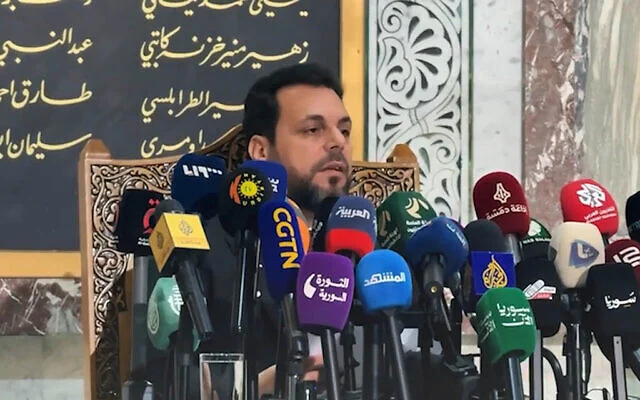
The People’s Assembly will hold its first session on Monday, Mohamed Taha al-Ahmed, head of the Higher Judicial Committee for Parliamentary Elections, said during a news conference.
The formation of the new parliament has been seen as a test of Sharaa’s promises of political inclusivity in post-Assad Syria.
His appointees included 15 women, boosting to 21 the number of female lawmakers after last year’s selection process resulted in only six being chosen.
Officials did not specify how many of the newly appointed lawmakers hailed from religious and ethnic minorities. Ten of the seats chosen last year went to members of religious and ethnic minorities, including Kurds, Christians and Alawites — the sect to which Assad belongs. Sharaa, a former al-Qaeda commander, is a member of Syria’s Sunni Muslim majority.
Sharaa has previously said he would use his nominations to address imbalances in political representation that emerged from last year’s selection process, notably in the representation of women.
Ahmed said the selection of lawmakers for the predominantly Druze province of Sweida had been postponed until “conditions become suitable.” The area has remained outside state control since government forces and allied fighters clashed with Druze there last July, with some 1,700 people killed, according to the United Nations.
The overthrow of Assad ended more than five decades of iron-fisted rule by his family, during which parliament was seen as little more than a rubber stamp.
UN Deputy Special Envoy for Syria Claudio Cordone had told the Security Council last week that the delay in forming the parliament was “generating anxiety.”
The two-thirds of lawmakers chosen last year were selected by electoral bodies formed under a committee appointed by Sharaa.
Officials have said this system was necessary because years of war had left millions of Syrians displaced and made it impossible to rely on accurate population records or voter rolls for nationwide elections.
Critics of the process, including some Syrian political figures and civil society groups, say the electoral framework concentrates influence over the legislature in the presidency.
In a joint position paper, a coalition of Syrian rights organizations said this process risks undermining parliamentary independence and political pluralism. The groups also called for broader political participation, stronger safeguards for judicial independence and electoral oversight, and greater representation of women and Syria’s diverse communities.
A temporary constitution introduced in March 2025 granted parliament limited powers. There is no requirement for the government to win a parliamentary vote of confidence.
The Assembly can propose and approve laws. Its term is 30 months, renewable. It assumes legislative authority until a permanent constitution is adopted and elections are organized.