World
Swedish schools turn back to paper amid worries over digital impact

Sweden, once seen as a global leader in bringing laptops and tablets into classrooms, is now investing heavily in printed textbooks amid growing concerns that extensive screen use may be hurting children’s learning and concentration.
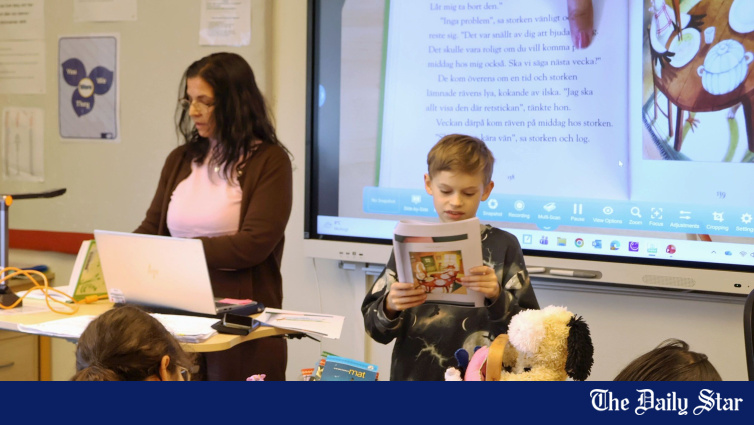
At Bandhagen school in Stockholm, fourth-grade students read aloud from printed materials after spending part of the lesson reading books of their choice — a scene that reflects Sweden’s broader shift back toward paper-based learning.
“When I read on devices, I usually get a headache,” said Emilia, who is in her teens. “I can concentrate better when I read physical books.”
Sweden rapidly expanded the use of digital devices in schools around 2010, but debate intensified after results from the OECD’s Program for International Student Assessment showed sharp declines in reading and mathematics scores between 2018 and 2022.
A government-commissioned review by neuroscientists and pediatric experts concluded that heavy reliance on digital devices could impair attention and concentration and that printed materials may be more effective for learning.
In response, Sweden changed course in 2023, encouraging paper-based instruction for younger students and setting aside 658 million to 755 million kronor ($70 million to $80 million) annually through 2025 for textbooks and other printed teaching materials in preschools as well as compulsory schools, which covers elementary through junior high schools for Japan.
Sweden’s return to printed books comes at a time when some countries are digitalizing their education. In Japan, for example, a revised law has recently been enacted to introduce digital textbooks as formal teaching materials at schools.
“The decision was based on research suggesting that young children, whose brains are still developing, may be particularly vulnerable to the effects of digital devices,” said Joar Forssell, chair of the parliament’s education committee.
But some researchers and educators point to other factors, including demographic changes and the challenges faced by students from immigrant families behind weaker academic performance. Sweden started taking in large numbers of immigrants and refugees from Syria, Afghanistan and African countries from around 2015.
The focus should be on finding the right balance between digital and traditional teaching methods, rather than blaming technology alone, according to Bandhagen’s Principal Pia Nystrom.