World
State exploited October 7 to silence Arab citizens systematically, report says

A new report by the left-wing Zulat Institute for Equality and Human Rights on Monday accused the government and state institutions of exploiting the October 7, 2023, Hamas massacre to suppress free speech in the Arab Israeli community.
Since October 7 and throughout the ensuing war, “a widespread perception has taken hold that the exercise of freedom of expression and demonstration among the Arab public constitutes a security threat that must be thwarted in advance, or at the very least significantly restricted,” the report said.
“This perception was not confined to fringe elements, but was adopted by state authorities – including the police, the State Attorney’s Office, the attorney general, the Supreme Court, the government and members of Knesset – and was also legitimized in academia, the labor market, the media and among significant parts of the Israeli public,” the report stated.
The Zulat Institute is an Israeli think tank founded by Zehava Galon, a former head of the left-wing Meretz party.
The report, titled “If You Speak, a Policeman Will Come – The Silencing of the Arab Public During the War,” argued that from the very first months following the massacre, and increasingly as the war dragged on, the state of emergency and the threat to Israel were abused to silence and suppress legitimate protest and discourse in Arab society, regardless of its substance or severity.
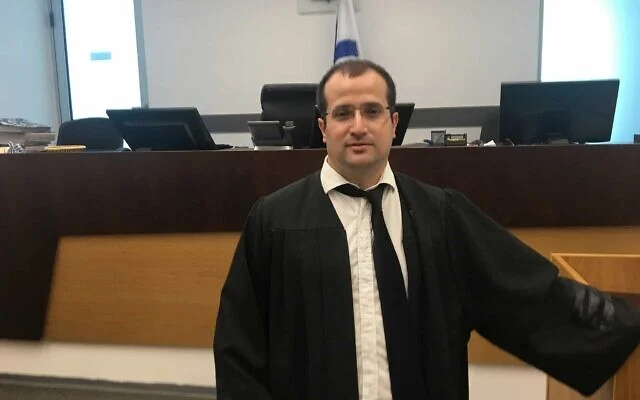
Attorney Eitay Mack, the report’s author – who also penned a previous report warning against the improper use of police to undermine election integrity – examined a series of cases from October 7 through recent months.
According to Mack, “expressing a critical position [in Arab society] was perceived as support for terrorism and as treason, and the price exacted for it was heavy and often involved harm to personal safety, social ostracism, suspension or dismissal from work, disciplinary proceedings at universities, or the opening of criminal investigations.”
The report highlighted the role of far-right National Security Minister Itamar Ben Gvir, who has been accused of using police to enforce his ultranationalist worldview. It said that police policy under Ben Gvir over the past three years has effectively been based on the premise that “allowing the Arab public to exercise its freedoms of expression and demonstration is tantamount to legitimizing support for Hamas.”
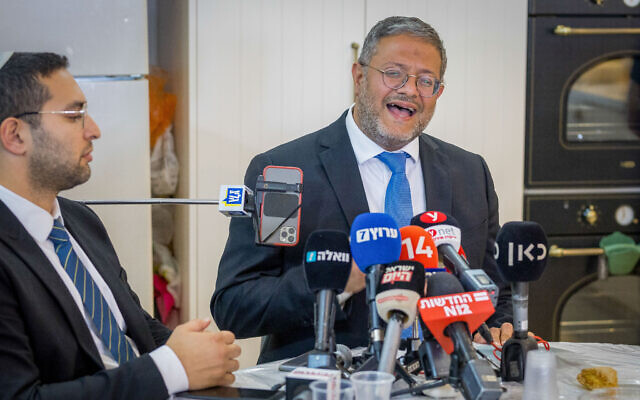
It detailed how Ben Gvir repeatedly raised the specter of Arab Israelis taking to support Hamas as they did during the May 2021 riots.
While that scenario never materialized, the report argued that the message successfully filtered down the ranks to politicians, uniformed personnel, and their commanders. This occurred despite the police commissioner making it clear during a Knesset committee discussion that, regarding Israel’s Arab citizens, “a good word must be said. There is exemplary behavior here, we have almost zero incidents of friction.”
The report highlighted a series of instances in which police nevertheless shifted their policy, making it increasingly difficult for Israel’s Arab citizens to exercise their legitimate freedom of expression and protest.
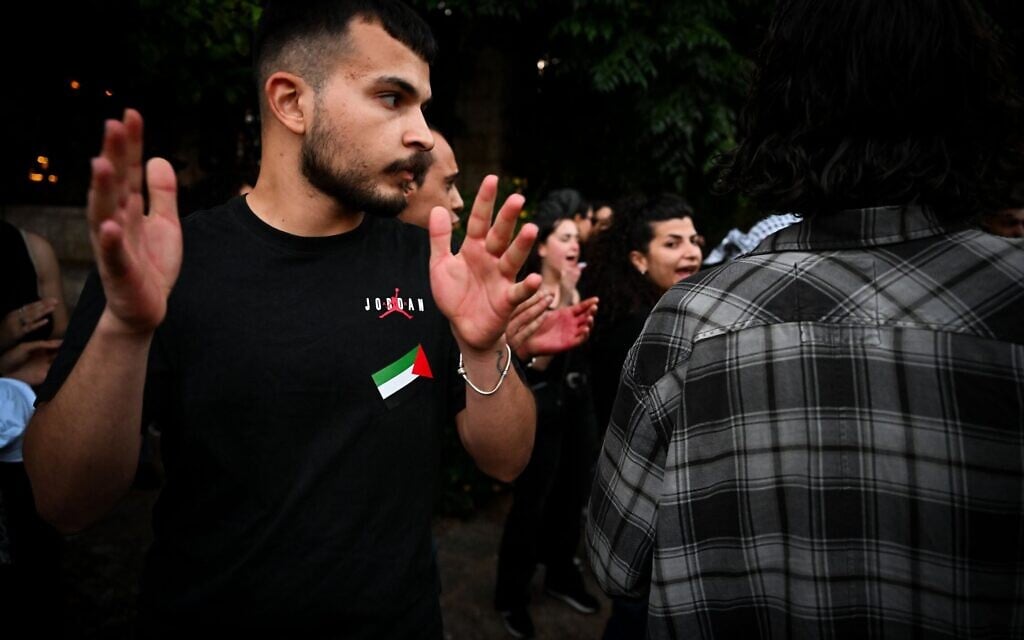
For instance, a Jewish-Arab conference scheduled for October 26, 2023, in Haifa – which former Knesset speaker Avraham Burg and Mohammad Barakeh, chairman of the High Follow-Up Committee (the top representative body for Arab citizens of Israel), were supposed to attend – was canceled. Police informed the owner of the venue that if he hosted the conference, his hall could be shut down.
Simultaneously, a wave of cancellations swept the cultural sphere. The screening of the documentary “1948 – Remembering and Forgetting,” produced by the Kan public broadcaster, was postponed, and police banned the screening of the documentary film “Lod” in Jaffa.
While these two films might be perceived by the Jewish public as bearing controversial messages, they had no connection to the events of October 7. Welcoming the moves, Ben Gvir stated: “I back the police commissioner and the Israel Police in their actions against incitement.”
Censoring protest signs
The report listed a series of infringements on the Arab public’s freedoms of expression and demonstration. On the surface, at least, those incidents had no connection to inciting terrorism or violence.
The report also noted that Ben Gvir had begun trying to crack down on Arab freedom of expression even before the October 7, 2023, massacre, leading an effort in January of the year to ban the public display of Palestinian flags.
The crackdown occurred even though the Supreme Court has ruled that raising a flag is inherently protected under freedom of expression. Furthermore, an opinion issued by the deputy attorney general determined that enforcement of measures against raising a flag is only permitted when “a real suspicion arises of the offense of identification with a terrorist organization or expressing sympathy for it, or when there is a high-probability concern of a serious breach of public order.”
The ban on flags only expanded as the war dragged on, with police often making no secret of the fact that the primary motivation behind the enforcement was simply to silence dissent.
On April 15, raising flags was banned at a rally marking Nakba Day – which commemorates the displacement of Palestinians during the 1948 establishment of Israel – held at the entrance to Tel Aviv University and attended by only a few dozen people. Ten days later, police raided the Nazareth offices of the Arab-Jewish Hadash political alliance and the Maki communist party, arresting activists on the grounds that “there were Palestinian flags at the site, displays that constitute incitement material.”
A month later, the Jewish mayor of the mixed Arab-Jewish city of Lod boasted that during a procession in the city center, “for the first time, the police enforced [measures] against raising Palestinian flags and there was not a single flag.”
In July, police arrested two demonstrators for raising a Palestinian flag at a Haifa protest attended by just five people. The judge rejected police’s request to extend their remand, ruling that raising a Palestinian flag does not constitute grounds for arrest or for shutting down a protest.
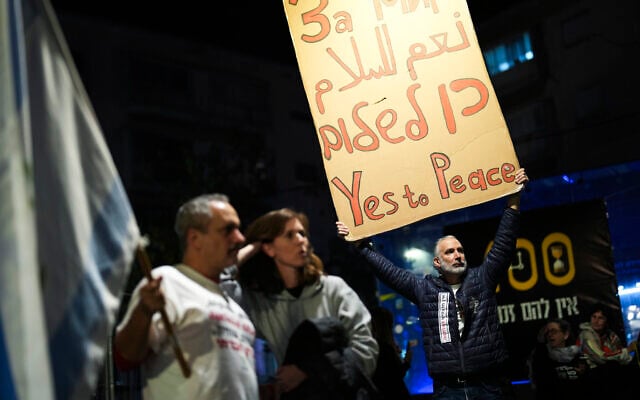
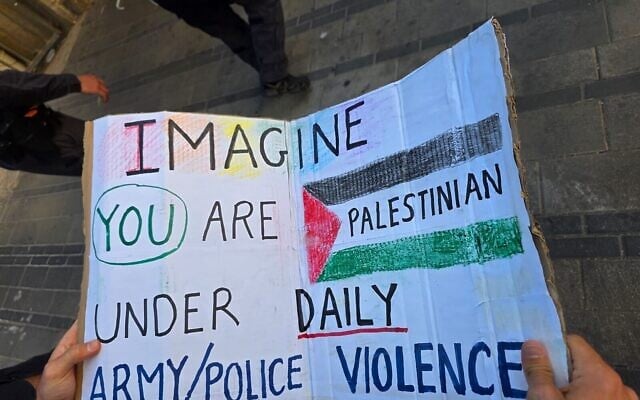
The report also provided an abundance of examples detailing police violations of the law and Supreme Court rulings regarding protest signs.
Unlike a flag, which also serves as a national symbol, case law regarding the display of signs is even clearer and more decisive. A series of legal decisions has established that police may not censor critical or provocative content, or infringe upon the right to free expression based on wording – even if it is blunt or infuriating. The sole exception is when there is suspicion of a criminal offense, such as incitement to murder.
Among the confiscated signs listed in the report – which in some cases also led to arrests – were slogans such as “Freedom for Gaza,” “Stop the bombings in Gaza,” “Stop the genocide in Gaza,” “There are civilians in Gaza,” and “Stop the massacre.” On the face of it, those signs do not meet the legal threshold for incitement under any existing criterion.
Indeed, in several cases, officers in the field explicitly stated they would prohibit any sign showing identification with Gaza or criticizing the justification for the war, even if those signs contained no incitement. In its response to a petition filed by the Association for Civil Rights in Israel, the state denied the existence of “principled police directives preventing the carrying of signs against the war within the framework of protests.”
However, despite these repeated official instructions, it is evident that on the ground, some officers openly disregarded directives and briefings, continuing to implement a policy that violates the law.
Ben Gvir’s office did not respond to a request for comment.
Persecution of academics and artists
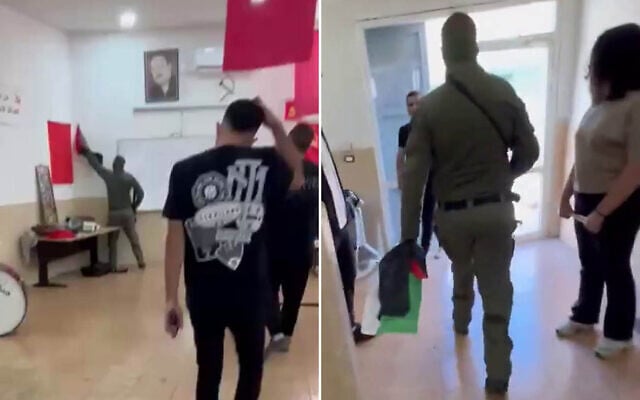
The report also detailed numerous incidents of incitement against Arab Knesset members, alongside a wide variety of cases involving the “silencing of Arab workers, artists and academics.” One prominent example is the high-profile arrest of singer Dalal Abu Amneh. On the day of the October 7 massacre, she published a post featuring a Palestinian flag alongside a Quranic verse: “There is no victor but God.”
Abu Amneh was subjected to widespread protests outside her home and threats. She was arrested, but the State Attorney’s Office simply announced: “After examining the circumstances of the case, it was decided to close the file.”
Similarly, Dr. Abd Samara, director of the Cardiac Intensive Care Unit at Hasharon Hospital in Petah Tikva, was suspended from his post roughly two weeks after the massacre following complaints about alleged “support for terrorism” in an image posted on his Facebook page.
Health Minister Uriel Buso declared his support for the move and encouraged the hospital to suspend the senior physician. Buso justified the decision by citing “statements of support for the terrorist organization that massacred and murdered hundreds of Jews in cold blood,” which he alleged Samara had made.
Samara subsequently posted a clarification on Facebook, explaining that the image in question was actually from two years prior, long before the massacre. He emphasized that he does not support terrorist activity in any form, and noted that the suspension was carried out behind his back, with hospital management making no attempt to clarify the details with him.
An investigation revealed that the allegation was indeed based on Samara’s profile picture from June 2022, a year and a half before the massacre. The image featured an illustration of the Islamic flag alongside the text: “There is no god but Allah and Muhammad is his messenger.”
The report also faulted the State Attorney’s Office and the attorney general, saying they either failed entirely or did not make a sufficient effort to combat the police’s ongoing crackdown on freedom of expression and protest in Arab society.
“They defended the police position in petitions filed to the High Court of Justice regarding the suppression of the freedoms of expression and demonstration among the Arab public, and determined that preventing demonstrations or restricting them was justified because they constitute a threat to public order and security,” the report stated.
As an example, the report cited a decision by State Attorney Amit Aisman, who authorized the police investigations division to open probes into suspects for incitement offenses without prior approval from the State Attorney’s Office. This applied to cases involving a single unequivocal statement, “against the backdrop of Israel being at war and in times of emergency, in clear cases of expressions of support for terrorist organizations and their murderous actions.”
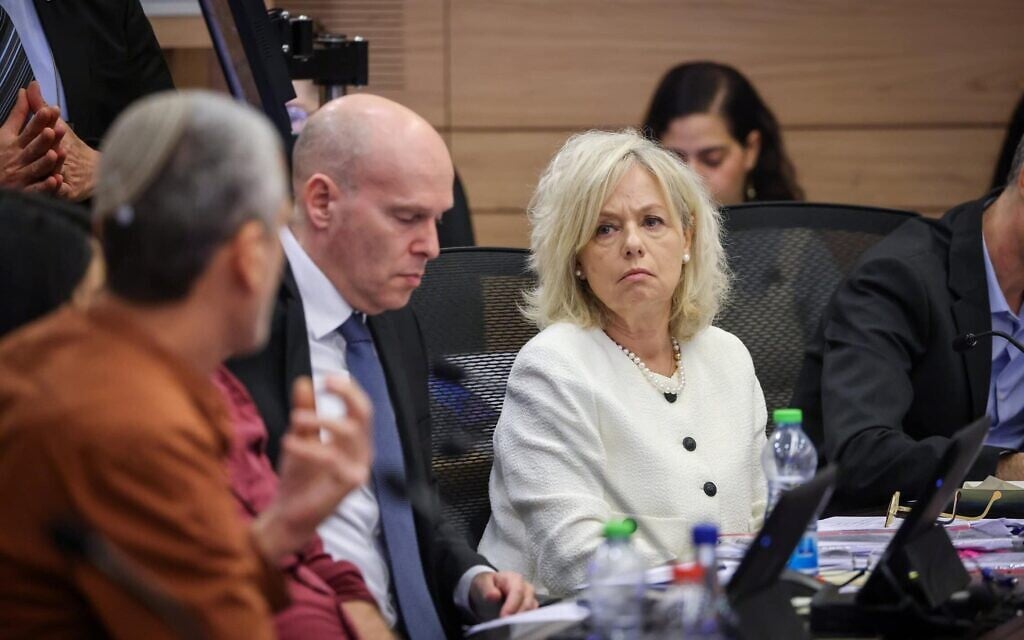
The permit sparked a massive inflation in investigations regarding incitement to violence and terrorism. By October 25, 2023, the police had already announced that “110 suspects have been arrested on suspicion of incitement to violence and terrorism,” and that “since the start of the fighting, more than 270 posts encouraging violence, incitement, support and identification with terrorist organizations have been handled.”
The report noted that the temporary permit was rescinded in early 2024. The surge in case files over isolated incidents drew criticism from within the Justice Ministry itself, as the loosened rules made it easier for police on the ground to overreach and persecute individuals for single statements. Indeed, at a July 2024 conference, State Attorney Aisman admitted that the permit may have been interpreted too broadly – a trend that continued even after it was revoked:
“We have recently encountered several cases in which the Israel Police opened an investigation into statements without receiving the State Attorney’s Office’s approval, as required by the State Attorney’s directive,” Aisman said. He confirmed that police were charging suspects with allegations of treason or of disturbing public order – offenses seemingly unrelated to the statements themselves – in direct violation of the State Attorney’s Office directives.
For comparison, the report noted that the attorney general and the state attorney “decided not to open a criminal investigation into at least 80 statements by Jewish public figures and members of Knesset against the Palestinian population […] even in cases where videos and social media posts were published calling to burn, destroy and erase Palestinian communities or calling to kill civilians – explicitly and implicitly.”
“The message of the state authorities to the Arab public was clear,” the report’s author concluded. “It is forbidden to oppose the war, express pain over the killing and hunger in Gaza, cast doubt on the version given by the government and security forces, or express solidarity with Palestinian victims in Gaza. Anyone who did so could be classified as a terror supporter or a traitor, and risked harm to their personal safety, dismissal or prosecution.”