World
Starmer stays defiant as Mandelson saga continues to swirl

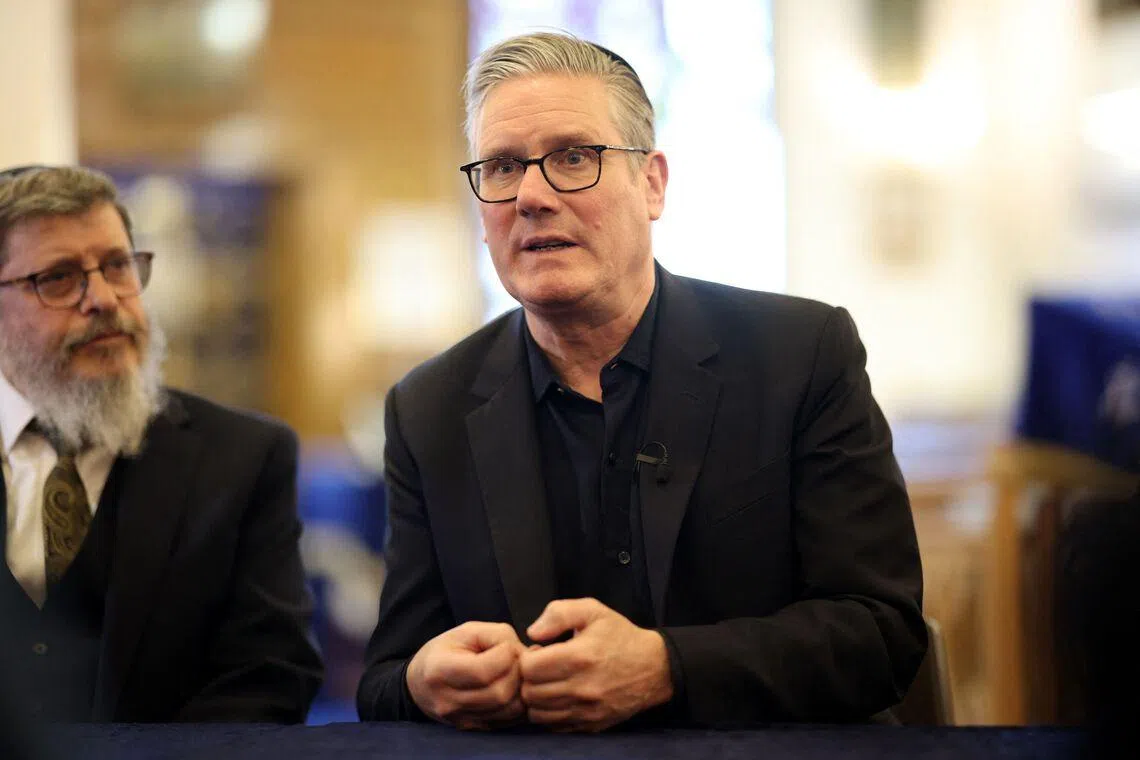
Prime Minister Keir Starmer insists he will remain in the job and lead the Labour Party into the next general election, even as the controversy over his appointment of Mr Peter Mandelson as ambassador to the US refuses to die down.
In an interview with the Sunday Times, Mr Starmer dismissed speculation he will be forced to resign or that he will face a leadership challenge as “talk”.
While once again acknowledging that the appointment of Mr Mandelson was a mistake, he expressed frustration at how the scandal is overshadowing the “urgent” issues facing his government.
“I understand why there are questions,” Mr Starmer said in the interview. “I’ve answered I don’t know how many of them. But at the same time, I’ve got a huge amount of work to do on the war on two fronts.”
The fallout from the Mandelson saga will continue in Westminster on April 27, with Speaker of the House of Commons Lindsay Hoyle deciding whether to allow an opposition motion calling for Mr Starmer to face an investigation into whether he misled MPs over the appointment.
For his part, Mr Starmer may have to decide if he wants to whip his Labour MPs against such a vote, a move that would risk a further test of his shaky authority.
“There doesn’t need to be an investigation, because he hasn’t lied to Parliament,” Environment Secretary Emma Reynolds said on Times Radio on April 27.
“It was proven categorically last week that the Prime Minister has not lied.”
The opposition parties have been calling for Mr Starmer to face a probe over his statements in Parliament that “due process” had been followed in the Mandelson appointment, and also that “no pressure” was applied to the Foreign Office to approve Mr Mandelson.
Mr Olly Robbins, who was sacked by Mr Starmer over the affair, told a parliamentary committee on April 21 that he faced an “atmosphere of pressure” from Downing Street to get Mr Mandelson’s appointment over the line, apparently contradicting Mr Starmer’s own statement in the House of Commons the day before.
“There are different types of pressure,” Mr Starmer told the Sunday Times. “There’s pressure, ‘can we get this done quickly’, which is not an unusual pressure. That is the everyday pressure of government.”
The appointment of Mr Mandelson, a friend of the late, disgraced financier Jeffrey Epstein, has engulfed Mr Starmer’s already rocky tenure and shows no sign of going away.
Evidence from the former top civil servant at the Foreign Office last week eroded the Prime Minister’s credibility over the saga, and more testimonies are scheduled for the coming week.
Mr Starmer’s former chief of staff Morgan McSweeney will appear before lawmakers on April 28, as will former Foreign Office chief Philip Barton.
The saga has undermined public trust in Mr Starmer ahead of local elections in May where Labour is predicted to sustain big losses, and damaged the premier’s relationship with the British civil service. It has also drawn attention away from Mr Starmer’s response to the Iran crisis.
“The whole situation is regrettable as you would imagine,” Mr Starmer’s chief secretary Darren Jones said during a BBC interview on April 26.
“But as to say on this particular questions on whether the PM had lied or done any wrongdoing here – that’s has been shown not to be the case.”
On the Iran war, one of the government’s concerns is tackling UK inflation, which has been pushed up by the US-Israel war with Iran, mainly through higher energy prices linked to disruptions in Middle Eastern supplies.
The government is monitoring potential shortages across fuel types, but the bigger concern is energy, food, and travel costs that are expected to increase over the coming months, with the impact lasting well beyond any resolution – potentially for months after tensions ease, Mr Jones told the BBC.
“It really depends on how long the negotiations take to unblock the Strait of Hormuz and bring the de-escalation to the conflict in the Middle East. I think our best guess eight-plus months from the point of the resolution when you’ll see economic impacts coming through the system,” he said. BLOOMBERG