Topnews
SPECIAL REPORT: The Trillion-Naira Paradox — How Tinubu’s Economic Windfalls Clash with “Renewed Hope” Promises

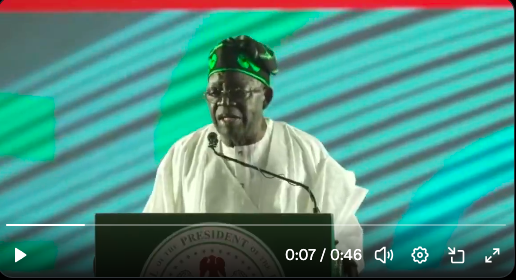
ABUJA, NIGERIA — When President Bola Ahmed Tinubu stepped onto the inauguration podium in May 2023, his declaration that “subsidy is gone” was framed as the painful but necessary key to unlocking national prosperity. Central to his “Renewed Hope” manifesto were pledges to drastically reduce the cost of governance, cut systemic waste, expand infrastructure without drowning the nation in debt, and lift millions of Nigerians out of poverty through targeted social investments.
Three years into his administration, an in-depth analysis of government financial flows reveals an unprecedented macro-fiscal windfall. However, a sharp contrast emerges when comparing the trillions accruing from fuel subsidy savings, tax overhauls, and new loans against the reality of capital delivery, mounting debt servicing costs, and escalating executive spending.
1. The Inflow Boom: Subsidy Savings, Tax Surges, and Mounting Loans
From 2023 through 2026, the Tinubu administration has overseen one of the most rapid expansions of public cash inflow in Nigeria’s financial history, powered by fuel subsidy removal, aggressive tax collections, and net borrowings.
- Fuel Subsidy Removal Savings: According to fiscal monitoring reports and FAAC disclosures, terminating the petrol subsidy unlocked approximately ₦15.8 trillion in cumulative savings between June 2023 and December 2025. The funds, previously lost to under-recovery, were redirected into state and federal coffers.
- Tax & Non-Oil Revenue Surge: Driven by aggressive tax reforms under the Federal Inland Revenue Service (FIRS) and exchange rate adjustments, tax revenue skyrocketed from ₦12.3 trillion in 2023 to ₦28.3 trillion in 2025, topping ₦21.6 trillion in H1 2026 alone. Cumulative internal revenues crossed the ₦68 trillion mark.
- Public Debt Accumulation: Despite record internal revenue, borrowing escalated. Data from the Debt Management Office (DMO) shows Nigeria’s total public debt climbing toward ₦166.79 trillion, with new external borrowings pushing foreign debt up by over $11.4 billion.
2. The Outflow Reality: Debt Service, Infrastructure, and Executive Costs
While government revenues have scaled up to macro-trillion-naira levels, the disbursement of these funds tells a very different story:
======================================================================================
TOTAL GOVERNMENT INFLOWS & DEBT POOL (2023–2026)
======================================================================================
1. Internal Tax & Non-Oil Revenues (FIRS/Customs/SOEs)  : ~₦68.0 Trillion
2. Fuel Subsidy Removal Savings                         : ~₦15.8 Trillion
3. Net Public Debt Additions (Domestic + External)      : ~₦75.2 Trillion
--------------------------------------------------------------------------------------
AGGREGATE CASH POOL & BORROWINGS                        : ~₦159.0 Trillion
======================================================================================

======================================================================================
ESTIMATED ALLOCATIONS & EXPENDITURES
======================================================================================
1. Debt Servicing & Capital Repayments                 : ~₦45.0+ Trillion
2. Recurrent Expenditure (Civil Service Salaries/Pensions): ~₦28.0+ Trillion
3. Capital Infrastructure Outlays                       : ~₦35.0+ Trillion
4. Presidential Travels, Fleet & Aides' Logistics       : ~₦37.64 Billion (~₦0.0376 Trillion)
======================================================================================
While capital outlays are allocated toward flagship projects such as the Lagos-Calabar Coastal Highway and regional rail lines, debt servicing and personnel costs continue to swallow between 60% and 70% of actual collected revenues.
3. Campaign Promises vs. Economic Realities
The core friction in President Tinubu’s economic record lies in the gap between the commitments made in the 2023 APC Manifesto and the fiscal decisions made in office.
+-----------------------------------+-----------------------------------+-----------------------------------+
| Campaign Promise (2023 Manifesto) | Official Administrative Record    | Economic Reality for Citizens     |
+-----------------------------------+-----------------------------------+-----------------------------------+
| "Drastically reduce the cost of   | Over ₦37.64B spent on local and   | High inflation, soaring power     |
| governance and elite waste."      | foreign executive travels.        | tariffs, and cost-of-living strain.|
+-----------------------------------+-----------------------------------+-----------------------------------+
| "Eliminate reliance on excessive  | External debt grew by ~$11.4B;    | Debt servicing consumes bulk of   |
| foreign borrowing."               | total debt topped ₦166.79T.       | actual tax revenue.               |
+-----------------------------------+-----------------------------------+-----------------------------------+
| "Reinvest subsidy savings into    | ₦15.8T redirected to FAAC and     | Public services remain strained;  |
| public infrastructure & social safety." | legacy highway projects.    | cash releases lag behind budgets. |
+-----------------------------------+-----------------------------------+-----------------------------------+
Key Highlights of the Gap:
- Cost of Governance:
- The Promise: In his manifesto, Tinubu pledged a “lean, efficient government” and a firm reduction in the cost of governance.
- The Reality: Independent tracking via GovSpend shows executive travel, presidential air fleet maintenance, and international delegation estacodes crossing ₦37.64 billion. While this represents roughly 0.05% of internal tax receipts (~₦68 trillion), its political weight is immense amidst public austerity calls.
- Fiscal Independence vs. Debt:
- The Promise: Moving away from heavy deficit financing toward expanding the local production base.
- The Reality: To cover widening budget deficits, the administration has relied heavily on international bond markets, multilateral loans ($20.5B+ requests), and domestic debt issuances.
- Public Relief vs. Macro Gains:
- The Promise: Protecting purchasing power and ensuring shared prosperity.
- The Reality: While macro indices show historic tax collection milestones, average households face elevated food inflation, removal of electricity subsidies, and reduced purchasing power.
The Bottom Line
The administration’s fiscal reforms have succeeded in generating record-breaking revenues and unlocking thousands of billions in previously spent subsidy funds. Mathematically, spending on presidential travel and executive overhead is a small fraction of national debt or total tax receipts.
However, politically and socially, the contrast between multi-billion-naira administrative spending and the hardship endured by citizens remains a defining challenge of the “Renewed Hope” agenda. As the country approaches the final leg of the presidential term, the key question for voters remains whether these macroeconomic windfalls will translate into tangible structural relief for the average Nigerian.
Related