Special Report
Sowore urges police to release detainees over alleged Elumelu defamation case

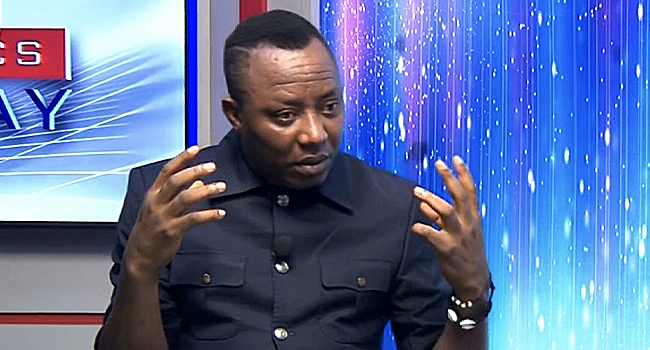
Human rights activist and former presidential candidate Omoyele Sowore has called on the Nigeria Police Force to release three individuals arrested over alleged defamatory reports involving Tony Elumelu, Chairman of United Bank for Africa (UBA).
In a Facebook post shared on Monday, Sowore argued that publishing claims about a public figure’s marital status should not be treated as a criminal offence warranting arrest or detention. According to him, such matters fall within the scope of civil law rather than criminal prosecution.
“We must continue to remind the Nigerian Police Force that it is not a criminal offence warranting arrest or detention for bloggers to report that Tony Elumelu… has reportedly divorced his wife,” Sowore stated.
He further called for the immediate release of Kingsley Akunemeihe, Chigozie Success Ihebom, and John Surpruchi Nwanorue, who were reportedly arrested in connection with the publication.
Sowore maintained that even if the claims were inaccurate or damaging, the appropriate legal response would be through civil litigation rather than police action. He warned against what he described as the misuse of law enforcement to suppress online expression.
The controversy follows an earlier statement by UBA dismissing as false and defamatory a viral report alleging that Elumelu had divorced his wife, Awele Elumelu. The bank described the publication as “fabricated, reckless, and malicious,” insisting that it was intended to mislead the public and harm reputations.
READ RELATED STORY
Sowore rejects Ibadan opposition summit
Sowore: Tinubu’s UK trip adds nothing to Nigeria
In a statement signed by its Group Head of Brand, Marketing and Corporate Communications, Alero Ladipo, the bank confirmed that the matter had been reported to law enforcement authorities, leading to the arrest of three individuals allegedly linked to the creation and dissemination of the content.
UBA also warned individuals and digital platforms sharing the report to desist and remove the material, noting that failure to comply could result in both civil and criminal proceedings.
The development has triggered wider debate across Nigeria’s media and legal landscape, raising questions about the limits of free speech, the boundaries of defamation law, and the role of the police in handling disputes arising from online publications.
Legal analysts note that while defamation can carry serious consequences, the distinction between civil and criminal liability remains a contentious issue, particularly in cases involving public figures and digital media.