Viral
Sowore Raises Alarm Over Possible Security Appointment for Sunday Igboho

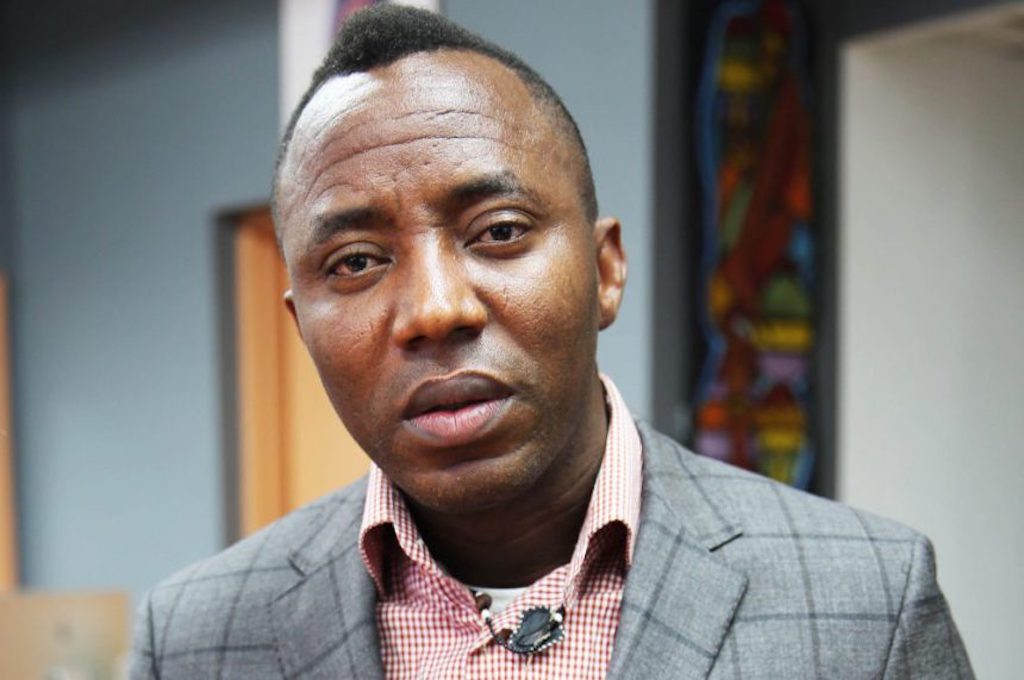
Former presidential candidate of the African Action Congress (AAC), Omoyele Sowore, has cautioned the Federal Government against assigning official security responsibilities to Yoruba nation agitator Sunday Igboho or any other non-state actors, warning that such a move could threaten democratic accountability and human rights protections.
Sowore made the remarks on Tuesday in Abuja after participating in a mass protest over the deteriorating security situation across Nigeria. The demonstration drew attention to the increasing wave of kidnappings, violent attacks, and insecurity affecting several parts of the country, including the recent abduction of pupils, teachers, and a school principal in Oyo State.
Speaking with journalists on the sidelines of the protest, the activist acknowledged that Sunday Igboho already commands a loyal following and possesses an existing network capable of carrying out security-related operations independently of government support.
However, he argued that officially empowering individuals or groups outside established state security institutions could create significant legal, political, and human rights concerns.
According to Sowore, the challenge with entrusting security functions to non-state actors lies in the difficulty of ensuring that their operations comply with national laws and internationally accepted human rights standards.
He noted that once security authority is delegated to unofficial groups, it becomes harder for the government to enforce operational guidelines, accountability mechanisms, and oversight procedures designed to protect citizens from abuse.
Sowore further questioned Igboho’s suitability for any formal security role, citing statements allegedly made by the Yoruba nation agitator regarding political activities in the South-West region.
He argued that any individual perceived as politically partisan should not be entrusted with powers that could be used to influence political opposition or restrict democratic freedoms.
The AAC chieftain maintained that granting official security authority to such figures could be interpreted as endorsing partisan interests, thereby eroding public confidence in the neutrality of security operations.
Sowore also used the opportunity to reiterate his unconventional views on national defence and security management. In a remark that drew attention from those present, he restated his preference for deploying advanced technology and automated systems in tackling security threats rather than relying heavily on political appointees.
His comments come amid growing public debate over alternative approaches to addressing Nigeria’s security challenges, as communities across the country continue to grapple with kidnappings, banditry, terrorism, and other forms of violent crime.
The protest in Abuja reflected increasing frustration among citizens who are demanding stronger and more effective measures from the government to safeguard lives and property and restore confidence in the nation’s security architecture.