Viral
Some Governorship Candidates Spend Up to ₦30 Billion to Win Elections — EFCC Chairman Olukoyede

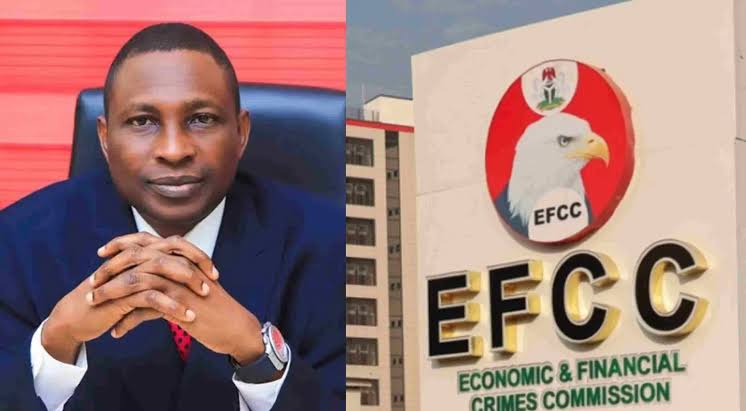
Chairman of the Economic and Financial Crimes Commission (EFCC), Ola Olukoyede, has expressed alarm over the escalating cost of political campaigns in Nigeria, revealing that some governorship aspirants reportedly spend between ₦20 billion and ₦30 billion in their quest to secure electoral victory.
Olukoyede made the disclosure on Wednesday while delivering a public lecture at the University of Ilorin, where he warned that the growing commercialisation of politics poses a serious threat to democratic governance and national development.
The lecture, organised by the Centre for Peace and Strategic Studies, focused on emerging challenges and preparations ahead of Nigeria’s 2027 general elections.
Rising Cost of Politics Fuels Corruption
According to the EFCC chairman, the enormous sums being spent by politicians to secure elective positions have created a dangerous cycle that often encourages corruption in public office.
He argued that candidates who invest billions of naira during election campaigns may feel compelled to recover their expenses once they assume office, thereby increasing the likelihood of financial misconduct and abuse of public resources.
Olukoyede warned that such practices undermine the integrity of the democratic process by allowing financial influence to determine electoral outcomes rather than competence, ideas, or public service credentials.
“The commercialisation of votes weakens the foundation of good governance because it compromises the political recruitment process,” he said.
He added that politicians who spend excessively to secure victory may be more concerned with recouping their investments than addressing the needs of citizens.
“Leaders who buy their way into office are more likely to focus on recovering their investments rather than serving the public interest,” he stated.
EFCC Intensifies Crackdown on Vote Buying
The anti-corruption chief reiterated the commission’s commitment to combating vote-buying, financial inducement and other forms of electoral malpractice capable of undermining free and fair elections.
He disclosed that the EFCC has already arrested several individuals in different parts of the country over alleged involvement in electoral offences linked to money politics.
According to him, those facing investigation and prosecution include politicians, electoral officials and other individuals accused of violating provisions of Nigeria’s electoral laws.
Olukoyede stressed that the commission would not shield any individual from accountability, regardless of status or political affiliation.
“There must be no sacred cows in the fight against electoral corruption,” he said, warning that failure to punish offenders could weaken democratic institutions and encourage future violations.
EFCC to Deploy Drones for 2027 Elections
As part of efforts to strengthen election monitoring ahead of the 2027 polls, Olukoyede announced plans by the commission to deploy modern technology, including drones and surveillance tools, to monitor polling environments and detect suspicious financial transactions during elections.
He said the initiative would enhance the agency’s ability to identify and respond quickly to incidents of vote-buying and other illegal activities around voting centres.
The EFCC chairman also urged political parties, candidates and their supporters to embrace issue-based campaigns and avoid inflammatory rhetoric capable of inciting violence before, during and after elections.
Call for Stakeholder Collaboration
Olukoyede further appealed to key institutions involved in the electoral process, including the Independent National Electoral Commission (INEC), security agencies, civil society organisations and the media, to work collectively towards ensuring credible, peaceful and transparent elections in 2027.
He maintained that safeguarding Nigeria’s democracy requires the active participation of all stakeholders committed to electoral integrity.
Experts Highlight Threat of Electoral Corruption
Speaking at the event, Vice-Chancellor of the University of Ilorin, Wahab Egbewole, described electoral corruption as one of the major obstacles to democratic consolidation in Nigeria.
He noted that transparent and credible elections remain essential for political stability, economic development and public confidence in government institutions.
Also speaking, G.A. Animasawun, explained that the lecture series was designed to encourage early conversations on potential threats to the credibility of the 2027 general elections and to promote practical solutions before the campaign season intensifies.
The event attracted academics, students, representatives of security agencies, electoral officials, civil society organisations and other stakeholders interested in strengthening Nigeria’s democratic process.
With preparations for the 2027 elections gradually gathering momentum, concerns over campaign financing, vote-buying and electoral integrity are expected to remain central issues in national political discourse.