World
Signs of Saudi reassurance for LGBTQ visitors before 2034 World Cup

DUBAI – In the run-up to Saudi Arabia’s 2034 World Cup, there are signs the Gulf monarchy is tentatively seeking to reassure LGBTQ visitors – with a queer cruise scheduled to arrive in the Red Sea city of Jeddah in 2027.
The ultra-conservative kingdom, home to the birthplace of Islam, has in recent years tried to soften its forbidding image through social reforms, including allowing women to drive, re-introducing cinemas and welcoming non-Muslim tourists.
Under the direction of Crown Prince Mohammed bin Salman, Saudi Arabia’s de facto ruler, the power of its influential clerics has diminished and the once-feared morality police have been muzzled.
And although homosexuality remains criminalised, the authorities have softened their rhetoric in a bid to establish themselves as a global destination.
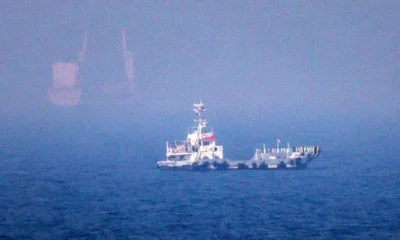
In a sign of changing times, the US LGBTQ-focused travel company VACAYA has announced an “Arabian Nights” cruise for spring 2027 from Jeddah to Egypt’s Ain Sokhna, promising its customers they will “make and live history”.
“For decades, LGBTQ+ visitors could scarcely imagine setting foot in the Kingdom,” the company said on its website, where cabins aboard the Emerald Kaia luxury super yacht go for between US$9,900 (S$12,818.30) and US$57,000.
Yet, it added, as Saudi Arabia seeks to “reshape its international image in anticipation of hosting the 2034 World Cup, a quiet but notable shift has emerged: visitors of all identities are being welcomed, provided they honour local customs”.
‘Everyone is welcome’
Saudi authorities did not respond to an AFP request for comment on the cruise.
But officials have stated that everyone would be welcome in the kingdom for the global football spectacle.
Even the FAQs section of Visit Saudi, the official tourism website, includes the question, “Are LGBT visitors welcome to visit Saudi?“
The answer: “Everyone is welcome.”
“We ask that visitors respect our culture and traditions and follow our laws,” it added. “Visitors are not required to disclose their personal information, and we will respect visitors’ right to privacy.”
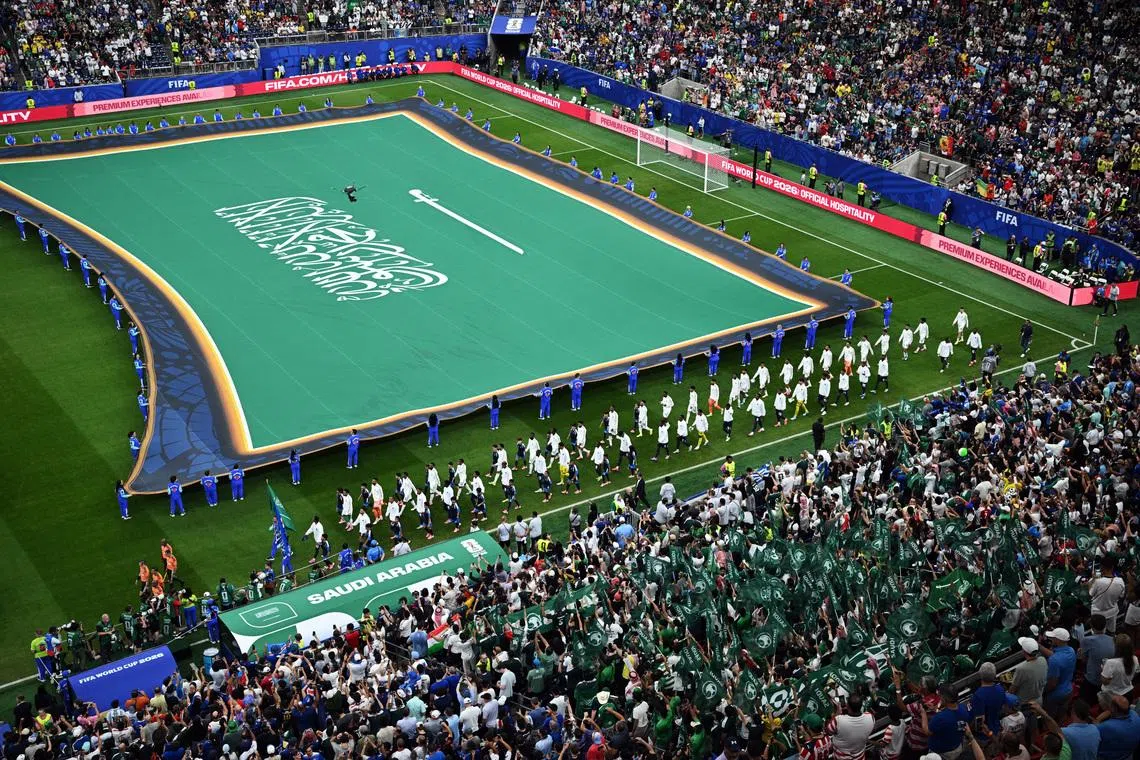
Like Qatar, which in 2022 hosted the first football World Cup in the Middle East, Riyadh faced criticism over its LGBTQ policies when it was selected at the end of 2024.
In Doha, some supporters and a journalist were prevented from entering stadiums because they were wearing rainbow-coloured clothing.
Homosexuality is a potential capital offence in Saudi Arabia, known for its strict interpretation of Islamic syariah law, which forms the basis of its entire judicial system.
The country does not have a comprehensive written penal code for all crimes, meaning enforcement can be vague.
The kingdom has ranked third-highest for the number of executions in the world over the past three years, according to Amnesty International.
But the organisation has not recorded any recent LGBTQ-related executions.
‘Two Saudi Arabias’
For Saudi activist Tariq Aziz, the queer cruise is an example of double standards.
“There are two Saudi Arabias: one meant for foreigners – more tolerant and more open – and another meant for citizens: much more conservative, where freedoms and rights are severely restricted in the name of religious norms and traditions,” he told AFP.
In the rapidly changing society, where 60 per cent of the population is under 35, some privileged Saudis are able to push the envelope of freedom.
At the 2025 MDLBEAST Soundstorm electronic music festival, men wearing make-up or crop tops mingled with others dressed in traditional white thobes.
In Riyadh’s upscale residential neighbourhoods, a few well-off homosexual couples manage to discreetly share a home, according to testimonies gathered by AFP.
But none were willing to share their experiences because of the sensitivity of the matter. Homosexuality remains largely taboo in Saudi society.
In practice, observers believe that the authorities generally turn a blind eye as long as same-sex relationships remain strictly private.
But “supporting LGBT rights in Saudi Arabia and being vocal about them is criminalised and could land you in prison”, Amnesty’s Middle East researcher Dana Ahmed told AFP.
The most recent cases documented by the NGO date back to 2022, which Ahmed said she would categorise “as freedom of expression cases rather than a crackdown on the LGBT community”.
Aziz, the activist and lawyer, said he was detained from 2021 to 2022 for “promoting homosexuality” and “Twitter posts deemed harmful to public order, religious values and public morals”.
He has since received refugee status in the United States.
“LGBT Saudis need laws that protect them against discrimination, hatred and persecution,” Aziz said.
Under one of his social media posts about the cruise, someone claiming to be Saudi had written: “Let them all drown.” AFP