World
Several said injured in Israeli strikes on southern Lebanon

Several people were injured on Wednesday when Israeli forces carried out airstrikes in areas of south Lebanon, state media said.
The latest strikes came despite the US-Iran interim deal to end the Middle East war, which reportedly includes a stipulation ending the fighting between Israel and the Hezbollah terror group in Lebanon.
According to the National News Agency, three strikes were carried out in the towns of Mansouri and Aaziyyeh, causing several injuries.
Another strike was carried out in Barashit, NNA reported.
There was no immediate comment from the Israel Defense Forces on the reports.
A short time later, sirens warning of a suspected drone infiltration from Lebanon sounded in the border community of Zarit, but the IDF said this was the result of a “false alarm.”
While violence has declined in Lebanon since the US-Iran agreement was announced on Monday, Israeli strikes on the south have still killed at least five people since then, according to NNA. Lebanese officials don’t distinguish between noncombatants and fighters in their tallies. Hezbollah has also continued to fire at Israeli forces operating in southern Lebanon.
One of the biggest questions still hanging over the truce is the fate of Lebanon. Israeli forces invaded the country’s south in March to root out Hezbollah, after the Iran-backed terror group began firing rockets and drones across the border in solidarity with Tehran due to the US-Israeli campaign in Iran. The attacks disrupted the lives of tens of thousands of people in northern Israel who were repeatedly driven to seek safety in bomb shelters at all hours of the day and night, playing havoc with their daily lives. Many of those residents had evacuated their towns during a previous round of Hezbollah attacks, which began in October 2023 and came to a halt in November 2024.
Israeli forces still occupy a swath of southern Lebanon, where more than a million people have been driven from their homes by the fighting, while Hezbollah remains undefeated.
Iran says the ceasefire must also end hostilities in Lebanon, and that a permanent deal must lead to an Israeli withdrawal. Israeli officials have said they will not be bound in Lebanon by the terms of the tentative Iran-US agreement and do not know the details of it.
Israel has insisted it reserves the right to use military force to protects itself from the Hezbollah threat. Earlier this month, Iran fired missiles at Israel after the latter attacked a Hezbollah stronghold in Beirut in response to rocket fire on its territory.
At a press conference Monday, Prime Minister Benjamin Netanyahu avoided criticizing the interim US-Iran deal, but also stressed that Israeli troops would stay in southern Lebanon.
Iranian Foreign Minister Abbas Araghchi said Tuesday that Israel’s continued occupation of southern Lebanon would violate the deal.
“Without the withdrawal of Israeli forces from the territories they occupied during this war, the war has not fully come to an end,” Araghchi said.
Iran’s Top Joint Military Command, Khatam al-Anbiya Central Headquarters, said that Israel should expect a hard response from the Iranian armed forces if it does not stop its attacks on southern Lebanon.
Hezbollah has so far not issued any statements since Tuesday claiming attacks on Israeli targets in south Lebanon, when the IDF said it intercepted several rockets launched by the group at troops there.
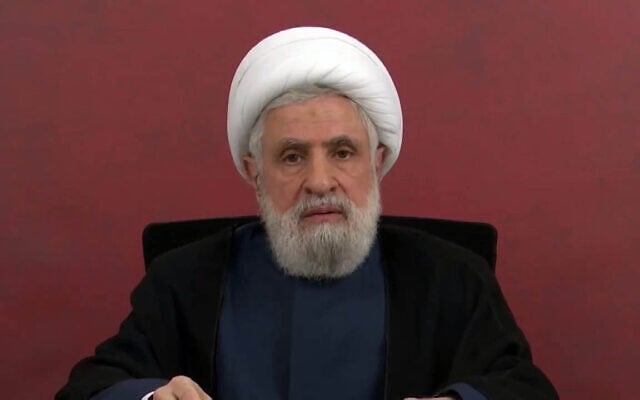
Hezbollah leader Naim Qassem is due to make a televised address on Wednesday.
He expressed “profound gratitude” on Tuesday for Iran’s efforts “to compel the Israeli entity to an immediate and permanent cessation of military operations on all fronts, including in Lebanon.”
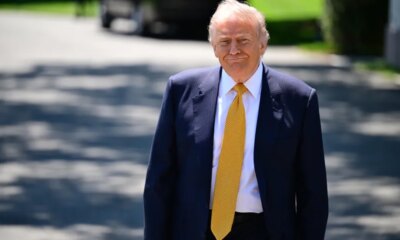
Meanwhile, Trump told reporters on Tuesday that he did not think an Israeli attack on Hezbollah would necessarily sink the agreement, though he said he was “not happy with the way Israel has handled themselves with Lebanon and with Hezbollah.”
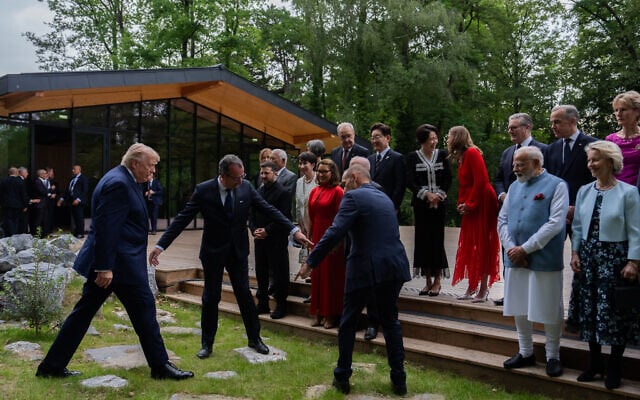
Trump spoke at a summit of G7 leaders in the French town of Evian-les-Bains on Lake Geneva, while details of the US-Iran ceasefire agreement trickled out of Washington and Tehran ahead of its formal unveiling, expected on Friday across the nearby Swiss border.
On Wednesday, the G7 issued a declaration on the US-Iran agreement saying they supported, “through an immediate robust ceasefire,” Lebanese efforts to disarm Hezbollah and protect Lebanon’s territorial integrity and sovereignty.
Israeli and Lebanese officials have been holding face-to-face talks in Washington to reach their own lasting ceasefire agreement, separate from the US-Iran negotiations.
The talks, which Israel has said are ultimately aimed at securing a full peace deal while Lebanon has said they are only focused on de-escalation, have faced an uphill battle since Hezbollah has vowed not to recognize or abide by any deal they yield, raising the prospect of a renewed civil war in Lebanon.