World
Scientists discover new fish species, names it after Sesame Street character Mr Snuffleupagus

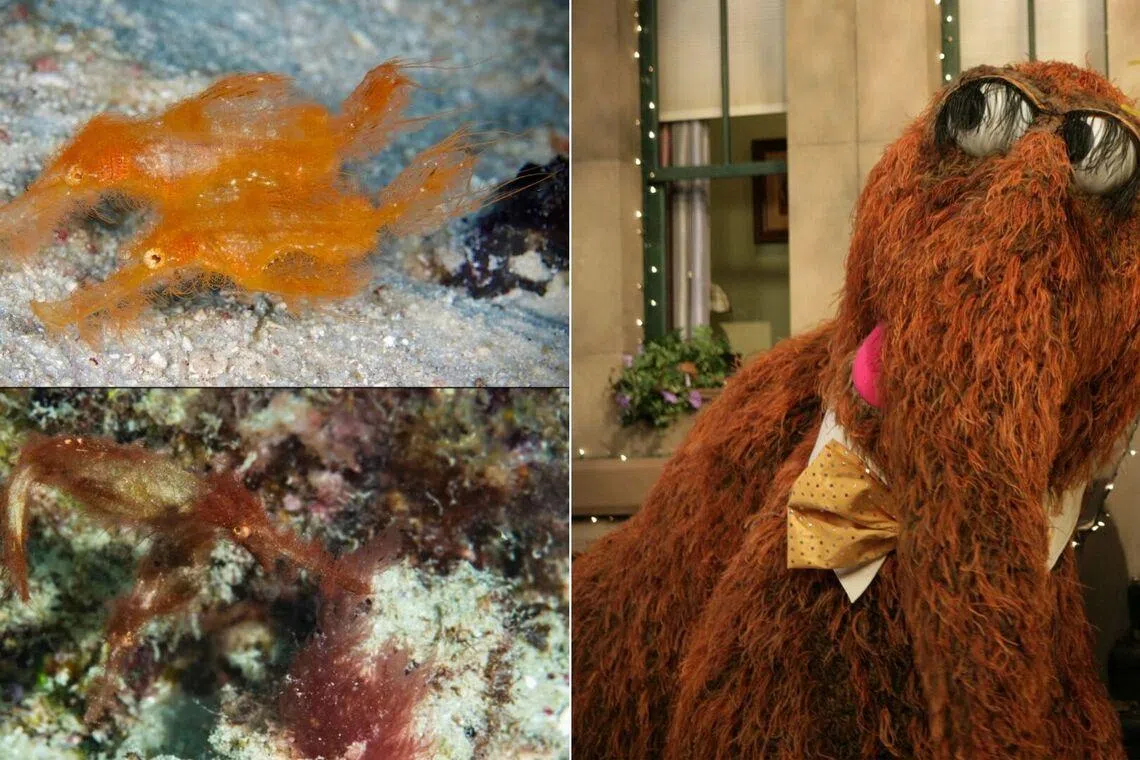
A sea creature that resembles Sesame Street’s biggest resident Mr Snuffleupagus has been discovered by scientists in Australia’s Great Barrier Reef, and is now named after the elephant-like muppet.
“Once you see the fish, the connection is impossible to unsee,” said Mr Graham Short, who co-authored a paper published in the Journal of Fish Biology on May 10 about the discovery.
The Solenostomus snuffleupagus is a type of ghost pipefish, a close relative of seahorses and pipefishes.
The hairy ghost pipefish was first spotted in 2001 by the paper’s author, Dr David Harasti, during a dive in Papua New Guinea, and kicked off a 25-year search for the elusive creature.
“I was perplexed,” he said in a statement quoted by People magazine. “I photographed a few shots on my old film camera, went home, and pulled out every fish book I owned. Nothing matched.”
Dr Harasti realised then that he could have been looking at a new species.
“You don’t often get a moment like that in your career, where you realise you could be looking at a species no one has ever documented before,” he said.
Mr Short said the hairy ghost pipefish, much like seahorses, rely on camouflage and body form to vanish into reef habitats.
“This species had been doing exactly that, hiding in plain sight, for over two decades,” he said, adding that the creature’s “elaborate hair-like filaments almost certainly function as camouflage among algae and reef growth”.
Compared to other ghost fishes, the Mr Snuffleupagus lookalike has the most number of vertebrae, said Mr Short – 36 vertebrae, while others have 32 to 34.
It is also the first species of ghost pipefish to be documented eating fish, after a small fish was discovered in the gut of a specimen during a micro-CT scan. Ghost pipefish mostly feed on tiny crustaceans.
According to the paper, the hairy ghost pipefish can be found in Australia, Papua New Guinea, Fiji, New Caledonia and Tonga.
It exhibits predominantly orange to red body colouration to closely match the hue of the filamentous red macroalgae it mimics, said the paper.
Sesame Street shared their delight at the creature’s discovery and gave their approval for it to be named after their beloved muppet.
“Connecting science with imagination and discovery is what Sesame Street has always been about, and this charming new species is a wonderful reminder that there is still so much to explore and learn about the world,” Dr Rosemarie Truglio, Sesame Workshop’s senior vice-president of global education, reportedly said.
“And of course, Snuffy is honored to have a brand-new species named after him and hopes to one day visit Australia to meet his new namesake!”
Mr Snuffleupagus, also known as Aloysius Snuffleupagus or Snuffy, is described as slow talking and thoughtful. He loves to dance, sing and give his friends hugs.