News
Refining Without Relief: How Global Oil Wars, Market Structure, and Monopoly Risks Still Drive Fuel Prices in Nigeria

BY BLAISE UDUNZE
The vision was bold. The expectation was clear. And the promise was powerful. When the Dangote Refinery began operations, it was hailed as Nigeria’s long-awaited escape from decades of energy contradiction, which involves exporting crude oil while importing refined fuel at high costs. It was meant to guarantee supply, stabilize prices, conserve foreign exchange, and most importantly, deliver relief to ordinary Nigerians.
What appears to be a distinct contradiction is that, despite months into its operation, a different reality is emerging, with fuel prices rising sharply. Inflationary pressures are intensifying. This occurrence has forced Nigerians to ask a difficult question once again, one that calls for an urgent answer. Why does a country that produces and refines crude oil still suffer the consequences of global oil shocks?
Looking at the trend, it is clear that the answer lies not just in geopolitics, but in the deeper structure of Nigeria’s oil economy, where global pricing, policy gaps, and now the looming risk of monopoly intersect.
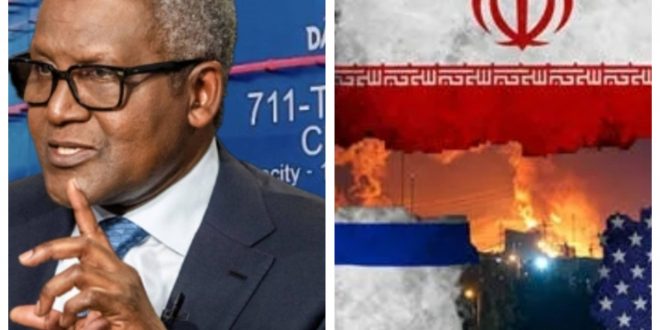
With the recent development, the latest alarming surge in petrol prices has been driven largely by escalating tensions in the Middle East. This is particularly the U.S-Israel strikes on Iran and retaliatory measures from Tehran. A well-known fact is that at the center of the crisis is the Strait of Hormuz, a vital oil transit route through which a significant portion of global supply flows. Any disruption, even a speculative one, triggers immediate spikes in crude prices.
Within a week, oil prices jumped from the mid-$60 range to nearly $120 per barrel. For global markets, this is expected. For Nigeria, it is devastatingly ironic. Because, despite having crude oil in abundance and despite refining it locally, Nigeria remains fully exposed and this has continued to re-echo the same ironic question.
In a rare moment of corporate candor, the refinery’s leadership acknowledged this reality. The plant is deeply affected by global shocks. Crude oil, even when sourced locally, is priced at international benchmarks. Shipping costs have surged dramatically, from about $800,000 per tanker to as high as $3.5 million. Insurance premiums have climbed, and logistics have become significantly more expensive, with total costs further driving higher.
Even more revealing is the refinery’s sourcing structure. Only about 30 percent – 35 percent of crude comes from the Nigerian government supply under the crude-for-naira framework. A significant portion is still purchased in U.S. dollars on the open market, while another 30 percent – 40 percent is sourced internationally, including from the United States and other regions. This means the refinery is not insulated; it is integrated into the global oil system. The implication is unavoidable as local refining has not translated into local pricing control.
The impact on Nigerians has been immediate and severe, as petrol prices have surged from under N800 earlier in the year to over N1,200, and in some regions, it is even more alarming when the prices skyrocketed close to N1,400 per litre. Within weeks, multiple price increases have been recorded, driven largely by global crude price spikes and rising logistics costs. Doubtless, the country has witnessed the consequences ripple across the economy as transport fares rise, food prices increase, businesses struggle with higher operating costs, and inflation accelerates.
The development has attracted the attention of the labour unions and the organised private sector, prompting them to raise concerns and alarm about the consequences of job losses, business closures, and worsening hardship if the trend continues with each passing day, witnessing a daily increase and causing possible artificial scarcity.
Nigeria remains trapped in a painful contradiction. It produces crude oil. It refines crude oil. Yet it cannot protect its citizens from global oil volatility. As Aliko Dangote himself acknowledged, Nigeria has no direct role in the conflict driving these price increases, yet it bears the consequences due to global economic interdependence.
In a real sense, this is the deeper tragedy, as Nigeria has achieved capacity without control.
At the heart of the issue is a structural reality, crude oil is priced globally, not locally. Even under the crude-for-naira arrangement, pricing is benchmarked against international rates. This means refineries pay global crude prices, fuel prices reflect global market conditions, and domestic consumers absorb international shocks. In essence, Nigeria has moved refining home without bringing pricing sovereignty with it.