World
Quake-hit airport, lost pilots disrupt Venezuela’s revival

Caracas – Just as Venezuela was leaving behind years of international pariah status, catastrophic earthquakes have devastated its main international airport – and many of the skilled hands who worked there.
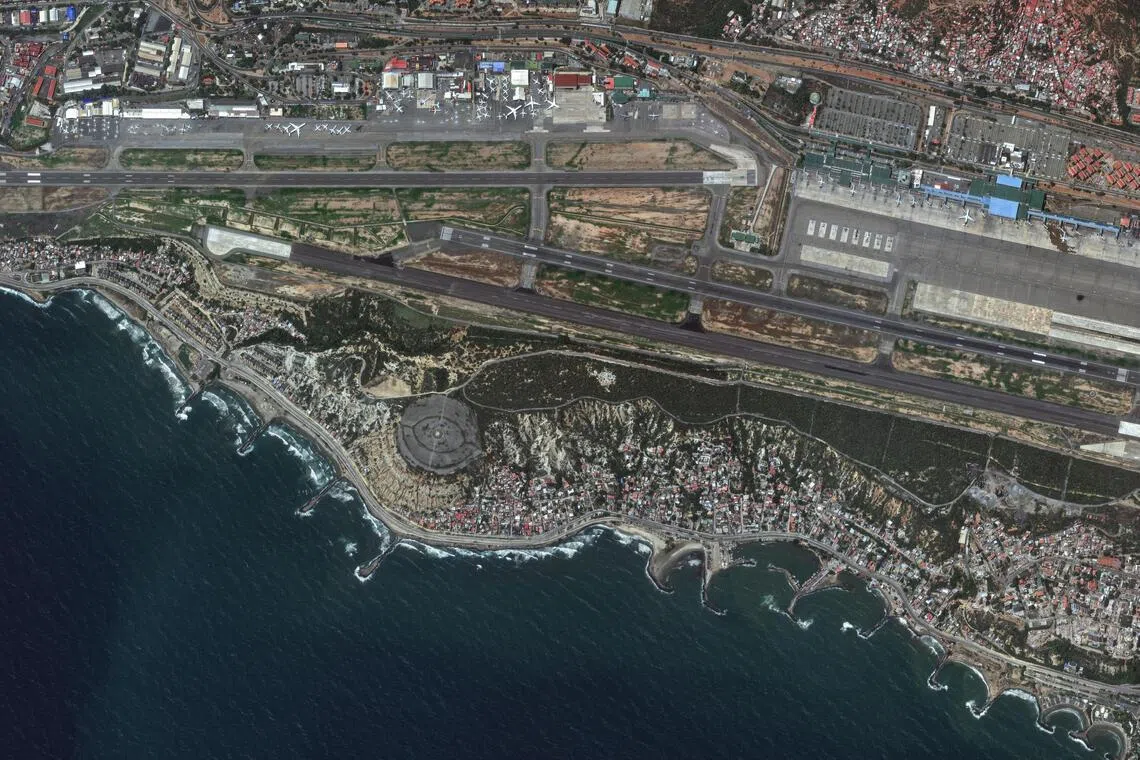
Ground zero for the devastation from the twin quakes on June 24 is the coastal state of La Guaira, home to Simon Bolivar International Airport in Maiquetia. Two of the airport’s three runways have been cleared for aid and rescue flights, but commercial operations will probably not resume for months, experts say.
Longer term, the loss of many Venezuelan pilots and other personnel who lived in La Guaira will take years to overcome in a country that has seen more than a quarter of its population emigrate over the past decade.
The death toll from the 7.2 and 7.5-magnitude quakes has now reached 1,719, with tens of thousands still missing under collapsed buildings. Aftershocks are keeping many on edge.
As the window for survivability was closing last week, international rescue crews pulled some victims from the rubble, while Venezuelans using their bare hands clawed through the concrete and twisted metal in a desperate search for loved ones.
One was Marcos Perez, chief pilot at Caracas Air, a national airline, and instructor at NAV Aviation, a pilot-training academy.
“It affected me a lot, many of my students died,” said Perez, 52, in a trembling voice. “The director of the university I worked with died when his house collapsed. I have other friends who have been confirmed dead.”
Bloomberg spoke with about a dozen Venezuelan pilots who were missing colleagues or relatives. Many of them were actively participating in rescue and aid efforts, with some piloting humanitarian flights.
There are no official figures of the death toll for the industry, but posts about pilots and flight personnel who are unaccounted for are flooding citizen chat groups and unofficial registries of missing people. One pilot said about 90 per cent of the country’s aviation sector is connected to La Guaira.
On June 29, Venezuela’s aviation authority issued a notice requiring international flights to obtain prior authorisation to land in or depart from Venezuela until July 2. The authority had issued a notice on June 28 restricting the airspace, but withdrew it shortly after.
Opposition leader María Corina Machado said on June 29 that “the regime closed our country’s airspace” to prevent her planned return to Venezuela.
The airport devastation reflects the wider hit to Venezuela’s infrastructure that was already deteriorated from years of mismanagement and corruption. Ports, highways and bridges around the epicenter in Yaracuy state have been heavily impacted.
Of Maiquetia’s three main runways, one had been undergoing repairs, so commercial planes had been using another one that suffered major cracks from the quake, according to a person familiar with the airport operations who was not authorised to speak publicly.
Last week, American officials inspected the runway that had been under repair, certifying that it was ready for use. That runway has been used by rescue teams from countries such as Portugal, Qatar and Germany.
Pilots consulted by Bloomberg estimated the airport could start operating at reduced capacity in two to three months.
For now, the airport buildings are decimated.
“There is very little information from the authorities about the specific damage,” said Marisela de Loaiza, president of the Venezuelan Airlines Association. De Loaiza said a census of personnel will also be needed since most employees at Maiquetia live in the La Guaira area.
Perez said that extensive studies are needed to determine what kind of airplanes will be able to use the damaged runways. Given the weight of the airplanes, the runway could fracture and there could be a major accident if not assessed properly, he said. He said the airport structure will need to be evaluated too.
The aviation industry is in ruins, said Andruys Hernandez Solorzano, a 32-year-old Venezuelan pilot and flight instructor who works in Maiquetia on a daily basis.
“Behind every flight there is huge machinery that makes those operations possible,” he said.
Beyond pilots and cabin crew, he cited ground logistics staff, passenger support services, control authorities, firefighters, fuel services and many others.
The catastrophe has dealt a double blow to Venezuela’s aviation sector, hitting both its infrastructure and its already limited workforce, said aviation lawyer Rodolfo Ruiz. The people will be difficult to replace because aviation professionals require years of training, he said.
Franco Sampieri Schembri, president of the Association of Pilots and Aeronautical Professionals in Venezuela, is urging the government to declare the country’s airports as humanitarian corridors to expedite aid delivery.
“Bureaucracy cannot suppress hope for people who are suffering. In the urgency of saving lives, the rules must be loosened,” he said.
Tourism chambers, which include airlines, are also weighing the impact of the disaster, said Vicky Herrera, president of the Venezuelan Association of Travel Agencies and Tourism.
“We don’t have a tally yet, there are a lot of missing people who work in airlines and in Maiquetia, specifically,” Herrera said. “There’s also equipment that got trapped at the airport that can’t be moved.”
Incoming international flights have mostly been rerouted to a smaller airport in Valencia, a city located about two hours’ drive from Caracas, or to the Libertador military airbase in Maracay, about 90 minutes away. The latter could be used in the future to resume limited commercial operations, Herrera said.
The airport has a storied past in the oil-rich country that hosted Concord flights from Paris in the 1970s.
After late socialist icon Hugo Chavez came into power in 1999, Venezuela’s economy and decades of political stability unravelled, accelerating under his hand-picked successor Nicolas Maduro, who was captured and flown out of the country by American forces in January.
Since then, the airport had been showing signs of revival as oil executives and investors started jetting in. The quakes have pulled the plug on that traffic for now.
The damage is also likely to delay new routes from United Airlines and Qatar Airways, which were set to start in July, De Loaiza said.
In 1999, La Guaira was hit by torrential rains that triggered catastrophic mudslides and flash floods, but within a few months the airport was up and running again. Citing the comeback, De Loaiza said “the need for connectivity will make the recovery happen as quickly as possible”.
“Our industry is characterised by resilience,” Hernandez said. “The pilot and aviation community in Venezuela is quite united.”
Peter Cerda, the Americas regional vice-president of the International Air Transport Association, known as IATA, cautioned that reopening the airport in Maiquetia will only be the first step.
“One thing is reopening the airport, another is restoring normal operations,” he said.
Engineers still need to determine whether the existing structure can be repaired or whether the damage is so severe that an entirely new terminal will be needed, he said.
It is possible that Venezuela may need to rely on temporary passenger facilities while reconstruction is underway, similar to the emergency infrastructure used at Santiago’s airport after Chile’s 2010 earthquake, Cerda said.
The priority, he said, is to restore operations “in a way that is safe, efficient and fully compliant with international standards”. Bloomberg