World
‘Project Freedom’ takes hold with 11 ships transiting Strait of Hormuz as Trump refuses to telegraph his redline on Iran

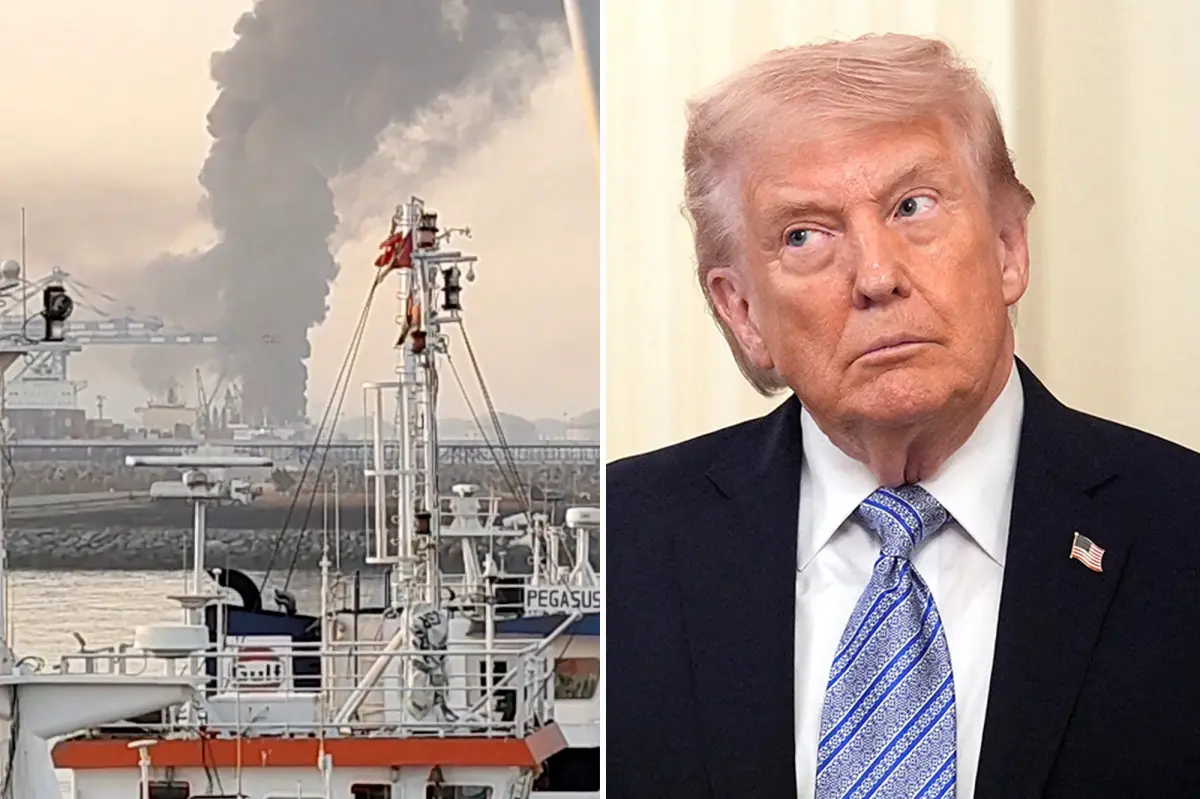
WASHINGTON — Commercial traffic in the Strait of Hormuz ticked up on Tuesday as the Pentagon’s new “Project Freedom” took hold in President Trump’s latest strategy to test Iran’s will to stay in the fight.
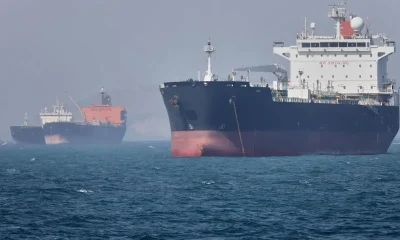
At least 11 ships crossed through the critical oil chokepoint in the 24 hours that ended at 6 p.m. Tuesday, as the new US initiative to reopen the strait held hostage by Tehran commenced.
Though only about 18% of the daily traffic that normally passes through the key waterway, it was an improvement from Monday, when just two ships passed through, according to open-source tracking databases.
Secretary of State Marco Rubio said the military operation is a “favor to the world” to rescue innocent sailors stuck at sea because of Iran’s takeover of the Strait of Hormuz since the war broke out on Feb. 28.
Rubio said nearly “23,000 civilians from 87 different countries” have been “trapped inside the Gulf, and left for dead in the Persian Gulf by this Iranian regime.”
The Pentagon has made clear that Project Freedom is a defensive operation, with no intention of initiating further conflict.
“American forces won’t need to enter Iranian waters or airspace – it’s not necessary. We’re not looking for a fight,” Secretary of War Pete Hegseth said Tuesday. “But Iran also cannot be allowed to block innocent countries and their goods from an international waterway.”
But the operation has elevated the possibility of further conflict breaking out, some experts have said.
“The risk of cease-fire breaking down is elevated but not immediate,” a regional source familiar with the ongoing mediations between the US and Iran told The Post. “The cease-fire is still intact, but its stability is limited and dependent on continued restraint from both sides.”
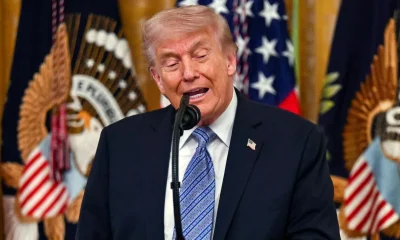
Trump was coy Tuesday on what Iran would have to do to break the tenuous cease-fire with the US, as the United Arab Emirates came under attack for a second day.
“Well, you’ll find out, because I’ll let you know,” the president responded. “They know what to do, and … they know what not to do, more importantly, actually.”
Trump downplayed recent skirmishes in the Strait of Hormuz when Iran fired on US warships on Monday — with the US responding by sinking six small Iranian boats.
“You know, they fired them in little boats with pea shooters. You know, peas shooters, little boats,” he said. “You know why? Because they don’t have any boats anymore. Their Navy is comprised of, they call them, little boats.”
“They’re looking around for little boats to try and compete with our great Navy,” he added.
Hegseth argued Tuesday that the cease-fire with Iran is still in effect despite a spike in hostilities from Tehran on Monday and America’s top general acknowledging that Iran has launched at least 10 attacks against US forces since the pause began April 8.
“Not over. Ultimately, this is a separate and distinct project,” Hegseth told reporters at the Pentagon while discussing the Trump administration’s bid to force the Strait of Hormuz open. “We said we would defend and defend aggressively, and we absolutely have.”
“The president is going to make a decision whether anything were to escalate into a violation of a cease-fire,” Hegseth went on. “Certainly, we would urge Iran to be prudent in the actions that they take to keep that underneath this threshold.”
Iran, meanwhile, accuses the US of having broken the cease-fire with its continued blockade of Iranian ports — even as the US launched “Project Freedom,” a Navy effort to free up ships from the Strait of Hormuz as Iran continues to hold hostage the critical oil chokepoint.
Sen. Lindsey Graham (R-SC) said Monday Iran has “absolutely” violated the cease-fire with its attacks on ships in the Strait of Hormuz and the UAE.
While Trump declined to label the assaults as such, he claimed in an interview Monday evening that US hostilities with Iran could last another two or three weeks.
“We’ve taken out much of what we’d have to do, probably another two weeks, two weeks, maybe three weeks,” Trump told conservative radio host Hugh Hewitt. “And time is not of the essence for us.”
The US is sending in its smaller, more agile ships into the Strait of Hormuz as part of “Project Freedom.”
The guided-missile destroyers USS Mason and USS Truxtun were sent in to maneuver the strait as the at least four-times-larger amphibious landing ship USS Tripoli and aircraft carrier USS Abraham Lincoln stay outside, sailing nearby in the Arabian Sea.
Analysts warn the bigger story isn’t debating what qualifies as a cease-fire violation, but who’s calling the shots in Tehran — as Chairman of the Joint Chiefs of Staff Gen. Dan Caine on Tuesday declared it’s Iran’s Islamic Revolutionary Guard Corps — not its political leadership — running the country.
“It is correct to say that the IRGC is Iran’s most powerful institution. But that didn’t happen overnight,” said Behnam Ben Taleblu, director of the Iran Program at the Foundation for Defense of Democracies.
“No one other than Ali Khamenei has been instrumental. No one,” he added, arguing the supreme leader — not outside pressure from Trump or Israel — built the Islamic Revolutionary Guard Corps into the regime’s dominant force.
Former Pakistani Amb. Jamil Ahmed Khan said that was by design — and now, it’s leaving government decisionmaking in disarray.
“In all past years, IRGC had maximum funding, IRGC had maximum motivation, IRGC has maximum interest in all the civilian organizations of Iran,” he said. “So they have their interest, and they have their final word in so many departments in the ministries of Iran.”
That concentration of power inside Iran’s hardline camp could complicate any effort to hold a cease-fire, especially as attacks spill beyond direct US-Iran exchanges.
“It’s hard to think of a cease-fire where there’s weapons of war, like ballistic missiles, flying around,” Taleblu said, pointing to Tehran’s expanding “gray zone” playbook — from maritime harassment to direct strikes on US partners like the UAE.
What’s more, the divided leadership and complexities of shared power have made the diplomatic track exceedingly difficult, said Mark Kimmit, a former US assistant secretary of state for political-military affairs.
“The Iranians are speaking with many voices which causes the US to wonder who is in charge,” he said. “The foreign minister is calling for negotiations at the very time the IRGC seems to be provoking a return to war.”
“Under these circumstances, it is hard to see a near term return to diplomacy,” he added.
In Taleblu’s view, letting the IRGC’s recent military attacks slide risks further emboldening the regime.
“The non-response… helped to pave the pathway for the regime’s increased missile risk-taking,” he said, referencing Iran’s ballistic missile barrage after the 2020 US killing of Gen. Qassem Soleimani.
Now, he warned, Washington may be nearing another turning point.
“I fear that… we will come back to look on this moment as an inflection point as to the regime’s risk tolerance,” Taleblu said.
Even if the White House is trying to avoid a broader war, the current approach — limited retaliation paired with restraint — may only go so far.
“A regime that chooses not to bend can probably only be broken,” he said. “The question becomes… will Washington spend the time to try to break it… or push away from the table?”
But Khan argued that because the IRGC never officially took credit for the strikes on the UAE, the incident may not lead to a larger escalation.
“Iran has not admitted it,” he said, suggesting the attacks could have been false flag operations or messaging strategies. “But IRGC, if they come up with official statements, that means there’s a complete violation of the cease-fire — and that means they would then admit and they would have to face the consequences.”
Ryan King and Samuel Chamberlain contributed to this report.